
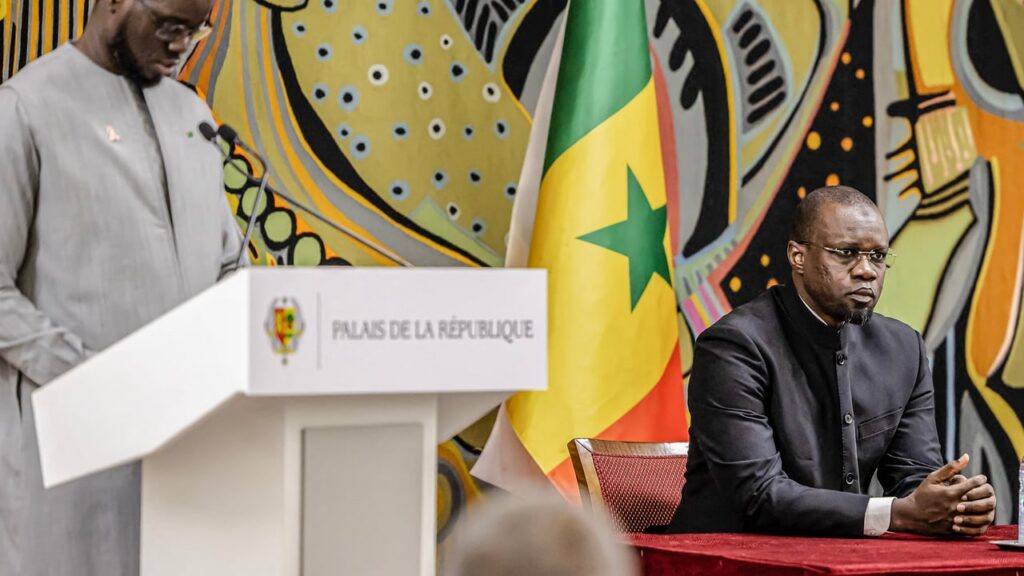

In April 2025, during a national celebration address, President Bassirou Diomaye Faye made a bold declaration: he intends to overhaul the balance of power between the presidency and other institutions. His vision? A government where authority is distributed more evenly, with strong directors-general, empowered ministers, and a premier wielding significant influence. Yet behind this reform lies a far-reaching political strategy that could reshape the future of Senegal’s governance—and solidify the ambitions of one key figure: Ousmane Sonko.
Why this constitutional reform favors Ousmane Sonko
At its core, the proposed changes aim to decentralize executive power, a move that aligns closely with Sonko’s long-standing advocacy for institutional reform. As a prominent leader of the Pastef movement and a presidential candidate, Sonko has repeatedly criticized the concentration of authority in the hands of a single leader. By redistributing responsibilities, the reform could create new pathways for political influence—ones that Sonko may be poised to exploit.
One of the most significant shifts involves the role of the Prime Minister. Under the current system, the President holds sweeping powers, but the new framework could grant the Prime Minister greater autonomy. This change would require a strong, charismatic leader to step into the role—a profile that closely matches Sonko’s political persona. By positioning himself as a transformative figure capable of leading this empowered executive branch, Sonko could position himself as the natural successor to the presidency.
A strategic power shift
The reform goes beyond mere institutional adjustments. It reflects a deliberate attempt to redefine governance in Senegal, moving away from a centralized model toward a more collaborative structure. This transition could benefit Sonko in several ways:
- More influence in government appointments: A decentralized system would rely on a network of strong leaders across ministries, giving Sonko leverage in selecting key officials who align with his vision.
- Enhanced political legitimacy: By advocating for a reform he has long championed, Sonko can reinforce his image as a champion of democratic change, appealing to voters seeking an alternative to traditional leadership.
- Stronger opposition positioning: If the reform passes, Sonko’s movement could gain greater access to decision-making roles, allowing it to shape policy from within the government rather than from the opposition benches.
While President Faye’s motivations remain open to interpretation, the timing of the reform—amid rising public demand for accountability—suggests a calculated move to address long-standing frustrations. Yet the unintended consequence may be the unintentional empowerment of a political rival who has spent years positioning himself as the face of Senegal’s next generation of leadership.
Public reaction and political implications
The announcement has sparked mixed reactions. Supporters of the reform argue that it will bring much-needed transparency and efficiency to Senegal’s governance. Critics, however, warn that the changes could destabilize the political landscape, particularly if they are perceived as a maneuver to sideline rivals or consolidate power in new forms.
For Ousmane Sonko, the reform presents both an opportunity and a risk. If executed effectively, it could elevate his profile and expand his influence within the government. But if mishandled, it may backfire, reinforcing perceptions that the reform is a tool for personal political gain rather than a genuine effort to modernize Senegal’s institutions.
The coming months will be critical in determining how this constitutional shift unfolds—and whether Sonko can turn it into a stepping stone toward the presidency.