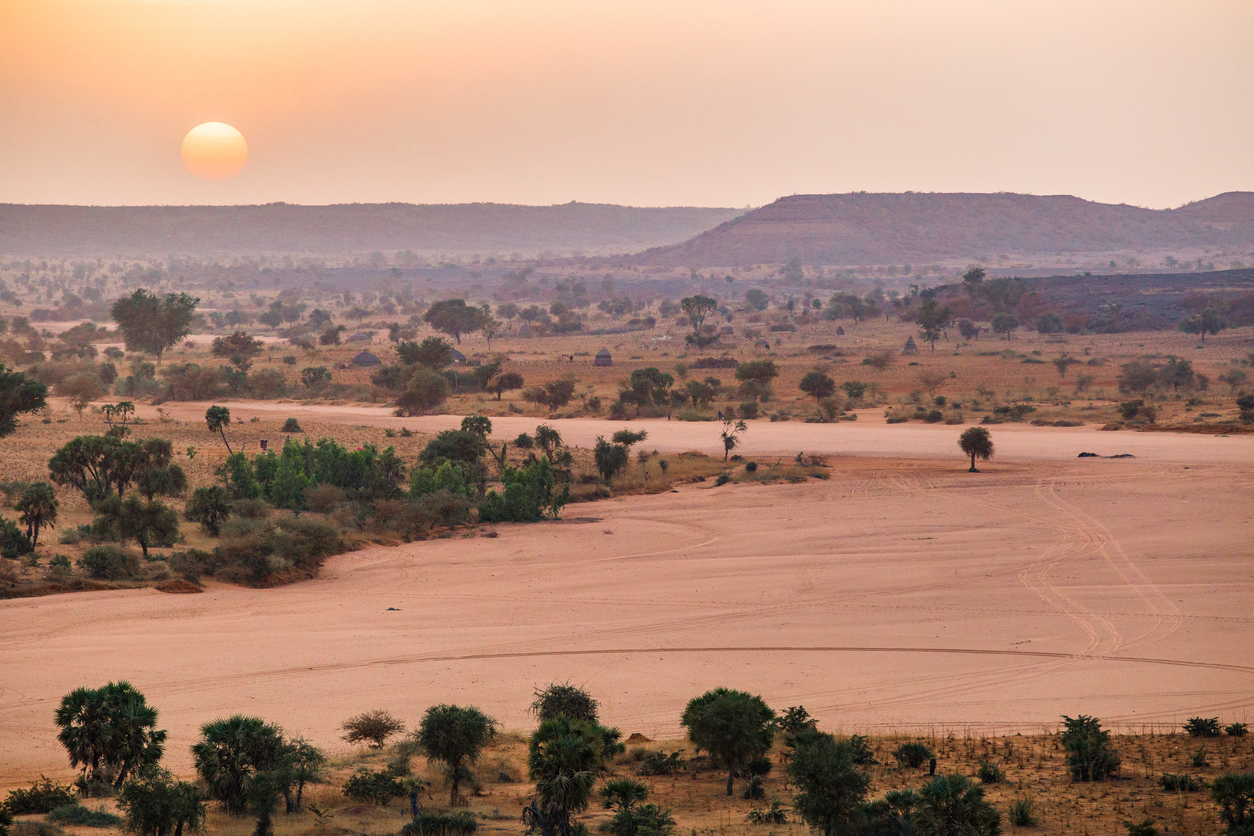
The Sahel no longer dominates global headlines. While the world’s attention has shifted to conflicts in Ukraine, Gaza, and Congo, as well as political upheavals in the United States, the Sahel’s persistent crises continue to fester. More than a decade of instability, marked by jihadist insurgencies and political turbulence, has only intensified, despite promises from military regimes to restore peace.
Since the recent wave of coups in West Africa, juntas in Mali, Niger, and Burkina Faso—collectively known as the Alliance of Sahel States (AES)—have vowed to dismantle jihadist networks. Yet violence has surged instead. The Sahel is now the global epicenter of jihadist fatalities, with deaths linked to extremism tripling since 2021. In 2024 alone, over 11,200 people were killed by militant groups, while civilian casualties at the hands of state forces and their allies have also risen sharply. The result? A humanitarian catastrophe unfolding in plain sight.
This analysis examines the dual crises gripping the Sahel: the relentless advance of jihadist violence and the authoritarian drift of military regimes. It argues for sustained European engagement in the region, despite shifting global priorities and waning influence. Understanding these dynamics is crucial—not just for the Sahel’s 60 million people, but for broader regional and international stability.
escalating jihadist violence and state failures
The Sahel’s descent into chaos defies earlier trends. A decade ago, it recorded the lowest number of extremism-related fatalities on the continent. Today, it holds the grim title of the most violent region worldwide, with deaths linked to militant Islamist groups soaring. The Global Terrorism Index 2025 confirms this alarming shift, underscoring how jihadist groups have exploited power vacuums created by political instability.
Three countries—Mali, Burkina Faso, and Niger—form the core of the AES and bear the brunt of this violence. Each faces a unique but interconnected crisis:
Mali: trapped between separatists and jihadists
In Mali, the 2023 expulsion of the UN peacekeeping mission MINUSMA was followed by a resurgence of armed clashes in the north, particularly in Kidal. The Malian junta, backed by Russian Wagner forces, has framed both separatist Tuareg groups and jihadist factions as “terrorists,” intensifying a multifront war. The Group for the Support of Islam and Muslims (JNIM), an Al-Qaeda affiliate, has demonstrated growing military sophistication, including simultaneous attacks on Bamako’s gendarmerie school and military airport in 2024—killing over 70 security personnel. Such strikes, targeting only military sites, suggest a calculated strategy to gain public sympathy while undermining the regime’s legitimacy.
Civilian casualties have surged in tandem. In 2024, a wedding bombing in Mopti killed 40 people, while drone strikes by Malian forces in retaliation for the Tinzaouaten ambush—where 40 Malian soldiers and 80 Wagner mercenaries died—claimed over 20 civilian lives. By early 2025, another attack on a military convoy escorting civilians near Gao left 50 dead. Despite these setbacks, polls indicate Malians retain confidence in their armed forces, reflecting a dangerous disconnect between perception and reality.
Burkina Faso: when state collapse fuels communal violence
Burkina Faso’s 2022 coup has accelerated a catastrophic security collapse. By 2024, the state controlled just 40% of its territory, with the JNIM active in 11 of 13 regions. The Barsalogho massacre in August 2024—where civilians forced to dig trenches for the army were slaughtered in a jihadist attack—killed between 130 and 600 people, the deadliest single incident in the country’s history. Meanwhile, state forces have committed their own atrocities, including the summary execution of 223 civilians in February 2024 and the recruitment of Volunteers for the Defense of the Homeland (VDP)—a civilian militia accused of massacring Peul civilians in Solenzo. These VDPs, armed and trained by the state, have become both targets and perpetrators of violence, blurring the lines between civilian, militant, and soldier.
This militarization of society has displaced over 2 million Burkinabè, making Burkina Faso home to the highest number of internally displaced persons in the region. The junta’s reliance on community-based militias has fueled ethnic tensions and created a cycle of retaliation that shows no signs of abating.
Niger: rising lethality amid regional spillover
Though Niger has faced fewer jihadist attacks than its AES neighbors, the lethality of violence has increased since its 2023 coup. State forces have killed three times more civilians in the past year than in 2022, while jihadist groups have expanded their operations. In 2024, 51 attacks were launched against the army—nearly double the 2023 figure—including a mosque bombing in March 2025 that killed 44 people. The Islamic State in the Greater Sahara (EIGS) and JNIM now operate across Niger’s borders with Mali and Burkina Faso, exploiting porous frontiers and weak governance.
authoritarian consolidation: silencing dissent to mask failure
Facing territorial losses and military setbacks, the AES regimes have turned to authoritarian tactics to suppress criticism and control the narrative. Independent media, political parties, and civil society organizations have been systematically dismantled:
- Mali: RFI and France 24 were banned in 2022, followed by the closure of Joliba TV in 2024 for reporting on a staged coup. Journalists face arbitrary arrests, and NGOs have been shut down under vague “security” pretexts.
- Burkina Faso: The junta has expelled foreign journalists, banned RFI, France 24, and Jeune Afrique, and forced TV5Monde off air for critical coverage. Critics, including exiled opponents, are labeled “terrorists” to silence dissent.
- Niger: RFI and France 24 were suspended days after the 2023 coup, with further media closures and arrests targeting journalists covering security issues. Opposition figures, including former President Mohamed Bazoum, remain detained without trial.
These measures extend beyond borders. In October 2024, Burkina Faso claimed to control 70% of its territory—a figure mirroring estimates of jihadist control—illustrating how regimes manipulate data to project strength. For citizens, distinguishing truth from propaganda grows harder by the day.
permanent transitions: power grabs disguised as temporary rule
The AES juntas have systematically extended their rule under the guise of “transitional” governments. What began as short-term promises has become indefinite:
- Mali: The junta, led by Colonel Goïta, initially pledged elections in 2022 but has since extended its rule to 2029, promoting itself to general and appointing loyalists to top military ranks.
- Burkina Faso: Captain Traoré, who seized power in 2022, has set a 60-month transition, ensuring his presidency until 2029. His constitutional reforms and media crackdowns reinforce his grip on power.
- Niger: After resisting election timelines for 18 months, the junta proposed a renewable five-year transition in 2025, with junta leader General Tchiani sworn in for a five-year term in March.
These prolonged transitions serve a dual purpose: they consolidate power within the AES and enable deeper ties with non-Western partners, such as Russia, which has pledged military support to the alliance. For the European Union, this reality demands a recalibration of engagement strategies—one that balances pragmatic diplomacy with the defense of democratic norms.
the Sahel’s silent crisis: a threat to global stability
The Sahel’s marginalization in global media is no accident. Repressive regimes have systematically silenced independent voices, while Western powers, distracted by other crises, have reduced their engagement. Yet the consequences of inaction are severe:
- Humanitarian catastrophe: Over 52.7 million people in West Africa face acute food insecurity between June and August 2025, with 3.1 million displaced across the Sahel.
- Jihadist expansion: Militant groups now operate with near impunity, exploiting weak governance and ethnic grievances to recruit and tax local populations.
- Regional spillover: Instability in the Sahel fuels migration, arms trafficking, and extremism across Africa and into Europe, posing long-term security risks.
Europe’s strategic rethink must prioritize three questions:
- What can the EU realistically achieve in a region where traditional partners are hostile to its influence?
- Who are the credible local actors with whom engagement is possible and ethical?
- How can humanitarian aid and development support be delivered without legitimizing authoritarian regimes?
Early signs suggest cautious steps toward re-engagement, including the appointment of a new EU Special Representative. But without a clear vision, Europe risks repeating past mistakes—supporting regimes that prioritize control over stability, and abandoning populations caught in the crossfire.
The Sahel’s silence is not a sign of peace. It is a warning. And the time to act is now.