
Burundi calls for enhanced international involvement as violence persists in Eastern DRC
- Security
Diplomatic pressure mounts as regional leaders grapple with persistent insecurity
The Burundian government, currently holding the rotating presidency of the African Union, has publicly expressed deep concern over the continued failure to implement the Washington Peace Agreement between the Democratic Republic of the Congo (DRC) and Rwanda. This accord, brokered in 2026 under U.S. facilitation, was intended to stabilize eastern DRC by addressing the M23 rebel insurgency allegedly backed by Kigali.
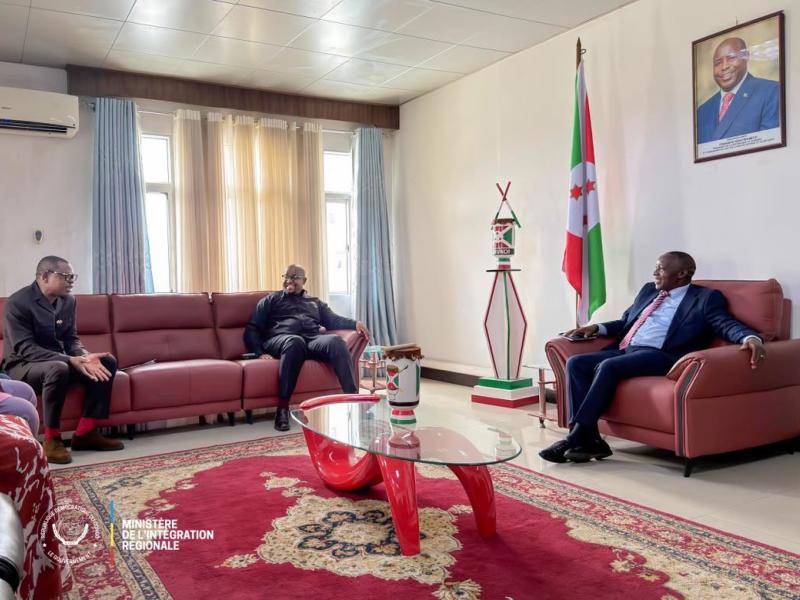
During high-level talks in Bujumbura on June 1, 2026, Édouard Bizimana, Burundi’s Minister of Foreign Affairs, Regional Integration and Development Cooperation, met with his Congolese counterpart Floribert Anzuluni. Their discussions centered on the alarming security vacuum in North Kivu and Ituri provinces, where Allied Democratic Forces (ADF) militants and other armed groups continue to exploit instability despite the presence of regional peacekeeping forces.
Minister Bizimana underscored that while some progress has been made in facilitating the return of displaced populations, large swathes of territory remain under the control of armed factions. He emphasized that the lack of compliance with the Washington Agreement—particularly regarding ceasefire violations and foreign support for rebel groups—has led to renewed displacement, with civilians fleeing toward neighboring countries including Burundi itself.
“The situation demands urgent, coordinated action from the international community to reinforce regional initiatives. Peace cannot be achieved when belligerents continue to act with impunity,” stated Bizimana during the press briefing following the meeting.
Strengthening bilateral ties amid shared security challenges
Beyond the security crisis, both ministers reviewed progress on key bilateral agreements, including:
- The allocation of land for Burundi’s future embassy in Kinshasa
- Management of the International Conference on the Great Lakes Region (ICGLR) Secretariat
- Preparations for the ICGLR Heads of State Summit, currently chaired by the DRC
Minister Anzuluni praised Burundi’s role in hosting thousands of Congolese refugees and facilitating humanitarian aid delivery. He also announced that a Troika meeting is being organized to assess the implementation of the Montreux Joint Communiqué—a follow-up accord signed in April 2026 aimed at consolidating the Washington Agreement’s terms.
Bizimana reaffirmed Burundi’s commitment to silencing the guns across Africa, aligning with President Évariste Ndayishimiye’s pledge during his AU inauguration. Since 2023, Bujumbura has deployed over 3,000 troops to support the DRC Armed Forces (FARDC) in securing the porous border and combating cross-border insurgencies.
Diplomatic deadlock fuels ongoing conflict
The Washington Agreement, despite multiple mediation sessions led by the U.S. and Qatar in Doha, has failed to curb hostilities. Both Kinshasa and Kigali accuse each other of violating ceasefire terms, while the AFC/M23 rebels—designated as a terrorist group by the DRC—continue to operate with alleged external backing. The Montreux talks produced temporary truces, but violations remain rampant, with civilian casualties reported weekly.
Analysts warn that the lack of a unified international response risks prolonging the crisis, particularly as regional blocs like the Southern African Development Community (SADC) and East African Community (EAC) struggle to align their positions. The African Union has called for an emergency summit, but delays in convening such a meeting have raised concerns over the bloc’s effectiveness in crisis resolution.
The DRC government has repeatedly accused Rwanda of orchestrating the M23 insurgency to destabilize eastern provinces and exploit mineral resources. Kigali denies these claims, instead accusing Kinshasa of failing to address the root causes of conflict, including ethnic tensions and state neglect.
As the humanitarian toll escalates—with over 5 million internally displaced persons in eastern DRC—the international community faces mounting pressure to move beyond rhetoric and enforce accountability mechanisms.
You may also like
-
Ousmane Sonko rallies Pastef militants in Bargny for membership card drive
-
Bargny rally: Ousmane Sonko rallies Pastef militants for membership drive
-
Ousmane Sonko rallies supporters in Senegal’s pastef membership drive
-
Ousmane Sonko rallies supporters in Bargny, Sébikotane, Khombole and Bambey for Pastef membership drive
-
Côte d’Ivoire electoral reform: 2PFJ pushes for inclusive political dialogue