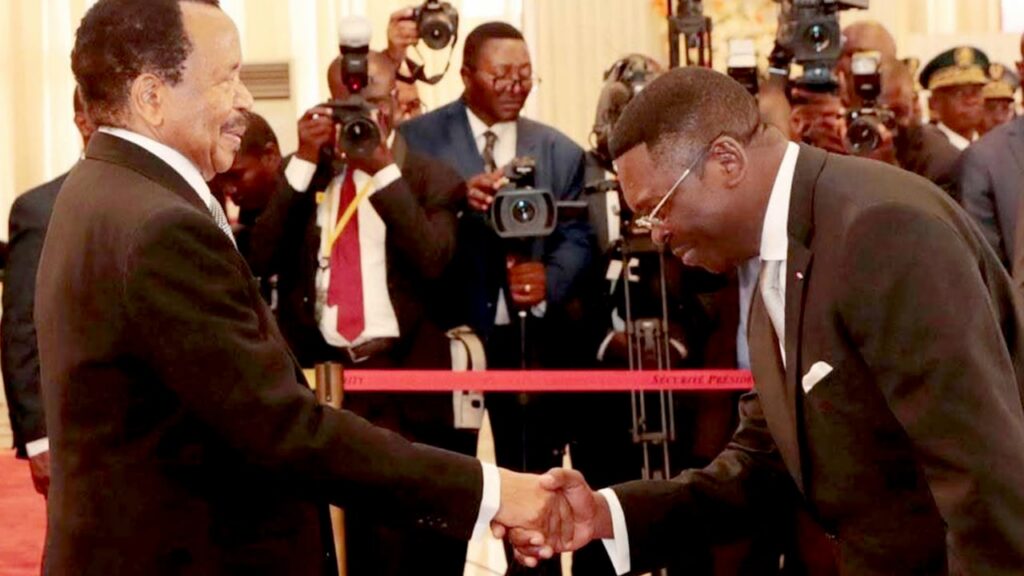

As Cameroon braces for a pivotal political transition, the capital city of Yaoundé has become a focal point of strategic maneuvering within the corridors of power. The shifting dynamics among key political figures are reshaping alliances and raising questions about the future leadership of Africa’s oldest republic.
Anticipating the post-Biya era
With President Paul Biya’s long-standing tenure showing signs of nearing its end, the political landscape in Yaoundé is evolving rapidly. The capital’s elite circles are already positioning themselves for what promises to be a defining moment in the nation’s history. Behind closed doors, factions are jockeying for influence, while public discourse increasingly centers on succession scenarios.
Observers note that the stakes are particularly high for the country’s political clans, whose internal rivalries could either stabilize or destabilize the transition. The stakes extend beyond mere power consolidation; they reflect deeper questions about national unity and governance in a post-Biya Cameroon.
Key players in the transition chessboard
Among the most prominent figures navigating this uncertain terrain is Ferdinand Ngoh Ngoh, Secretary-General of the Presidency. His role in shaping the narrative around the transition has drawn attention, as he balances institutional responsibilities with the need to maintain stability. Meanwhile, Samuel Mvondo Ayolo, another influential voice in political circles, is seen as a potential bridge between competing factions.
Their interactions, both formal and informal, are being closely monitored by diplomats and local analysts. The outcome of their negotiations could determine whether Cameroon enters a new chapter of continuity or faces potential turbulence in the coming months.
Public sentiment and institutional responses
The capital’s residents are acutely aware of the gravity of the moment. In markets, cafés, and government offices, conversations often return to the question of what lies ahead. While some express cautious optimism about the possibility of renewal, others voice concerns over the potential for infighting to disrupt the transition process.
Institutional responses to these uncertainties are taking shape through discreet but deliberate measures. Security protocols have been tightened in key areas of Yaoundé, while government agencies are reportedly reviewing contingency plans to manage any sudden shifts in power dynamics.
What to watch in Yaoundé’s political narrative
Several critical developments warrant close attention as the transition unfolds:
- Public statements from key figures: Any remarks from Paul Biya or his inner circle will be parsed for clues about the timing and nature of the transition.
- Shifts in cabinet appointments: Changes in ministerial roles could signal realignment within the ruling elite.
- Diplomatic engagements: How international partners react to the transition will influence domestic perceptions and stability.
- Civil society responses: Activist groups and opposition voices are preparing to shape the debate around governance reforms.
The coming weeks and months will be decisive in defining Cameroon’s path forward. As Yaoundé’s political actors navigate this uncharted territory, the nation’s future hangs in the balance.
You may also like
Will Senegal’s local elections break Bassirou Diomaye Faye’s presidency before it truly begins?
Senegal’s budget: can Ousmane Sonko afford to block Bassirou Diomaye Faye’s 2026 plan?
Senegal electoral reform: Khalidou dit Mbaye Sokoma’s full proportional representation push
Senegal’s local elections: Bassirou Diomaye Faye still won’t set a date
Alain-Georges Moukoko takes over Libreville prosecutor general’s office