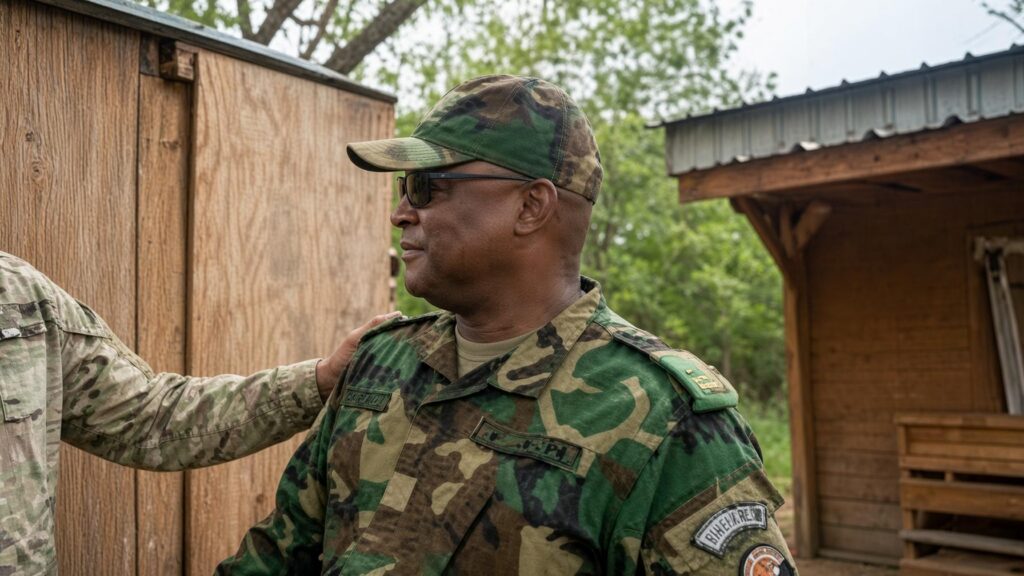
A decisive turn at the top of Niger’s military command
The detention of Major General Moussa Salaou Barmou marks a pivotal moment for Niger’s ruling junta. Once a central architect of the July 2023 coup that ousted President Mohamed Bazoum, Barmou now finds himself under house arrest — a stunning reversal that signals a new and more volatile phase in Niamey’s power struggles.
On 11 September 2026, a presidential decree stripped him of his role as chief of general staff of the Nigerian Armed Forces (FAN). The move came just two weeks after a failed mutiny at Air Base 101 on 28 and 29 August, an event that has reshaped the internal dynamics of the regime.
From coup linchpin to purge target
Barmou had long embodied the operational clout of Niger’s special forces and the continuity of military rule in Niamey. His influence made him a pillar of the post-coup order. But the tensions that erupted at Air Base 101 shattered the facade of unity within the junta.
Suspected by the highest echelons of power of links to the insubordination — though his direct involvement has not been officially confirmed — Barmou was removed by presidential decree. General Abdourahamane Tiani immediately handed command of the armed forces to Brigadier General Mamane Sani Kiaou, previously head of the army.
A climate of paranoia and deepening purges
For many observers, Barmou’s removal under close surveillance represents another step in the executive’s tightening grip on power. The resolution of the August crisis, supported on the ground by elements of the Russian Africa Corps formation, laid bare deep fractures within Niger’s security apparatus.
By neutralizing one of the country’s most influential officers, the junta is sending a deterrent message to the entire military hierarchy: no internal dissent will be tolerated, and the slightest suspicion of disloyalty carries a heavy price.
The snake that swallows its own tail
In the capital, reactions swing between false rumours of a denial and a bitter acknowledgement of a widespread crisis of confidence. For critics of the regime, this trajectory illustrates the inherent trap of exceptional governments: born from force, they often end up consumed by suspicion of their own architects.
By turning against its earliest companions, the Niamey leadership demonstrates the fragility of alliances built on constitutional rupture. Barmou’s case is yet another illustration that within the machinery of military regimes, yesterday’s loyalty rarely guarantees tomorrow’s security.