A breakthrough framework, not an immediate repatriation
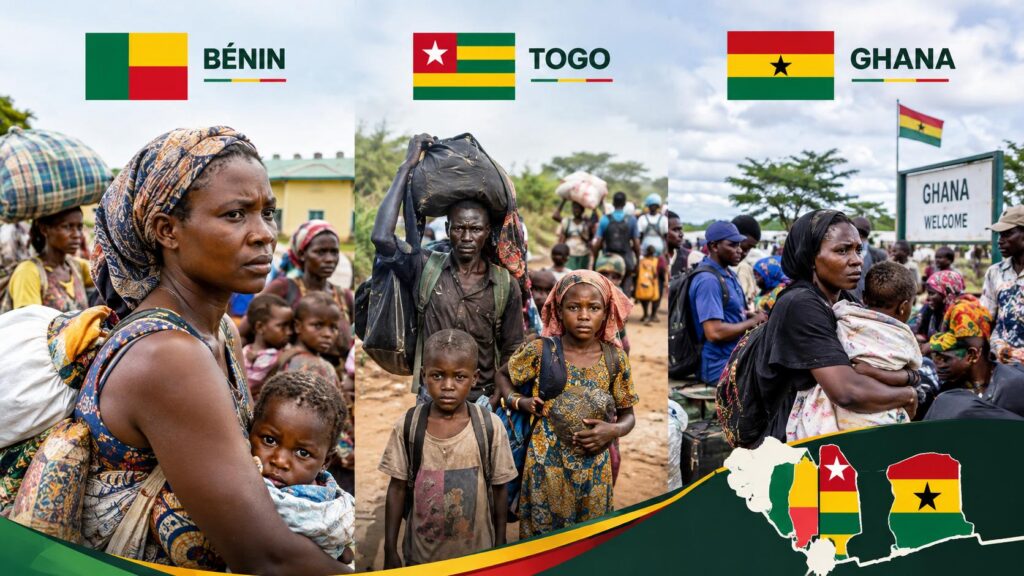
The signing of three tripartite agreements in Lomé on 11 September marks a decisive shift in how West Africa is approaching one of its most protracted displacement crises. Benin, Ghana, Togo, Burkina Faso and the UN refugee agency have laid the groundwork for the voluntary, safe and dignified return of Burkinabè refugees — but only once conditions on the ground allow it. This is not a call for mass repatriation. It is a commitment to prepare, coordinate and protect.
The nuance matters. In a region where forced displacement has become routine, the word “return” can be misread as a signal to pack up and go. The framework signed in Lomé explicitly rejects that logic. It establishes consultation mechanisms, monitoring systems and reintegration planning. Above all, it reaffirms a principle that refugee advocates have long defended: no one should be sent back to a situation they fled.
Host countries stretched to their limits
For years, insecurity in Burkina Faso has pushed thousands across borders into neighbouring states. Benin, Ghana and Togo now find themselves on the front line of a crisis they did not create.
The numbers tell the story. By 31 May 2026, Benin was hosting more than 11,000 refugees from Burkina Faso. In Ghana, June 2026 statistics recorded 13,368 Burkinabè refugees — nearly two-thirds of the country’s entire refugee population. Ghana had earlier set up reception centres in the border areas of Tarikom and Zini and, in February 2025, granted prima facie refugee status to Burkinabè seeking protection.
Togo has also absorbed a significant influx. According to UNHCR, by June 2026 the country hosted around 65,100 refugees and asylum seekers, 86 percent of them from Burkina Faso.
These figures give the Lomé accords a human face. Behind every potential return operation are families who left their villages, abandoned their belongings and, in some cases, lost loved ones.
The root causes cannot be swept aside
This is where the role of Burkinabè authorities becomes critical. Burkina Faso has been battling an insurgency led by Islamist armed groups, while also facing serious allegations regarding the conduct of government forces and allied militias.
Human Rights Watch reports that the human rights situation deteriorated further in 2025. The organisation has documented abuses attributed to both Islamist armed groups and government forces and pro-government militias, including killings of civilians, forced displacement and growing restrictions on media, opposition and civil society.
In an April 2026 report, Human Rights Watch documented 57 incidents and gathered testimony from hundreds of people to examine violence since 2023. It concluded that Burkinabè forces and their allied militias, as well as Islamist armed groups, are responsible for serious abuses that may amount to war crimes or crimes against humanity. The organisation has called for credible investigations to establish accountability.
These allegations directly shape the context in which refugees would be asked to return. A repatriation operation cannot be deemed a solution simply because a diplomatic agreement has been signed.
The junta and the question of security guarantees
Since the September 2022 coup, Burkina Faso has been led by military authorities under Captain Ibrahim Traoré. Human Rights Watch reports that the junta has extended the transition period and shrunk political and civic space, targeting journalists, opponents and civil society organisations.
The organisation has also documented disappearances, forced conscription and restrictions on critical voices. In May 2026, it again denounced tightening measures against independent media and information.
For refugees, these developments are not peripheral. The fundamental question remains protection: can they return to their villages without fear of renewed violence? Will their homes and land be accessible? Will they have civil documents, healthcare, schools and livelihoods? And crucially, will there be mechanisms to report violations?
UNHCR reminds us that durable return requires the root causes of displacement to be sufficiently addressed and peace to allow people to live without being forced to flee again.
Benin, Ghana and Togo: shared responsibility, shared stakes
In this context, the stance of Benin, Ghana and Togo is a vital part of the regional response. By hosting people forced to flee, these three countries have shouldered a heavy humanitarian burden despite their own security and economic challenges.
The Lomé agreement ensures that hosting and returning are not framed as opposing options. It provides a framework for preparing for the future while upholding the principle of voluntariness.
It is also a signal of regional cooperation. Gulf of Guinea countries are directly exposed to the fallout from the Sahel crisis. Population movements do not stop at borders, and they require coordination between states, international organisations and local communities.
Benin, Ghana and Togo can thus be seen not only as neighbours of Burkina Faso but as key actors in the regional response to the crisis.
A signature, not yet a return
The Lomé accords are therefore more of a roadmap than a repatriation timetable. Their effectiveness will depend on how they are implemented and, above all, on conditions inside Burkina Faso.
The message to refugees is clear: return must be voluntary and must happen when safety and dignity are assured. This caution is all the more important given that the Burkinabè context remains marked by armed violence and allegations of abuses involving multiple conflict actors.
For Benin, Ghana and Togo, the challenge is now twofold: continue protecting those who need asylum while preparing, with UNHCR and Burkinabè authorities, the conditions for a possible return.
Because a refugee only truly goes home when they can live there in safety. The real success of the Lomé accords will not be measured by how many people are moved back to Burkina Faso, but by how many can return freely, reunite with their communities and rebuild their lives without being forced to flee again.
You may also like
Niger’s turning point: Tiani’s four-minister purge after failed coup signals a regime betting everything on fear
Benin’s logistics leap: the €30m breakthrough that could redefine West African trade
Niger’s decisive turn: 500 worshippers abducted after prayer are a turning point for the Tiani regime
Nigeria’s anti-jihadist surge gains momentum: over 1,100 insurgents neutralized since April 2025
The turning point for Benin in Paris: how a bookstore residency is rewriting the cultural narrative