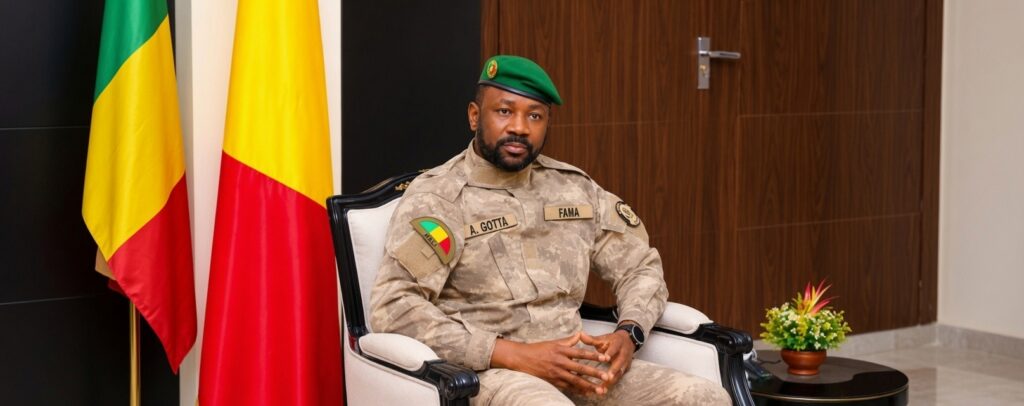
The Malian military’s communication tactics have evolved into a finely tuned strategy, particularly when announcing battlefield successes. On a recent mid-August day, the Directorate of Information and Public Relations of the Armed Forces (DIRPA) once again rolled out its signature accounting ritual. Colonel-major Bakary Bocar Maïga presented figures that defy easy explanation: 1,850 “neutralized” terrorists, 45 destroyed bases, and countless vehicles and motorcycles reduced to ashes—all within the span of just two months. Yet beneath these staggering numbers lies a troubling pattern of unverified assertions and questionable methodology.
Statistical grandstanding overshadows factual verification
The precision with which these figures are reported raises immediate concerns. How can an army claim to have eliminated nearly 2,000 enemy combatants in eight weeks without presenting independent corroboration? In West Africa’s conflict zones, military communications increasingly operate free from any obligation to substantiate claims. No neutral observers, civil society groups, or independent monitors have been granted access to verify these triumphant declarations.
The term “neutralized” itself remains frustratingly vague. Does it refer to armed fighters killed in combat, suspects detained during sweeps, or civilians caught in the crossfire within areas sealed off from outside scrutiny? Without named rosters or transparent identification protocols, the line between local populations and armed groups remains dangerously blurred.
Contradictions between claims and on-ground reality
Even more glaring is the disconnect between these sweeping claims and the persistent instability gripping the country. If 2,000 insurgents were truly eliminated and their supply networks dismantled, why do major roads continue to suffer frequent ambushes? Why must convoys transporting essential fuel supplies be escorted by overwhelming military force if vast forest sanctuaries and terrorist strongholds have been cleared?
The recent surge in attacks on strategic locations such as San and Konna, coupled with simultaneous offensives by the Group for the Support of Islam and Muslims (JNIM) in the North and East, paints a starkly different picture. The enemy’s ability to coordinate large-scale assaults on key garrisons suggests not weakness, but rather adaptation and resilience. Declaring adversaries “severely weakened” while they execute coordinated operations against critical military positions stretches credibility far beyond tactical reality.
The Africa Corps factor and the information blackout
This communication strategy also serves a broader political purpose: justifying the military transition’s strategic choices, including the Dougoukoloko Plan and the deepened partnership with Russia’s Africa Corps contingent. To legitimize the sidelining of traditional allies and the substantial military investments made by the state, the armed forces must demonstrate undeniable successes.
By restricting information flows and criminalizing dissenting analyses of the security situation, Bamako enforces a single narrative—one where victory is perpetually imminent, yet never substantiated. Until the DIRPA prioritizes transparency over numerical grandstanding, these unverified reports will continue to fuel skepticism among those enduring the relentless rise in insecurity.
You may also like
As donor fatigue spreads, can Benin’s €544,042 UNAIDS pledge keep the HIV response on track?
Who pays the price when Burkina Faso’s public payroll contracts? Households weigh the cost of 1,917 fewer agents
Libya pushes for direct Tripoli-Yaoundé flights as Cameroon sets up working groups
JNIM seizes three Burkinabè positions in a single day as Traoré’s security record faces hard questions
Chad condemns Ennedi-East airstrikes at un general assembly, warns of retaliation