In September 2026, as the 81st United Nations General Assembly filled the corridors of New York, an uncomfortable question travelled with it: who keeps the HIV response financed when traditional donors start pulling back? Benin offered its answer by signing a €544,042 contribution to UNAIDS for 2026-2027 — and in doing so raised a second, sharper question. Can a single national pledge, however symbolic, shield two decades of hard-won progress from a widening funding squeeze?
Who foots the bill when global health budgets contract?
The backdrop is not encouraging. International health and development financing is under mounting strain, with tensions running high over how — and whether — replenishment obligations will be met. Against that climate, Benin’s decision to write a fresh cheque rather than rest on past achievements carries weight far beyond its arithmetic.
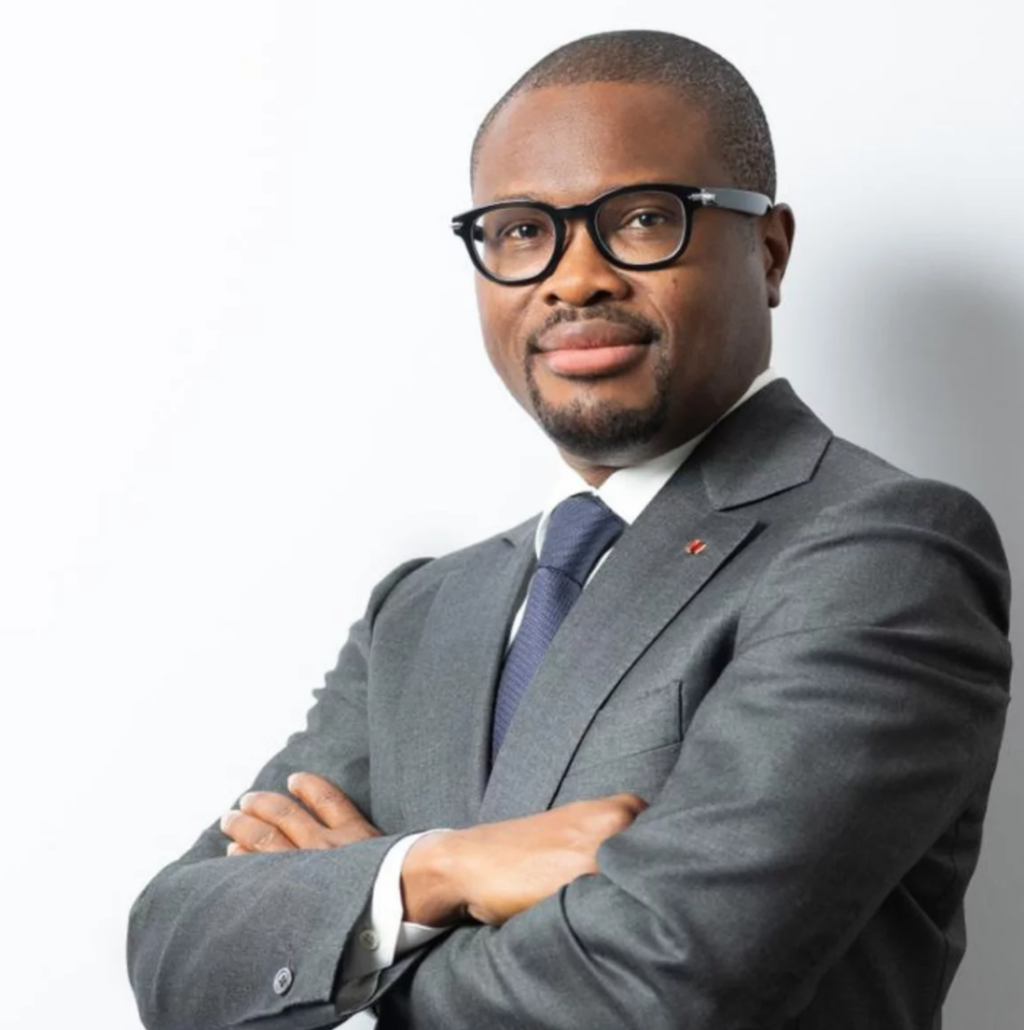
The gesture also carries a personal signature. President Romuald Wadagni has made health and human capital a central plank of his programme, and the contribution is presented in Cotonou as the logical extension of that doctrine: a country that invests in its own resilience instead of waiting for others to do it.
What the Beninese government actually committed to
The agreement, fixed at precisely €544,042, finances UNAIDS operations in Benin across 2026 and 2027. In practice, the money props up four pillars: reliable data and analysis, community engagement, multi-sectoral coordination and resource mobilisation.
For the people the programme serves, the effects are tangible. Young people, women and key populations would retain uninterrupted access to prevention, testing, treatment and support services. The funding also keeps the country on its stated course toward ending AIDS as a public health threat by 2030, a target Benin has embraced within the Sustainable Development Goals framework.
Hounkpatin: a signature that means fidelity, not paperwork
Health minister Benjamin Hounkpatin framed the moment in deliberately human terms. “The signature we are applying today is not a simple administrative act: it is the mark of fidelity,” he said, recalling a partnership that reaches back to 2001, when UNAIDS first began working alongside the country.
For him, the protocol transcends a funding arrangement. “It is proof that a faithful partnership, when it lasts, saves lives — 72% fewer infections and 51% fewer deaths since 2010,” he said. “These are lives saved, families preserved.”
A relationship measured in decades, not budget cycles
That longevity matters in a sector where programmes often collapse the moment a grant cycle ends. Twenty-five years of continuous collaboration, Hounkpatin argued, is precisely what allows results to compound rather than reset.
From a decade at finance to a 94% mandate: Wadagni’s calculus
The commitment bears the imprint of a president who spent ten years as minister of economy and finance and earned a reputation as the architect of reforms that reinforced Benin’s economic credibility. Health and human capital, his team has consistently argued, sit at the centre of that reform agenda rather than at its margins.
His accession to the presidency in May 2026, backed by more than 94% of the vote, extended a project he describes as durable transformation. Read through that lens, the UNAIDS pledge looks less like charity and more like an investment in national resilience — a sovereign, responsible and solidarity-minded Benin financing its own health security even when the global mood turns inward.
Byanyima: the fight against aids is not finished
Winnie Byanyima, UNAIDS executive director, greeted the announcement as proof of shared responsibility. “This contribution from the government of Benin is a strong demonstration of national leadership and of shared responsibility in the fight against HIV,” she said. “At a time when global health financing is being severely tested, Benin sends a clear message: the fight against AIDS is not finished.”
She added that the partnership would help preserve gains won through sustained struggle, accelerate progress toward ending AIDS and ensure that nobody is left behind.
Cotonou, Parakou, Natitingou: what the country office will do with the money
Christian Mouala, UNAIDS country director and representative for the multi-country office covering Côte d’Ivoire, Togo and Benin, sent a message from New York that mixed optimism with gratitude. He saluted “the visionary leadership of President Romuald Wadagni and the determination of the Beninese government to protect the gains of more than two decades of partnership.”
Mouala said the funds would consolidate coordination efforts, strengthen strategic data and amplify community engagement, so that every Beninese citizen can keep reaching quality services and the country remains firmly committed to ending AIDS by 2030.
A short list of countries that fund UNAIDS directly
Benin’s UNAIDS contribution now places it in a narrow and prestigious circle of nations that put their own resources into the organisation’s work — a group that includes Algeria, Brazil, China, Côte d’Ivoire and Thailand. The move signals a political maturity that remains uncommon: a country refusing to lean exclusively on external aid and accepting its share of responsibility for the health of its own citizens.
Legal reform and the broader bet on health sovereignty
The pledge lands amid a wider shift. Benin recently adopted pioneering legislation on HIV prevention, care and the elimination of stigma, aligned with international human rights standards. Those legal advances, combined with growing domestic financing, sketch out a model of health sovereignty that several countries across West and Central Africa are watching closely.
The stakes behind the number
Strip away the diplomatic phrasing and the €544,042 is not merely a line in a budget. It stands for fidelity, responsibility and hope — a reminder that behind every euro lie protected lives, intact families and a calmer future for the generations that follow.
In the halls of the General Assembly and in health centres from Cotonou to Parakou and Natitingou, the message is the same: Benin is determined, Benin is responsible, Benin is a leader. And under Romuald Wadagni’s presidency, his government insists, that determination will not waver.
You may also like
Who pays the price when Burkina Faso’s public payroll contracts? Households weigh the cost of 1,917 fewer agents
Libya pushes for direct Tripoli-Yaoundé flights as Cameroon sets up working groups
JNIM seizes three Burkinabè positions in a single day as Traoré’s security record faces hard questions
Chad condemns Ennedi-East airstrikes at un general assembly, warns of retaliation
OFAC delists General Olenga and Safari Club after nine years