The Sahel region is witnessing a dangerous escalation as militant groups broaden their operations beyond traditional strongholds, employing economic warfare as a key tactic to destabilize governments and disrupt regional stability. This shift marks a critical turning point in West Africa’s security landscape, with far-reaching consequences for coastal nations and inland territories alike.
By the numbers: escalating violence and economic disruption
From January to November 2025, the human toll of political violence in the Sahel has reached alarming levels:
- Over 10,000 fatalities recorded in Burkina Faso, Mali, and Niger due to political violence.
- 30 foreign nationals kidnapped in Mali (22) and Niger (8), highlighting the growing vulnerability of international workers.
- Nearly 70% surge in fatalities in Benin compared to the same period in 2024, signaling the rapid spread of conflict into new territories.
Jihadist groups consolidate power and expand operations
In 2025, militant factions such as Jama’at Nusrat al-Islam wal-Muslimin (JNIM) and the Islamic State Sahel Province (ISSP) have significantly expanded their influence across Mali, Burkina Faso, and Niger. Their strategies now extend into the borderlands of Benin, Niger, and Nigeria, where they are challenging both regional and national security frameworks.
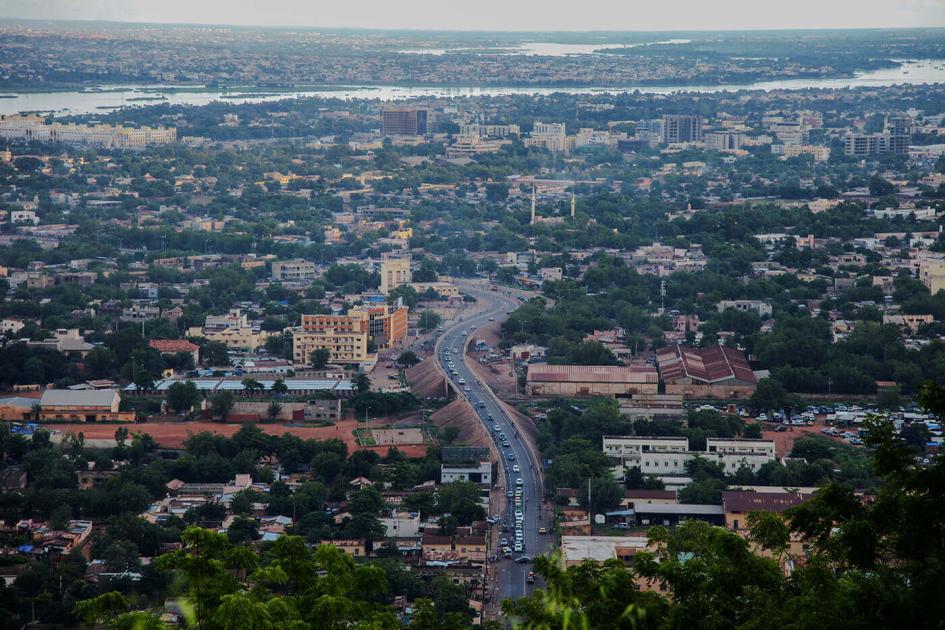
JNIM’s deliberate economic warfare tactics have severely disrupted trade and transportation networks. In Mali, the group imposed a fuel and transport embargo on cities like Kayes and Nioro du Sahel, paralyzing critical supply routes between Bamako and surrounding regions. This blockade triggered fuel shortages and price surges nationwide, directly undermining the government’s authority and destabilizing the military regime. The resulting surge in violence in Kayes, Sikasso, and Segou has reached historic highs since conflict tracking began in 1997.
Meanwhile, JNIM’s offensives in Burkina Faso have demonstrated alarming tactical advancements. In May, the group briefly seized control of Djibo and Diapaga, two provincial capitals, before launching a devastating ambush in September near Koubel-Alpha in Soum province. This attack, which resulted in approximately 90 military casualties, underscores JNIM’s growing military capabilities and its intent to weaken state control through sustained pressure.
Niger faces mounting threats as militancy spreads
While Niger has not experienced the same scale of violence as its neighbors, it is increasingly vulnerable to militant activities. Militant operations have expanded beyond traditional conflict zones into southern Dosso and northern Agadez, signaling a dangerous shift toward urban centers. ISSP, in particular, has intensified attacks on the Benin-Niger oil pipeline in the Dosso and Tahoua regions, further destabilizing the country’s economic infrastructure.
The kidnapping of a U.S. citizen in Niamey on October 21 highlights the growing reach of militants into areas once considered secure. This incident, along with other high-profile abductions, reflects the evolving nature of militant operations, which now target not only industrial sites and mining facilities but also foreign nationals in urban areas.
kidnapping campaigns target foreign workers as economic pressure mounts
Both JNIM and ISSP have launched coordinated kidnapping campaigns targeting foreigners, driving record-high abduction rates in Mali and Niger. JNIM’s strategy focuses on disrupting industrial and mining operations, while ISSP has adopted a broader approach, targeting Western nationals and foreign laborers, particularly in Niger. These operations often involve collaborations with criminal networks, further complicating efforts to combat militancy in the region.
a new frontline emerges in coastal West Africa
One of the most significant developments of 2025 is the consolidation of a new conflict frontline in the Benin, Niger, and Nigeria borderlands. This area has become a critical battleground for both Sahelian and Nigerian militant groups, reshaping the dynamics of regional security.
Throughout the year, JNIM and ISSP have entrenched their presence in this tri-border region, transforming it into a hotspot for violence with implications for both the Sahel and coastal West Africa. Northern Benin experienced its deadliest year on record as JNIM intensified cross-border operations from eastern Burkina Faso. By midyear, the group had advanced further south into the Borgou department, along the border with Nigeria, marking a significant southward expansion beyond its traditional northern strongholds.
ISSP has also reinforced its foothold in southwestern Niger, moving closer to the city of Gaya on the Benin border and continuing operations in Nigeria’s Sokoto and Kebbi states. The group’s activities in the Niger-Nigeria border areas include attacks on villages, security posts, and military patrols, as well as sabotage of critical infrastructure. Both Sahelian groups have now established a presence in northwestern and western Nigeria, signaling the merging of previously distinct conflict zones into a single, interconnected theater of violence.
regional cooperation at risk as militants exploit state weaknesses
The growing convergence of Sahelian and Nigerian militants represents a turning point in West Africa’s security landscape. Groups such as JNIM, ISSP, Ansaru, Mahmuda, and the Islamic State West Africa Province factions are increasingly overlapping in border areas, creating a complex and evolving conflict environment that stretches from Mali to western Nigeria.
Military regimes in the central Sahel face mounting internal and external pressures as JNIM’s sustained offensives, blockades, and sieges weaken state control. In Mali, the fuel and transport embargo continues to strain the economy, exacerbating civilian hardship and eroding the junta’s legitimacy. Prolonged disruptions risk deepening fractures within the armed forces and triggering unrest that the military government may struggle to contain.
Burkina Faso faces similar challenges, with years of attrition leaving its army and the Volunteers for the Defense of the Homeland (VDP) overstretched. JNIM’s ability to temporarily seize major towns highlights the group’s strategic evolution and its potential to target regional capitals like Fada N’Gourma. Continued heavy military casualties and territorial losses could generate internal dissent and coup pressures, mirroring the instability that has plagued previous governments.
state authority erodes as militants gain ground
Across the central Sahel, state authority is steadily eroding despite promises from military regimes to restore security. JNIM and ISSP now contest sovereignty over vast rural territories, where they enforce their own social and economic order, tax populations, and control access to livelihoods. Their influence is encroaching on major population centers once considered insulated from militant activity, with ISSP’s incursions into Ayorou, Tillaberi, and even Niamey demonstrating that no urban area is beyond their reach.
Local self-defense groups, which play a central role in state counter-insurgency efforts, are under unprecedented strain. In Mali, many Dozo militias have been disarmed or forced into agreements with JNIM, leaving communities dependent on militant-enforced arrangements for security and economic access. In Burkina Faso, the VDP has suffered heavy losses and remains largely defensive, limiting the state’s ability to reclaim territory. As these groups weaken, militants are likely to expand their authority further, deepening the cycle of instability.
Russia’s limited role in addressing the crisis
Russia’s military partnership with Sahelian countries has yielded limited results in curbing militant advances. The transition from the Wagner Group to the Africa Corps has left large areas vulnerable, as the Africa Corps operates with a more limited scope and has been unable to prevent military setbacks. However, toward the end of 2025, the Africa Corps shifted its focus to securing fuel convoys and key supply routes in southern Mali, where JNIM’s embargo was beginning to lose momentum. This military partnership is expected to remain crucial in 2026, providing essential logistical and aerial support to help juntas maintain control over major transit routes and urban centers amid ongoing security challenges.
a precarious future for the Sahel and West Africa
The combination of sustained militant pressure, weakened militias, and declining state capacity heightens the risk of political destabilization in the central Sahel. If either the Malian or Burkinabe military regimes succumb to internal divisions or popular unrest, a regional domino effect could occur, placing neighboring governments in increasingly precarious positions. If current trends persist, 2026 may bring deeper political instability and territorial fragmentation across the central Sahel and its southern borders.