how the AES unified force can achieve its security goals
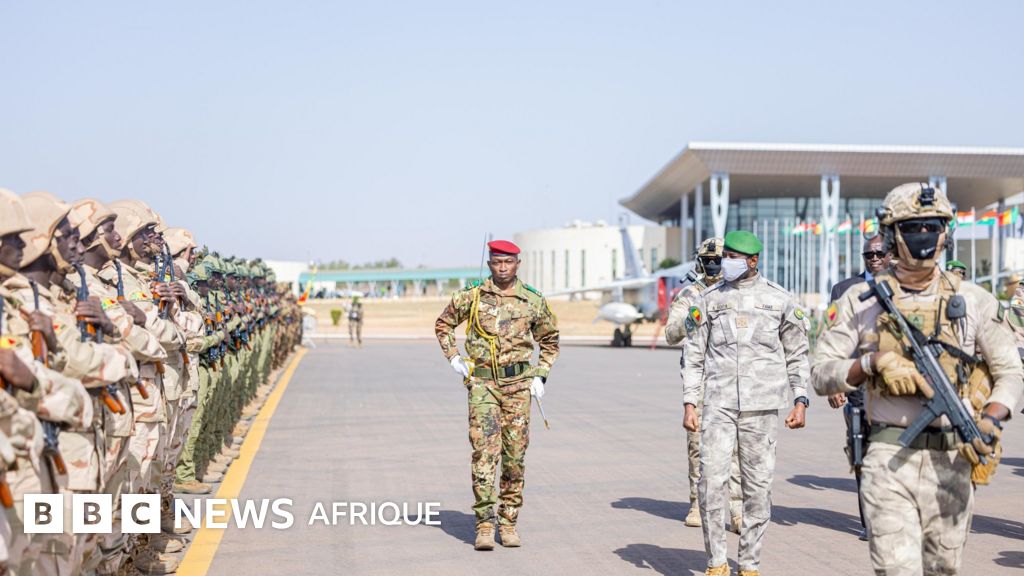
Photo credit, Presidency of the Republic of Mali
Leaders of the Mali, Burkina Faso and Niger are convening in Bamako for a two-day summit starting Monday. This marks the second session of the Confederation of Sahel States (AES) heads of state assembly. The meeting aims to assess progress since the Niamey founding summit on July 6, 2024, tackle security, diplomatic and development challenges, and appoint a new confederation president.
According to Malian government officials, the gathering will evaluate the implementation of the confederation’s roadmap during its first year and advance toward operationalizing its institutions. Regional and international stakes will also feature prominently in the December 22-23 discussions.
The AES’s first year has seen notable achievements, including the activation of confederate bodies and enhanced coordination among member states. With the AES now entering its second year, the summit seeks to solidify these gains and address ongoing challenges.
what is the AES unified force?
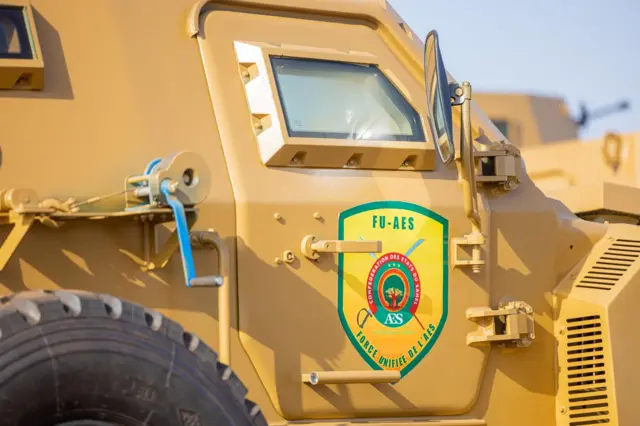
Photo credit, Presidency of the Republic of Mali
The AES member states have faced persistent security challenges, including armed attacks, border instability and the mobility of militant groups operating across national boundaries. To counter these threats, the three nations have prioritized military coordination, intensified exchanges between defense leaders, improved intelligence sharing and synchronized operations to reduce risks in vulnerable border zones.
The official activation of the AES Unified Force (FU-AES) in Bamako last Saturday represents a concrete step toward these goals. Comprising 5,000 troops from Mali, Burkina Faso and Niger, the force will be led by Burkina Faso’s General Daouda Traoré. Its mission is to combat insecurity and jihadist groups within the AES area.
“Peace, security and sovereignty cannot be delegated,” stated General Sadio Camara, Mali’s Defense Minister, presenting the unified force as the culmination of a strategic partnership rooted in Sahelian values of solidarity and dignity. He emphasized that the force’s establishment represents an irreversible commitment by the AES states.
how can the unified force achieve its objectives?
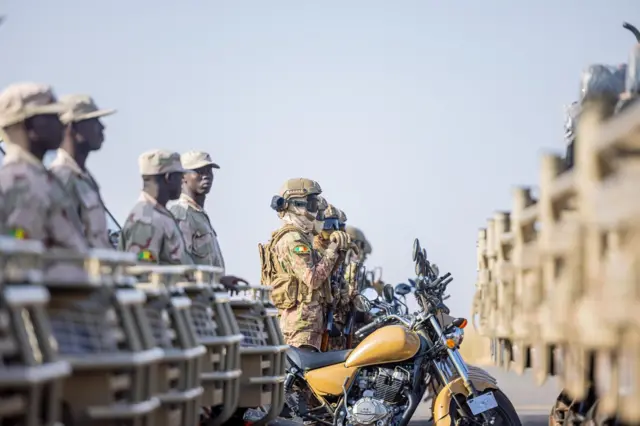
Photo credit, Presidency of the Republic of Mali
During the summit’s eve, Mali’s transitional President and AES Confederation President, General Assimi Goïta, presided over the official establishment of the FU-AES. He highlighted major joint operations conducted by the three nations’ armed forces over the past year, including Yéréko I and Yéréko II, which neutralized several jihadist leaders and dismantled criminal sanctuaries through shared intelligence and pooled resources.
However, militant groups remain active along the tri-border region, posing serious threats. Evidence includes the JNIM‘s blockade restricting fuel supplies to Mali.
Fiacre Vidjenagninou, Senior Researcher at the Behanzin Institute in Cotonou and Senior Associate Researcher at the Egmont Institute in Brussels, asserts that the FU-AES will only gain credibility if it moves beyond symbolic gestures to deliver tangible results on the ground, easing the burden on local populations.
He identifies critical operational levers for the force’s effectiveness: command structure, decision-making processes, intelligence sharing, logistics, casualty evacuation and post-operation territorial control. “A unified force must employ a straightforward method,” Vidjenagninou explains. First, concentrate efforts where the enemy is most organized. Then, establish an intelligence-action mechanism: gather information, merge it, strike quickly and maintain presence.”
He cautions that the strategy of striking and withdrawing is no longer viable, as militant groups often return to resume activities. “Territorial control is essential: securing roads, protecting markets, safeguarding villages and reassuring all populations.” Without this, defeating militant groups remains impossible when fear of reprisals, absent local justice, unresolved land disputes and communal violence persist.
“A force may win battles, but without basic governance, it cannot achieve stabilization,” Vidjenagninou emphasizes.
should the force expand to include more countries?
Photo credit, Getty Images
Vidjenagninou advises caution in expanding the force’s membership. He warns that including more countries could complicate coordination due to differing interests and doctrines, sometimes laced with mutual distrust. “The smartest approach is to proceed incrementally,” he suggests. First, prove the model works with the three current members. Then, collaborate with neighbors through highly operational, coordinated efforts on specific corridors. Strengthen cross-border pursuit agreements before considering formal integration once trust is established.”
The AES Unified Force represents a significant political milestone for the three nations, but its success hinges on their ability to command collectively, hold territory and produce lasting results for the people. The Bamako summit provides an opportunity for leaders to engage directly with the force’s command and chart the path forward for this ambitious initiative.