The recent public discourse surrounding fuel prices served as a crucial catalyst, drawing significant attention to Mauritania’s economic policy. This debate brought to the forefront critical decisions, circulating economic figures, and diverse viewpoints, prompting a deeper examination of the nation’s financial landscape.
My previous analysis touched upon these issues, and I return now not to rehash past arguments, but to explore the broader economic foundations, the promising outlook of natural gas, and the extensive reach of the social safety net, whose latest figures reveal a scope far wider than initially perceived.
My observations remain those of an engaged citizen, grounded solely in verified facts.
Policy consistency: a nuanced view on decision sequencing
My initial assessment acknowledged the validity of the chosen policy instruments—price adjustments complemented by targeted transfers—while also noting the Central Bank’s indication of excess banking liquidity contributing to inflation. This particular point warrants further discussion.
An insightful distinction, accurately articulated by prominent economist Sidi Mohamed Biya, highlights the appropriate response to an energy shock. A coherent strategy involves a clear division of roles: monetary policy addresses demand and inflation expectations, while targeted transfers safeguard real income without fueling aggregate demand. Crucially, providing support to vulnerable households does not generate inflationary pressure in the same way a general fiscal expansion would; this is precisely its intended purpose.
The often-overlooked sequencing of these measures further validates this approach. The government’s social initiatives were announced on March 31, 2026, preceding the Central Bank’s decision to raise the key interest rate on May 18, 2026. This demonstrates an inverse order to what some critics suggested—not a relaxation followed by tightening, but rather the Central Bank acting subsequent to governmental arbitration. Consequently, arguments regarding sequential incoherence lose some of their foundation.
However, a genuine blind spot persists. Mauritanian inflation is not solely imported through fuel prices. The Central Bank itself acknowledges that it is also fueled by an abundance of liquidity within the banking system. This domestic driver is distinct from the fuel price debate, and it is on banking liquidity and the composition of public expenditure that critiques of economic policy find their strongest footing.
Macroeconomic bedrock: figures defying the narrative of fragility
Before drawing any conclusions about the fragility of the Mauritanian economy, it is essential to consider several objective benchmarks.
Public debt stands at approximately 42% of GDP, considered sustainable by the IMF with a moderate risk of over-indebtedness. Public revenues hover around 22.5% of GDP, showing an upward trend thanks to new fiscal measures. Foreign exchange reserves comfortably cover about 6.4 months of imports. Economic growth reached 4.0% in 2025, with a projected rebound in 2026, primarily driven by the commencement of gas production. The IMF commends the nation’s prudent budgetary management, anchored by a rule that shields public spending from commodity price volatility.
This overview does not depict an economy in crisis. Instead, it illustrates an economy under pressure, with ongoing structural reforms.
Natural gas: a promise requiring deliberate action
By the close of 2024, the Greater Tortue Ahmeyim project successfully delivered its inaugural gas. The initial shipments of Liquefied Natural Gas (LNG) followed in 2025, with production steadily escalating towards its nominal capacity. Mauritania has officially become a gas producer, a significant achievement.
Yet, resource rent alone does not equate to economic transformation. It can, however, finance such a transformation, provided institutions are seriously committed to the task. Accessible roads, reliable energy, quality schools, an equitable justice system, and a productive private sector are the outcomes that well-directed resource revenue can secure. A recent development points in this direction: in March 2026, the Central Bank announced a partnership with the Islamic Corporation for the Development of the Private Sector (ICD), mobilizing approximately $900 million in Islamic financing for Mauritanian businesses. This marks a beneficial step. Nevertheless, local content cannot be simply mandated; it must be cultivated through training, structured subcontracting, and sustained effort over time.
Genuine sovereignty: stocks, regulations, and competition
Mauritania relies on imports for nearly all of its refined fuels, amounting to approximately 800,000 tons of diesel and 125,000 tons of gasoline annually. Its storage capacities remain limited, and distribution logistics are concentrated among a few operators. This dependency incurs significant foreign exchange costs and presents a tangible vulnerability to global market shocks.
The concept of sovereignty that merits discussion is not abstract; it is about concrete resilience: sufficient strategic reserves, transparent competition rules, the capacity to monitor profit margins, and the ability to arbitrate disputes among operators. Over time, natural gas will progressively reduce the energy bill for electricity generation, thereby easing pressure on foreign exchange reserves. However, its impact on transport fuels will be neither immediate nor direct.
Social initiatives: figures that reshape perceptions
It is here that the most recent information necessitates a revision of the initial framework of this debate.
During a meeting with representatives of the most influential trade unions on June 11, 2026, the President of the Republic publicly disclosed the ongoing social support efforts. For energy price support alone, the State had already allocated the equivalent of 4.06 billion MRU, a sum projected to reach 13 billion MRU by year-end. Concurrently, food aid is being distributed to an additional 155,000 families, and cash transfers are reaching 352,000 households nationwide—nearly triple the initially announced 124,000. Over 42,500 civilian and military personnel, along with 27,600 retirees, are receiving exceptional assistance. The total budget for social interventions is expected to exceed 14.8 billion MRU for the current year.
These figures illuminate three critical aspects of the discussion.
Firstly, the actual coverage of the system. The criticism regarding a low number of beneficiaries warrants reconsideration: 352,000 households represents a significant effort, comparable to the Tekavoul program operating at full capacity. The national social registry has undeniably proven its utility here.
Secondly, the question of cost. The energy price support (an anticipated 13 billion MRU in 2026) substantially surpasses the pure capping estimate presented in the initial contribution (approximately 5 billion MRU for diesel alone). However, these two figures are not directly comparable; “energy price support” encompasses a broader scope than just the petroleum tax on transport fuels, likely including electricity and other energy forms. A more precise breakdown of this allocation is necessary for a definitive assessment.
Finally, the nature of the adopted approach. The State has opted for a hybrid strategy: partial price adjustment, sectoral energy support, and multiple targeted transfers. This blended approach likely incurs a higher total cost than a rigorously applied pure option. This cost reflects a deliberate choice to provide protection, albeit imperfectly, without abruptly exposing households to the full impact of the shock.
Despite these efforts, the benefits distributed via Tekavoul and the national social registry remain modest relative to actual needs. The true challenge, made visible by these figures, is to transform these transfers from sporadic to regular and to progressively increase their amounts.
Economist and banker Yahya Ould Amar recently emphasized that the impoverished should never be the adjustment variable in economic decisions. This imperative does not contradict targeted transfers; rather, it dictates them. Universal subsidies, while seemingly social, disadvantage the poor twice: they first allocate resources to the more affluent (those who consume the most fuel), then create a deficit that these same vulnerable households will absorb during the next economic tightening.
The critical projects shaping the future
Mauritania’s macroeconomic foundation is robust. Gas revenues are beginning to flow. The social safety net is substantial and more extensive than previously understood. What remains to be achieved is genuine economic transformation: building an economy capable of generating value beyond resource rents and public expenditure.
This necessitates investment in human capital, as no natural wealth can replace a well-functioning educational system. It also requires correcting regional imbalances, ensuring that economic growth is felt across the entire nation, not just in Nouakchott. Furthermore, it demands institutions that operate consistently, transcending political and economic cycles.
Conclusion
The primary mission of any economy is to manage its financial balances. The second, more complex task, is to ensure prosperity is both sustainable and broadly shared. These two missions are not mutually exclusive, though they often progress at different paces.
The debate surrounding fuel prices has offered a valuable lesson. It underscored that protecting the most vulnerable segments of society and maintaining sound public finances are not contradictory objectives. Both demand the same fundamental instruments: rigorous targeting, consistent disbursement, and transparent expenditure. This is not merely a matter of generosity; it is a question of effective methodology.
An economy that understands its accounts must also know how to build for the future and precisely whom it aims to protect.
About Issa Cheiguer
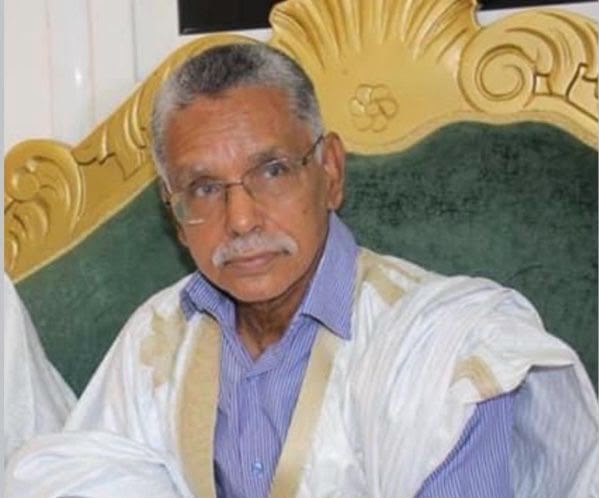
Issa Cheiguer is a Mauritanian expert in finance, investment, and strategic consulting. As Chairman and CEO of Finance Conseil Investissement (FCI), he assists businesses and investors in structuring their projects and mobilizing financing. He actively addresses issues related to private sector development and enhancing Mauritania’s economic attractiveness. His expertise spans financial advisory, investment, and supporting high-impact projects.
You may also like
Gabon’s poultry import ban: inside the 2027 sovereignty gamble
Mali’s 66th independence anniversary: a national celebration with implications for the AES
Mali: assimi goïta’s army confronts repeated battlefield losses
Niger : l’écart entre le discours sécuritaire du CNSP et la réalité des zones exposées
Niger: the double silence at the heart of power