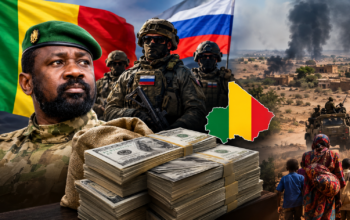
In 2021, Mali’s ruling junta turned to Russian mercenaries to bolster its fight against insurgencies, shifting focus away from counterterrorism efforts. Analysts warn this strategic pivot allowed Islamist factions like the Group for the Support of Islam and Muslims (GSIM) and the Islamic State in the Greater Sahara to expand their reach, tightening control over key trade routes and crippling the nation’s economy through sustained blockades.
From Counterterrorism to Ethnic Violence
The junta’s aggressive tactics, executed with the support of the Africa Corps (formerly Wagner Group), resulted in the deaths of thousands of civilians—mostly ethnic minorities—accused of sympathizing with rebels or terrorists. Many of these killings were extrajudicial, further radicalizing local populations and driving recruitment for extremist groups.
“While the junta concentrated forces on subduing rebel-held desert outposts, the GSIM grew bolder in the regions surrounding Bamako,” noted Wassim Nasr, a regional security analyst. “Their miscalculation backfired, fueling militant propaganda and expanding the insurgency’s footprint.”
Broken Promises and Escalating Conflicts
In January 2024, the junta abandoned the 2015 Algiers Accords—a peace agreement between Mali’s former democratic government and the Azawad Liberation Front (FLA)—renewing its crackdown on Tuareg communities. This followed a November 2023 offensive in Kidal, a Tuareg stronghold, where Mali’s forces, backed by Wagner mercenaries, reclaimed control.
Yet, as the junta prioritized crushing Tuareg resistance, the GSIM and Islamic State affiliates intensified attacks in central Mali, encircling the capital and severing critical supply lines from Senegal and Côte d’Ivoire. The junta’s shift in strategy coincided with the expulsion of the UN’s MINUSMA peacekeeping mission in late 2023, replacing it with Russian mercenaries to spearhead counterterrorism operations.
Among the most devastating operations was the three-day assault on the village of Moura, where mercenaries executed hundreds of Fulani civilians. Such brutality eroded public trust in the junta and Wagner, pushing more communities into the arms of militant groups. “They built no schools, no roads—only resentment,” Nasr observed. “Their only rallying cry became hatred for France and the West.”
Mercenary Withdrawal and the Rise of Africa Corps
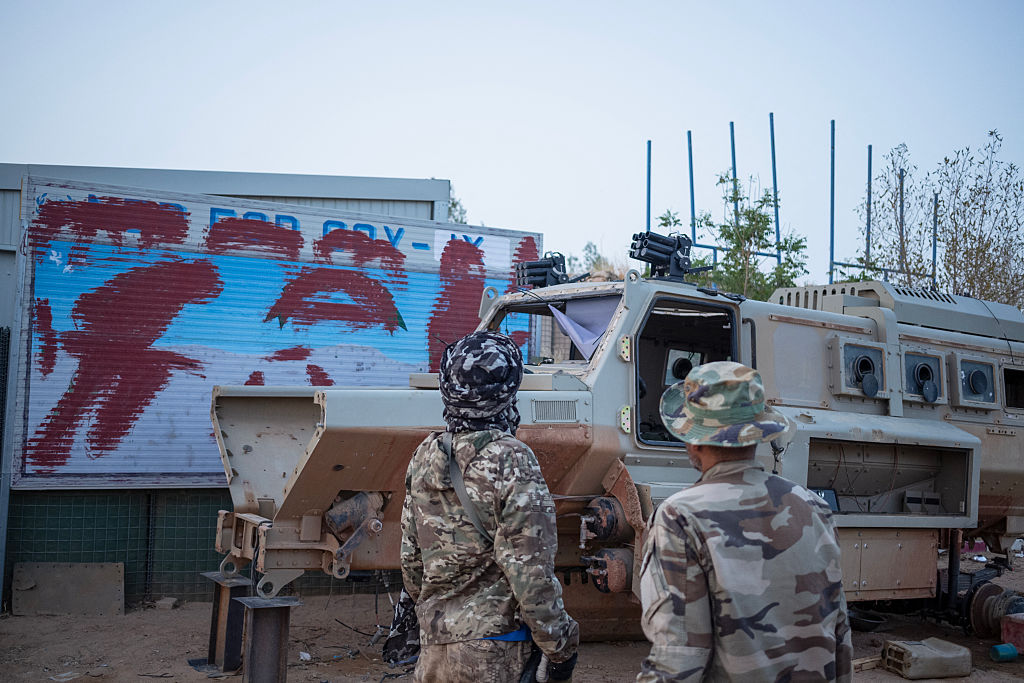
By July 2024, Wagner’s campaign in Mali collapsed after a decisive ambush in Tin Zaouatine, where Tuareg fighters decimated a joint Malian-Africa Corps convoy, killing nearly 50 soldiers and over 80 mercenaries. The defeat marked the end of Wagner’s operations in the country, with the Africa Corps—staffed by former Wagner veterans—taking over under a new banner.
Though Wagner’s departure signaled a tactical retreat, the Africa Corps remains financially tied to Bamako, receiving an estimated $10 million monthly retainer. However, the mercenary force now operates with heightened caution, relying heavily on drone surveillance and avoiding high-risk engagements.
“They venture out less confidently now,” Nasr remarked. “Their role has shifted from combat to protecting the junta’s survival.”
Collapse of Kidal and the Junta’s Desperation
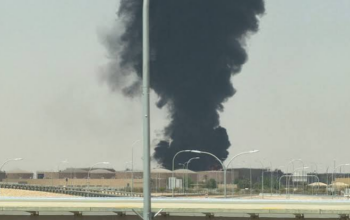
In late April, Africa Corps forces joined Malian troops in a failed attempt to repel a combined GSIM-FLA assault on Kidal. The mercenaries retreated, allowing the FLA to seize the city, while a separate attack claimed the life of Mali’s Defense Minister. With battlefield losses mounting, the Africa Corps’ objectives narrowed to safeguarding the junta’s grip on power—including defending Bamako’s international airport and ensuring fuel deliveries amid GSIM blockades.
Despite its reliance on mercenaries, Nasr noted, there are no signs of the junta pursuing negotiations with the GSIM or FLA. “They have no leverage left,” he said. “They pay for survival, not security. The Africa Corps is their last lifeline.”