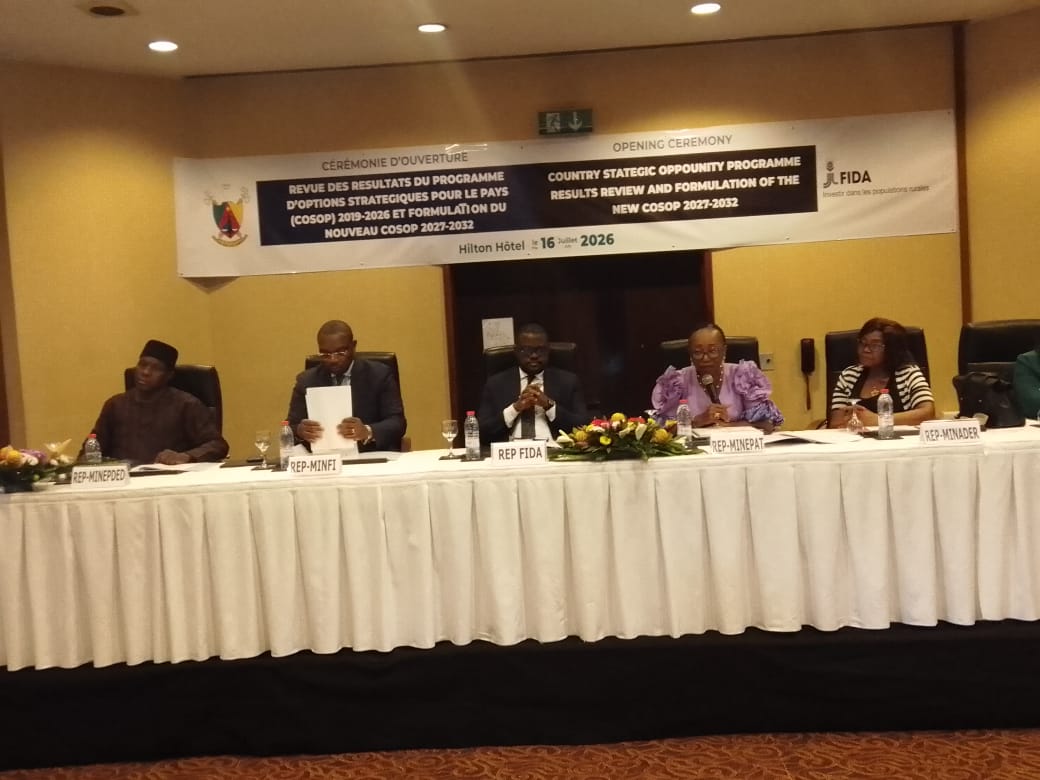
The strategic partnership between Cameroun and the International Fund for Agricultural Development (FIDA) has delivered measurable gains in agricultural productivity, as confirmed during a high-level review in Yaoundé on 16 July 2026.
The event focused on assessing the outcomes of the 2019–2026 Country Strategic Opportunities Programme (COSOP) and shaping the next phase for 2027–2032. Under COSOP, FIDA’s investments targeted rural poor households—prioritising women and youth—to lift incomes and strengthen food security.
Measurable progress in key agricultural programmes
The flagship PADFA II initiative recorded remarkable yield improvements: rice yields in lowland fields jumped from 3.7 to 5.4 tonnes per hectare (+74%), while upland rice rose from 2.5 to 4 tonnes per hectare (+63%). Onion production reached 18 tonnes per hectare, nearing the 21-tonne target. Paddy rice output totalled 52,996 tonnes against a 74,750-tonne goal, and onion bulb production hit 45,000 tonnes versus a 85,562-tonne forecast.
The PEA-Jeunes programme trained 99% of its youth beneficiaries in climate-smart agricultural techniques, far surpassing its 50% target. Meanwhile, 139 cooperatives in rice and onion value chains—comprising 10,505 producers (39% women, 49% youth)—are now fully operational. Only hydro-agricultural land development fell short, with just 649 of the planned 1,600 hectares completed.
National alignment and future roadmap
The 2019–2026 COSOP achieved 100% compliance in climate adaptation guidelines and supported 17 policy reforms, including a draft law to guide the agropastoral sector and three bamboo restoration strategies. These measures align with Cameroun’s 2020–2030 National Development Strategy (SND30) and the UN Sustainable Development Cooperation Framework.
The 2027–2032 COSOP will build on these results, further integrating climate resilience, gender equity, and youth inclusion to ensure sustainable agricultural growth across the country.