From stability to insecurity: a nation’s tragic shift
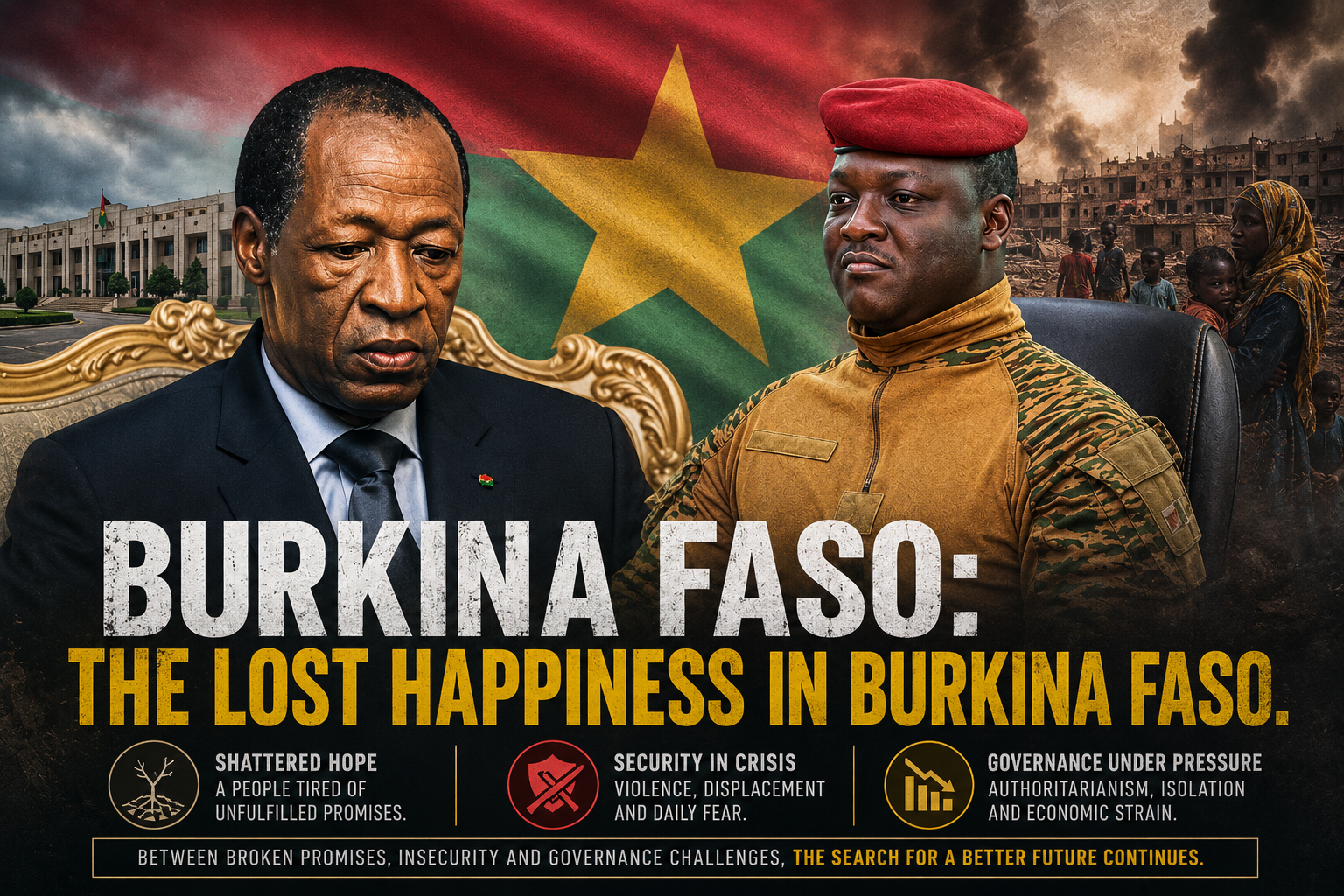
The Burkina Faso of yesterday was known for its stability, not its turmoil. While Blaise Compaoré’s 27-year rule faced criticism for political restrictions and democratic stagnation, his government succeeded in one critical area: ensuring relative security for its citizens.
The era prior to Compaoré’s ousting in 2014 was marked by freedom of movement. Farmers worked their lands without fear, traders transported goods across regions, and families traveled without dreading the journey. The specter of terrorism, which later engulfed the Sahel, had not yet shattered daily life in Burkina Faso.
This is not to romanticize Compaoré’s regime. His administration was widely accused of suppressing dissent, stifling opposition voices, and maintaining power through undemocratic means. Yet the harsh truth remains: a state’s legitimacy begins with its ability to protect its people. Without that foundation, governance, development, and political promises ring hollow.
Traoré’s promises meet harsh realities
When Captain Ibrahim Traoré assumed power in a military coup, expectations were high. His administration vowed a decisive counterterrorism campaign, territorial restoration, and a break from past dependencies. Nearly five years later, those ambitions collide with a stubborn reality: armed groups remain active, rural communities remain cut off, and roads continue to be perilous.
Official statements frequently herald military victories and territorial gains. Yet on the ground, the story is different. In many regions, schools remain closed, markets struggle to function, and families live in fear. The disconnect between military reports and civilian experience fuels frustration and disillusionment among the population.
The most damning indictment of Traoré’s leadership may not be the persistence of violence, but the mass exodus it has triggered. Thousands of Burkinabè have abandoned their villages, farms, and businesses—either relocating internally or fleeing across borders. No people flee their homeland by choice. When survival means leaving home, it signals a profound failure of governance.
Sovereignty without security: a hollow victory
Traoré’s rhetoric emphasizes national sovereignty, rejecting foreign partnerships and fostering patriotic sentiment. These themes resonate with a segment of the population weary of external influences. But sovereignty is not merely a slogan; it is measured by a government’s ability to exercise authority and protect its citizens across every inch of its territory.
An unsettling irony lingers: many of those who once fiercely criticized Compaoré’s authoritarianism now remain conspicuously silent about Traoré’s performance. This disparity fuels perceptions of uneven accountability, where some leaders face harsher scrutiny than others.
The comparison between Compaoré and Traoré is not an endorsement of the past. It is a call to prioritize what matters most: security. Before economic growth, national pride, or political reform, a functioning state must first guarantee the safety of its people. Without that, all other achievements lose their meaning.
The true measure of a nation’s well-being lies not in the grandeur of its slogans or the charisma of its leader, but in the quiet dignity of its villages, the safety of its roads, the vibrancy of its markets, and the hope of its families. Until Burkinabè no longer feel compelled to leave their homes in search of safety, the verdict on Traoré’s leadership remains incomplete. History will judge not by words spoken in Ouagadougou, but by the lives lived in peace across Burkina Faso.