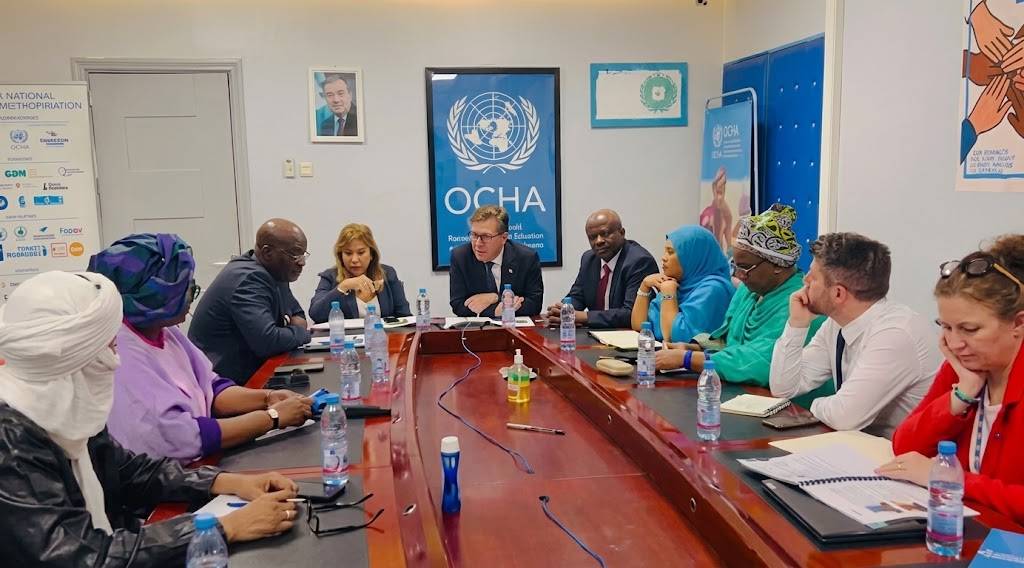
Behind Bamako’s diplomatic manoeuvring lies a stark humanitarian reality: nearly 5.1 million Malians will require emergency assistance by 2026, yet shifting international partnerships threaten to leave critical gaps in the aid response. The arrival of a high-level United Nations delegation led by Assistant Secretary-General Tom Fletcher this week spotlights the widening divide between Mali’s sovereignty-driven policies and the immediate needs of its most vulnerable citizens.
From exit of NGOs to escalation of needs
The Malian government’s recent decisions to restrict or end activities of multiple international humanitarian organisations have reshaped the operational landscape. While Bamako justified these moves as efforts to reinforce national sovereignty, the unintended consequence has been a sharp reduction in aid delivery channels just as humanitarian requirements surge. The UN’s 2026 Humanitarian Response Plan estimates that 5.1 million people—roughly a third of Mali’s population—will need urgent support next year.
The widening assistance gap
Within that staggering total, 3.8 million individuals are currently prioritised for direct intervention. However, the remaining 1.3 million represent a silent majority: vulnerable families, women-headed households, displaced persons, and communities cut off from basic services by conflict and climate shocks. Food insecurity, limited healthcare access, and disrupted water supplies are intensifying across central and northern regions, where insecurity already limits movement and delivery operations.
Key pressure points include:
- Restricted access to therapeutic nutrition for malnourished children under five
- Limited emergency obstetric care in areas with rising displacement
- Collapse of local water systems, forcing reliance on unsafe sources
- Breakdown of community protection mechanisms, exposing women and girls to increased risk
Why Bamako welcomed the UN—and what it means
The invitation extended to Tom Fletcher’s delegation comes after months of tense diplomacy between Malian authorities and Western donors. While the government has insisted on greater oversight of foreign aid operations, the visit signals a tacit recognition that no single actor can meet the scale of 2026’s humanitarian challenge alone. Still, experts caution that the UN’s presence does not automatically restore access to former operational zones or guarantee resumption of suspended programmes.
Sovereignty vs. survival: finding a sustainable balance
The fundamental tension in Mali today isn’t just political—it’s existential for millions. Government officials assert that tighter control over humanitarian operations is necessary to align aid with national development goals. Yet humanitarian agencies warn that bureaucratic delays and access restrictions could push entire communities beyond the point of recovery before assistance arrives.
With donor fatigue growing and geopolitical alignments shifting, the window to bridge this divide may be closing. The UN’s visit, while symbolically important, cannot by itself reverse the trajectory of a crisis that now threatens to outpace both diplomatic solutions and relief efforts.
The path forward: urgent priorities
To prevent further deterioration, three immediate actions stand out:
- Rapid administrative clearances for humanitarian access to newly restricted areas
- Flexible funding to support local NGOs that remain operational despite international exits
- Integrated risk communication to rebuild trust between communities and aid providers in a climate of mistrust
Time is the scarcest resource. By 2026, the question is no longer whether Mali will face a humanitarian storm—but whether enough shelter can be built before the first drops fall.