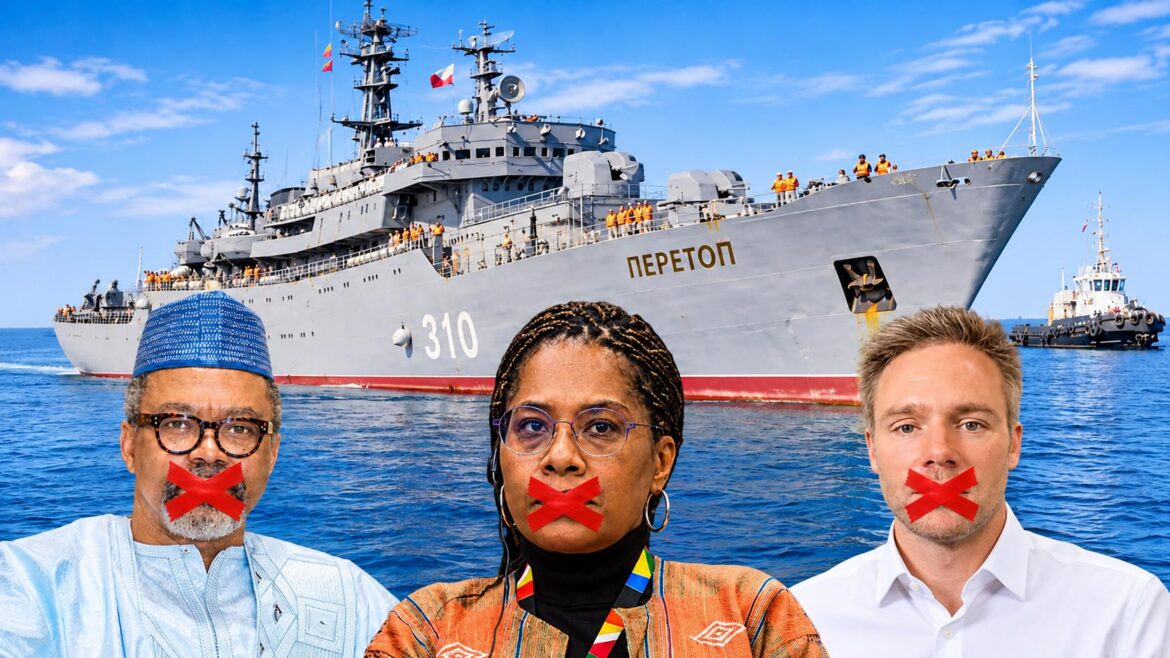
The arrival of a Russian naval vessel in Cotonou’s port has sparked little controversy compared to past international dockings, particularly those involving Western ships. This contrast invites a closer examination of the underlying dynamics shaping media narratives and public discourse in Benin’s maritime diplomacy.
The shifting tides of media reactions
Earlier this year, the docking of a French military ship in Benin’s waters triggered a wave of commentary, with certain regional media outlets framing the event as a potential threat to national sovereignty. Criticism centered on the perceived implications of foreign military presence, as well as concerns over transparency regarding the vessel’s mission and its intended duration.
The narrative that emerged was one of suspicion, with analysts and commentators questioning the legitimacy of the collaboration. While Benin had not formally protested or raised objections, media representations often leaned toward skepticism, amplifying narratives that framed the event as a challenge to the country’s autonomy.
In stark contrast, the recent arrival of a Russian warship has unfolded with markedly less scrutiny. Observers who had previously emphasized sovereignty concerns now remain notably silent, raising questions about the consistency of these positions. The absence of the same level of interrogation or critical coverage suggests a disparity in how different international partners are perceived and reported on.
Decoding the silence: is there a hidden bias?
The differing responses reveal deeper currents at play within regional media dynamics. While some voices had framed the French vessel’s presence as a breach of sovereignty, the same criteria do not appear to apply to the Russian ship. This inconsistency points to potential influences shaping editorial priorities notably, the influence of geopolitical alliances, personal or institutional alignments, and broader regional sensitivities.
Notable opinion leaders, including figures who had vocally critiqued the French vessel’s arrival, have remained conspicuously quiet regarding the Russian ship. This reticence suggests that their assessments may not be grounded purely in Beninese national interests but could instead reflect broader ideological or political considerations.
Sovereignty on shifting sands: where do Benin’s interests lie?
The silence surrounding the Russian vessel raises broader questions about the expectations placed on Benin’s maritime policy. Can sovereignty be selectively invoked depending on the partner nation? Should transparency and accountability apply only to certain foreign vessels and not others? The inconsistent application of these principles risks undermining the credibility of national sovereignty as a guiding principle in diplomatic engagement.
Benin’s position as a sovereign state grants it the right to engage in bilateral or multilateral cooperation without external interference or preconceived judgments. The country’s leadership holds the prerogative to evaluate partnerships based on their alignment with national priorities, ensuring that decisions serve the best interests of its citizens.
Yet, the disparity in media reactions also highlights a challenge for Beninese institutions: maintaining a balanced discourse that upholds the nation’s autonomy without being swayed by external narratives or partisan perspectives.
The role of media in shaping national narratives
As a cornerstone of public perception, the media plays a pivotal role in either reinforcing balanced narratives or propagating selective interpretations. When media outlets prioritize certain geopolitical narratives over factual reporting, they risk compromising their credibility and contributing to a fragmented understanding of Benin’s diplomatic engagements.
For the Béninois public, clarity and consistency in news coverage are essential to fostering informed discussions about the country’s international partnerships. The contrast in reactions to the Russian and French vessels underscores the importance of journalistic integrity and the need for narratives that reflect the country’s true diplomatic stance.
Benin’s sovereignty should not be subject to the whims of external commentary or ideological biases. Instead, it must remain guided by transparent policies and a commitment to national interests, ensuring that every international engagement is evaluated without double standards.
The question now is: will the media adjust its lens to uphold the same standards for all partnerships, or will external influences continue to shape the narratives that define Benin’s maritime diplomacy?
By Pierre Tchuente — Journalist