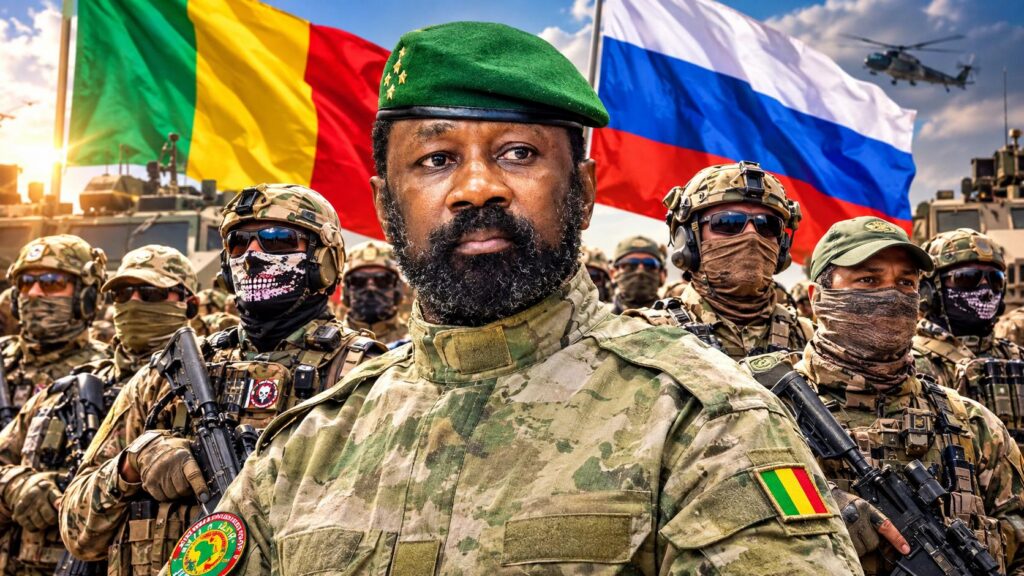
A symbolic threshold crossed
The Russian paramilitary contingent deployed in Mali — once known as Wagner, now operating under the Africa Corps banner — has reportedly lost at least 358 fighters since its arrival in late 2021. This figure, compiled from independent observer data, conflict monitoring groups, and corroborated security leaks, marks a highly symbolic milestone that challenges the official narrative of a “security reconquest” in the Sahel.
More than double France’s losses in a fraction of the time
The scale of these losses becomes even more striking when placed against the region’s recent military history. In just three years, the Russian partner has suffered more than double the human toll of the French army — 59 soldiers killed over nearly a decade of operations (Serval and Barkhane) across the entire Sahel.
A stark comparison of attrition rates
- French operations (Serval / Barkhane, 2013–2022): approximately 59 soldiers killed over nearly nine and a half years of regional engagement.
- Africa Corps / Wagner (2021–2026): roughly 358 fighters killed in only three years of intervention in Mali.
Sevaré and Dioura attacks fuel the escalation
The bloody ambush at Tinzawatène in July 2024 — where more than 80 Russian fighters died alongside Malian armed forces — was the first major shock. But recent large-scale coordinated attacks on garrisons in the center and north have pushed the toll even higher.
Repeated assaults on strategic installations at Sevaré and forward positions at Dioura have dealt painful setbacks to the joint FAMA / Africa Corps operation. Facing armed groups that exploit deep knowledge of the terrain and possess modern tactical equipment — including reconnaissance and strike drones — Russian troops are paying an extremely high price in this war of attrition.
Why the attrition rate is so high
The difference stems mainly from diametrically opposed operational doctrines. Western forces prioritized air support, technological intelligence, and the systematic avoidance of close contact. Russian mercenaries, by contrast, are deployed directly on the ground in frontline operations — high-risk sweeps through heavily mined areas riddled with IED ambushes.
Consequences for the junta and Moscow
This exorbitant human cost, combined with a financial bill estimated at several hundred billion CFA francs, calls into question the effectiveness of the security model imported from Moscow.
Within military barracks and among the population, questions are emerging about the sustainability of such a strategy. While the initial promise of the military transition rested on rapid pacification of the territory, the exponential rise in losses among the key partner illustrates the quagmire of a complex war of attrition whose human cost continues to mount.
You may also like
Togo’s rulers turn to Chadian rebels for domestic repression
Niger journalist Moussa Kaka missing in Niamey as RSF demands official answers
Olympe Bhêly-Quenum reaches 100: a life carved into African literature
Niger: General Tiani’s fear at the palace after the August mutiny
Maliweb.net aligns with official military propaganda in Mali