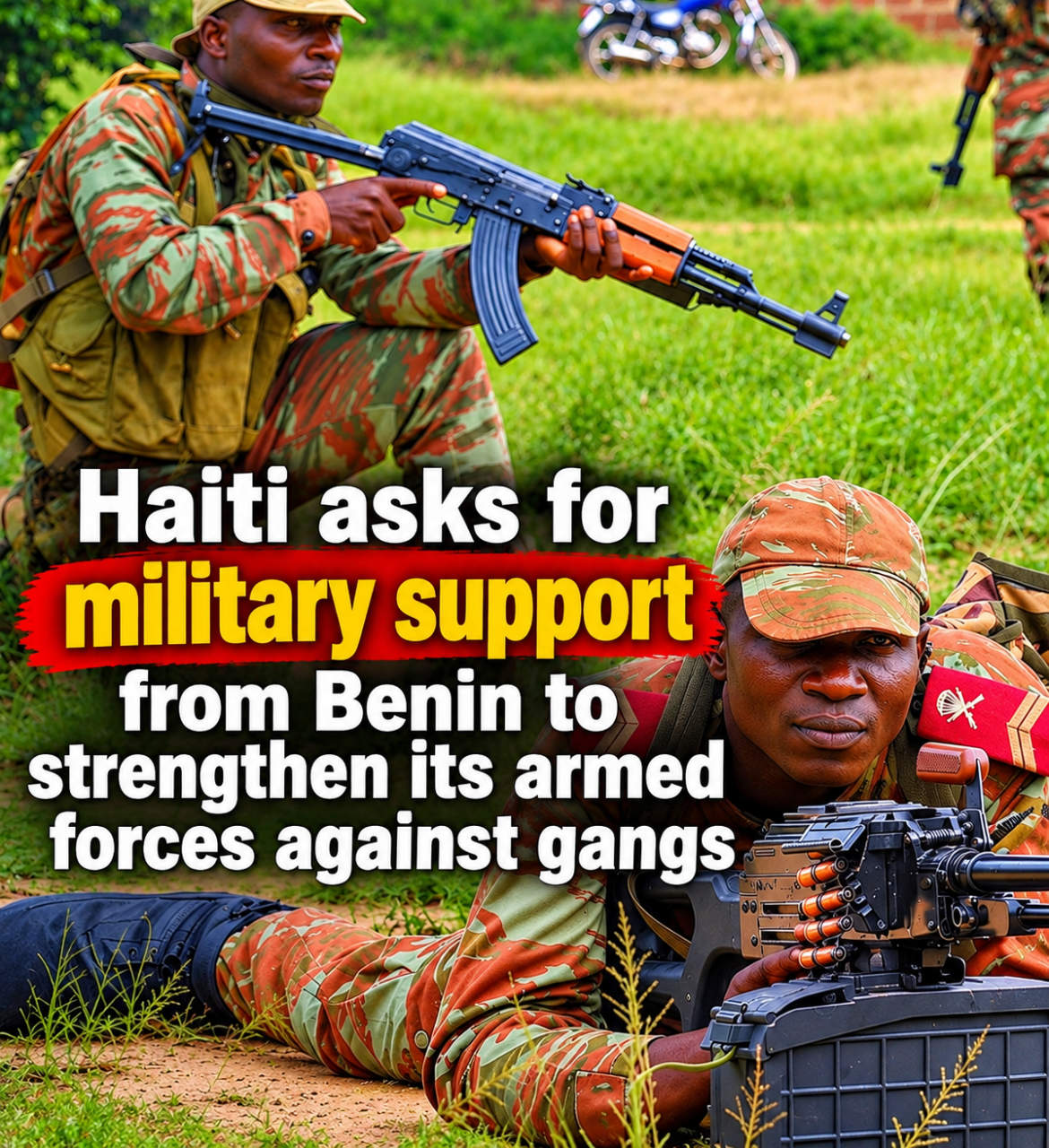
As gang violence tightens its grip on Haiti and erodes state authority across vast territories, Port-au-Prince is rethinking its approach to security by turning to an unlikely but increasingly influential partner: Benin. Behind this strategic pivot lies a critical examination of operational shortfalls, the hidden dynamics of urban gang warfare, and the untapped potential of South-South military cooperation.
The hidden forces behind Haiti’s security crisis
The escalating threat posed by armed gangs in Haiti is not merely a law enforcement issue it is a systemic crisis that has eroded public trust in state institutions, disrupted economic life, and transformed neighborhoods into contested zones of control. What began as localized criminal networks has evolved into a parallel power structure, challenging the monopoly on violence that the Haitian state once held.
This shift has exposed critical gaps in Haiti’s security architecture. Limited operational coordination, inconsistent training standards, and challenges in rapid deployment have weakened the capacity of national forces to respond effectively. Against this backdrop, Port-au-Prince has begun assessing alternative models ones that prioritize adaptability, local context, and institutional resilience.
Why Benin? The African model behind the partnership
The decision to engage Benin is rooted not in geopolitical convenience, but in a shared understanding of asymmetric threats. Like Haiti, Benin has confronted its own insurgency in the north, a conflict that required a reconfiguration of military doctrine, localized training, and a focus on community-based security approaches.
This experience has yielded valuable lessons lessons that resonate in Haiti’s urban battlegrounds. Benin’s forces have had to operate in remote and unstable regions, balance humanitarian concerns with military objectives, and develop strategies for rebuilding trust in communities scarred by violence. It is precisely these competencies often overlooked in traditional Western training models that Haiti now seeks to integrate.
The role of military training in reshaping operational readiness
The emerging partnership emphasizes training as a cornerstone, not just as a means to upgrade skills, but as a catalyst for organizational transformation. Haitian commanders are expected to focus on:
Combat discipline and unit cohesion: Mitigating fragmentation within forces and reinforcing command structures.
Operational flexibility: Adapting tactics to dense urban environments where mobility and rapid response are crucial.
Civil-military coordination: Ensuring that security operations protect civilians and avoid civilian casualties a key grievance in Haiti’s recent history.
Logistical self-sufficiency: Enhancing supply chains and maintenance in austere conditions.
Yet training alone cannot resolve a crisis rooted in political instability and socioeconomic despair. The real test will be whether these skills translate into a coherent security strategy that restores public confidence and protects strategic infrastructure.
The unspoken challenges of South-South security cooperation
While the Benin-Haiti partnership signals a shift toward regional solutions, it also reveals inherent contradictions. Each nation’s conflict landscape differs fundamentally: Haiti’s gangs operate as quasi-political entities in a fractured state, while Benin’s insurgents are rooted in transnational criminal networks. The transfer of knowledge, therefore, is not about replication, but about adaptation.
Moreover, the effectiveness of this cooperation hinges on more than technical training. It requires mutual trust, transparency in intelligence sharing, and a shared vision of what security should look like in both societies. Delays in implementation, mismatches in expectations, or lack of follow-through could undermine the initiative before it gains traction.
From dialogue to action: measuring the path forward
The joint military talks held in Cotonou on November 3, 2026, marked a symbolic step, but symbols alone will not restore order. The success of this initiative will depend on three key deliverables:
Rapid training deployment: Deploying Beninese instructors to Haiti within months, with a focus on urban counter-gang tactics.
Sustainable institutional strengthening: Embedding long-term mentorship programs within Haiti’s defense institutions.
Visible impact on security: Demonstrating improved response times, reduced civilian casualties, and regained control over key areas.
As Haiti charts a course through one of its darkest chapters, the collaboration with Benin represents more than a tactical adjustment it is a statement: that solutions to complex security crises can emerge from unexpected places. But the true measure of this partnership will not be in the agreements signed, but in the streets of Port-au-Prince, where the fight for sovereignty continues one operation at a time.
Only time will reveal whether this African military know-how can break the deadlock that has long paralyzed Haiti’s security sector—and whether that lesson can inspire a new era of regional resilience.
By Pierre Tchuente — Journalist