Gabon’s economic diplomacy: what concrete outcomes can Gabon expect from Paris talks?
Libreville, Tuesday 04 August 2026 – While Brice Clotaire Oligui Nguema’s state visit to Paris from 19 to 22 July showcased ceremonial honors and diplomatic exchanges, the real focus lay elsewhere: securing tangible economic commitments for Gabon. Beyond the pomp, Libreville pursued tangible agreements capable of driving measurable progress for its people. The question now is clear: following high-level meetings with French corporate leaders, what real benefits can Gabon expect?
The delegation dispatched to Paris numbered more than 80, including prominent Gabonese private sector representatives. While the identities of key French executives engaged by the President were initially undisclosed, official disclosures now reveal the scale of discussions and the sectors prioritized.
Air connectivity, manganese processing and energy: key economic files
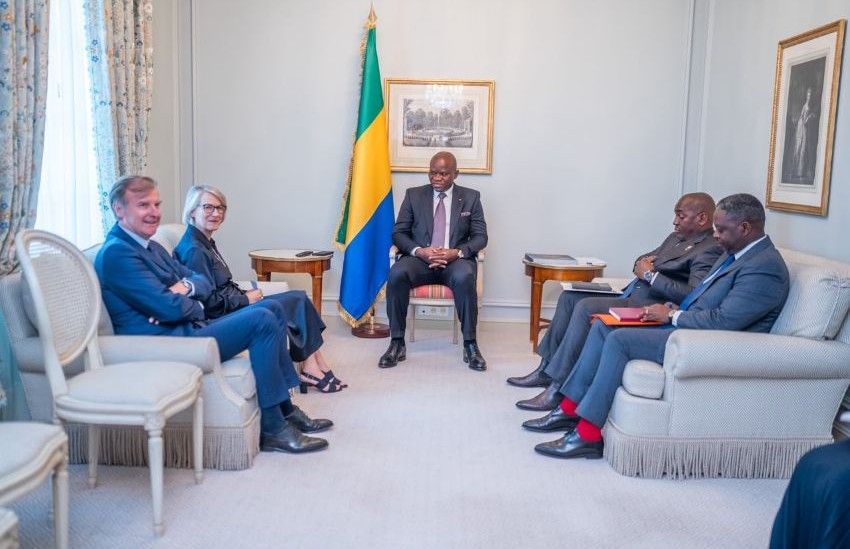
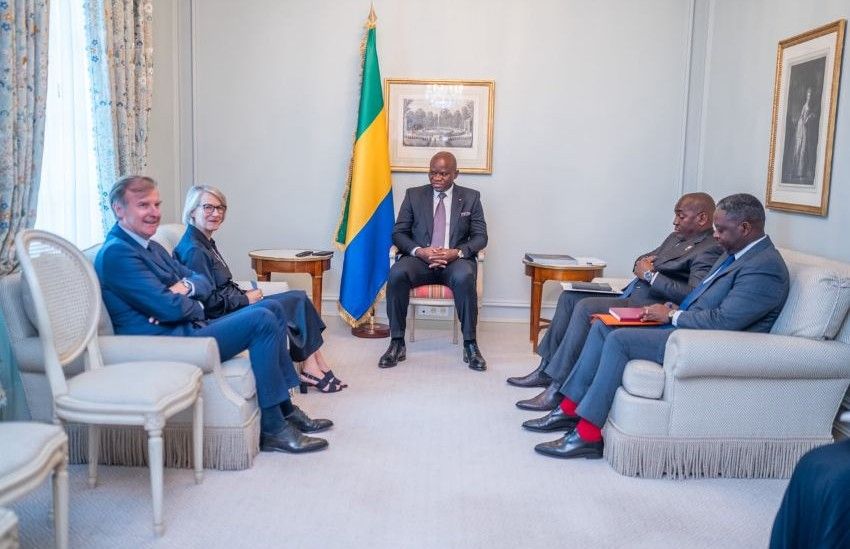
Upon landing in Paris on 19 July, Brice Clotaire Oligui Nguema engaged Anne Rigail, CEO of Air France. The aviation dossier carries strategic weight, as Air France and Fly Gabon already collaborate commercially. The objective: finalizing a codeshare agreement by year-end, enabling Fly Gabon to sell tickets to Paris under its own code. While no definitive contract was signed, the timeline demands careful scrutiny. For Gabon, the stakes extend beyond airline cooperation; enhanced air connectivity facilitates business travel, tourism, investment flows and talent mobility.
Manganese transformation: ambitious targets, pending details
The mining sector took center stage the following day at the Élysée Palace. Eramet and its subsidiary Comilog presented a local manganese processing roadmap co-developed with Gabonese authorities. Under the leadership of CEO Christel Bories, the group outlined plans to process up to 700,000 tons of manganese locally by 2031. The proposal also includes a “Made in Gabon” fund and a biocharcoal value chain. Crucially, these remain framework agreements; tangible investments, financing and infrastructure must materialize for Gabonese citizens to benefit.
Booué hydroelectric project: energy security on the agenda
Energy emerged as another critical dossier. Gabonese authorities, EDF Power Solutions and Gabon Power Company formalized an agreement for the Booué hydroelectric project on the Ogooué River, targeting 400 megawatts of capacity. Gabon possesses vast hydropower potential yet taps only a fraction of its capacity, with current output of around 700 megawatts failing to meet demand exceeding 1,000 megawatts. The Paris agreement marks an early milestone; partners have until 31 October to finalize development terms, with monthly reviews to maintain momentum.
The Consortium Omega, specializing in water and electricity infrastructure, also engaged with the President to discuss expanding access to essential networks. While presidential communications cited progress across mining, water, energy and security sectors, specific figures and detailed commitments remain undisclosed, leaving citizens eager for clarity.
From promises to results: the true test of economic diplomacy
The Paris visit identified partners, set deadlines and launched multiple initiatives. Yet the decisive phase begins now. Gabonese citizens anticipate jobs, reliable energy, improved water networks, enhanced mobility and greater domestic value addition. The Booué milestone on 31 October, the prospective aviation agreement by year-end and the evolution of the manganese roadmap will be closely monitored. Economic diplomacy cannot be measured solely by meeting counts or signed memoranda; its success hinges on transformative impact on daily life.
You may also like
Senegal’s December 2, 2026: will Diomaye Faye dissolve parliament or play the long game?
Senegal’s 2026 budget revision: can Dakar still rescue its growth and investment agenda?
Senegal’s 2026 revised budget: a trap vote for Pastef or a necessary evil?
Burkina Faso’s armored vehicles: can Faso Armored’s 300-unit claim survive the scrutiny?
Can Senegal and Azerbaijan turn a New York memorandum into a lasting political partnership?