Military juntas under growing strain in Niger and Burkina Faso
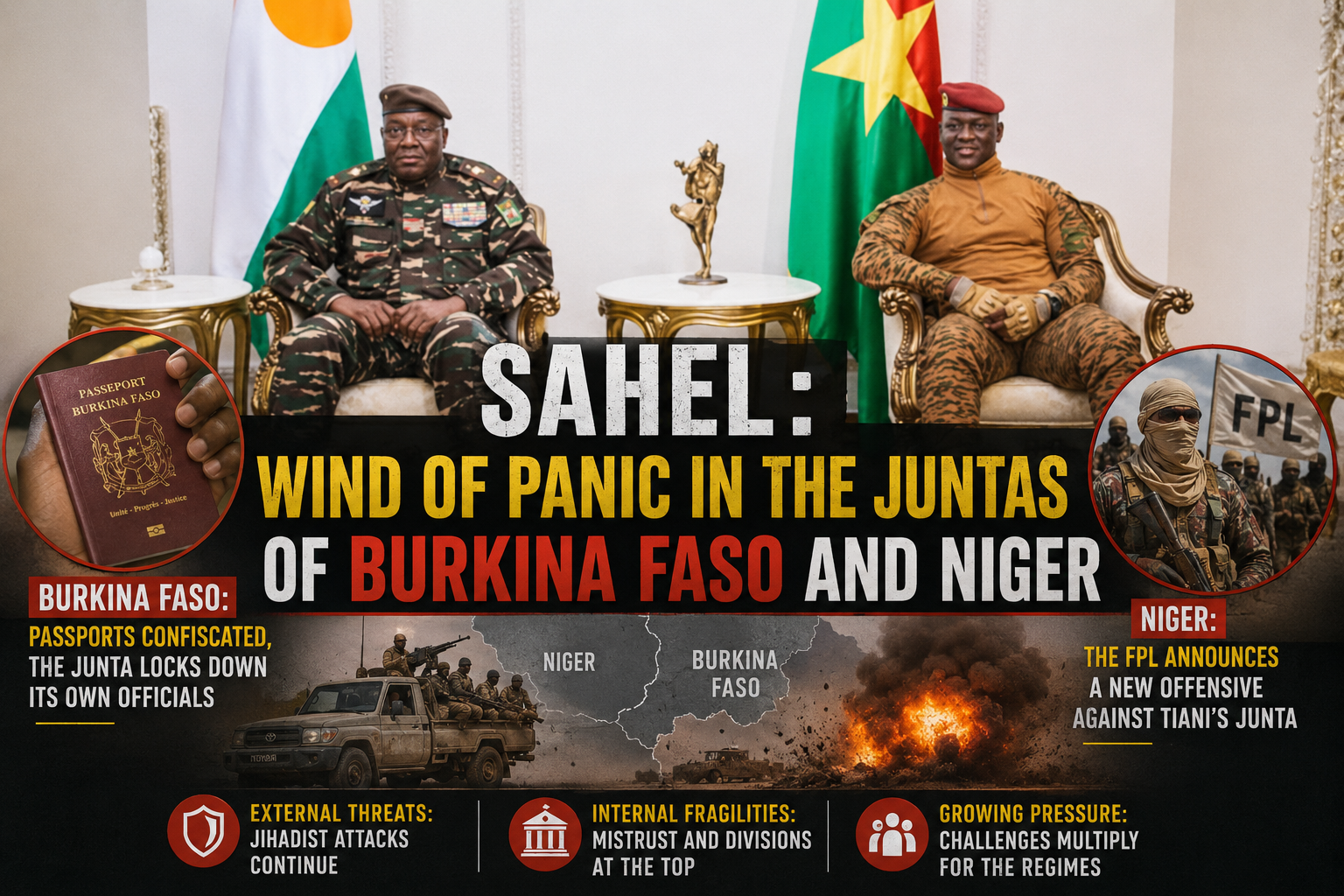
The security and political landscapes in the Sahel region continue to deteriorate, with two of the Alliance of Sahel States (AES) member nations facing compounding challenges. In Burkina Faso, authorities are tightening internal controls, while Niger braces for a potential armed confrontation led by a newly emboldened opposition faction. These developments underscore a critical juncture for both military regimes, as external threats converge with internal vulnerabilities.
Burkina Faso: state apparatus under lock and key
In Ouagadougou, a climate of suspicion has taken hold within government circles. Recent measures have stripped high-ranking officials of their travel privileges, with the seizure of government-issued passports becoming a symbolic yet drastic policy shift. This unprecedented restriction applies not only to cabinet members but extends to senior military officers, signaling an unprecedented level of scrutiny at the highest echelons of power.
The rationale behind this decision appears to be twofold. First, it aims to prevent potential defections or unauthorized departures that could compromise sensitive information or facilitate collaboration with external actors. Second, it reflects growing unease within the regime regarding internal cohesion, as the concentration of power in fewer hands heightens the risk of infighting or dissent among elites.
The timing of this move is particularly noteworthy, as Burkina Faso continues to grapple with a persistent jihadist insurgency. Despite intensified military operations and the deployment of civilian defense volunteers, attacks continue to target both security forces and civilian populations. This enduring insecurity has not only strained national stability but also intensified pressure on the government to assert control over its own apparatus.
Niger: opposition group escalates fight against military rule
Across the border in Niamey, the political climate has taken a more volatile turn. The recent release of Mohamed Salah, Secretary-General of the Patriotic Front for Liberation (FPL), has emboldened the group’s resolve to challenge the current military leadership. Salah, freed in a high-stakes prisoner exchange with Libyan factions, has since vowed to launch a decisive campaign aimed at toppling the regime led by General Abdourahamane Tiani.
The FPL frames its actions as a struggle to restore constitutional order, demanding the immediate release of former President Mohamed Bazoum—whom they recognize as the country’s legitimate leader. This escalation represents a significant shift in Niger’s crisis, as the junta now faces not only the persistent threat of Islamist militants but also a well-organized armed opposition openly advocating for regime change.
The dual pressures of counterterrorism and internal dissent place immense strain on Niger’s security apparatus. As the government redirects resources to address these converging threats, the risk of further destabilization looms large, particularly given the already fragile state of national infrastructure and public trust.
Military governments at a crossroads
The unfolding crises in Burkina Faso and Niger reveal a broader pattern of fragility among post-coup regimes in the Sahel. While both governments initially positioned themselves as bulwarks against terrorism and champions of sovereignty, their current predicaments highlight systemic weaknesses.
In Burkina Faso, the focus on internal control reflects deep-seated concerns over loyalty and stability. In Niger, the rise of an armed opposition group has introduced a new dimension to the conflict, one that challenges the junta’s legitimacy and capacity to govern. Together, these dynamics paint a troubling picture of governance in transition, where military rule—once hailed as a solution to insecurity—now appears increasingly vulnerable to its own contradictions.
The coming months will be critical in determining whether these regimes can navigate the confluence of security threats, political opposition, and economic hardship. With public patience wearing thin and regional alliances tested, the ability to restore stability may well hinge on their capacity to address both external aggression and internal fractures—without succumbing to the very instability they were meant to resolve.