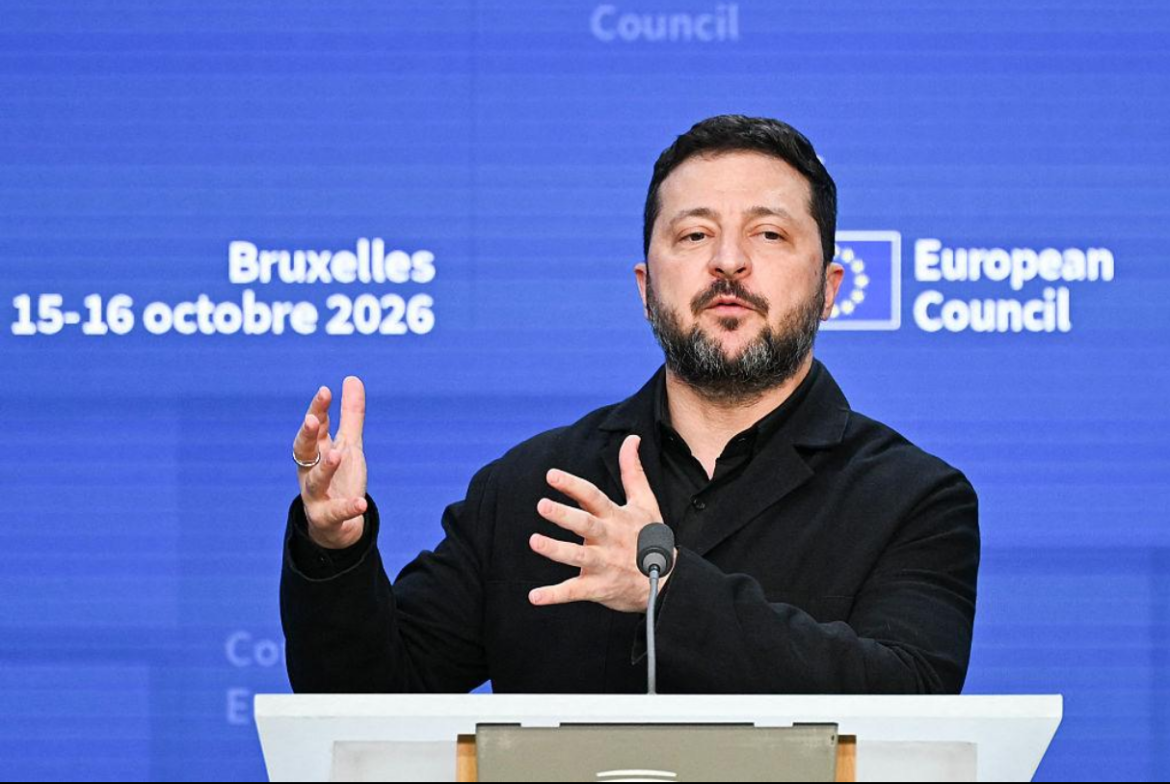
On 21 October 2026, Ukrainian president Volodymyr Zelensky announced his country’s readiness to pause active combat along current military positions, paving the way for talks on security guarantees with Washington and European capitals. Yet, in a follow-up interview with CNN the next day, he firmly dismissed any notion of ceding occupied territories or relinquishing areas still under Kyiv’s control.
Why zelensky’s ceasefire offer isn’t a surrender
The dual statements on 21 and 22 October underscore a delicate balancing act: halting the bloodshed without conceding sovereignty. By proposing a freeze on existing frontlines, Zelensky signals a pragmatic shift—prioritizing an end to hostilities while drawing a hard line on territorial integrity, the core dispute fueling the conflict with Russia.
The mechanics of a potential frontline freeze
In his remarks to Fox News, Zelensky framed the stalled military positions as a realistic pathway to halt the fighting. «We must freeze the situation now,» he argued, positioning a ceasefire as the first step toward a political process after years of war. This pause, he stressed, would represent the bare minimum expected of Moscow—an immediate stop to killings and destruction before tackling thornier issues at the negotiating table.
Crucially, this proposal does not equate to Kyiv’s acceptance of Russia’s territorial claims. A frozen frontline would merely suspend combat along existing contact lines, leaving the legal status of occupied regions unresolved. For Ukraine, military realities on the ground must not translate into de jure recognition of Moscow’s annexation demands.
Security guarantees: kyiv’s non-negotiable safeguard
Post-ceasefire, Ukraine insists on ironclad security commitments from the US and European allies. Zelensky’s vision extends beyond a temporary lull in fighting; without robust deterrent mechanisms, any truce risks becoming a fragile intermission before renewed aggression. His strategy unfolds in stages: halt combat, initiate talks, and construct a security framework to prevent future Russian offensives.
However, this approach hinges on mutual agreement—both on the terms of the ceasefire and the willingness of Western partners to underwrite Ukraine’s long-term protection. The lingering question remains: what concrete forms would these guarantees take?
Territorial red lines: the donbass dilemma
In his CNN interview, Zelensky quashed speculation about territorial concessions. «Our land is invaluable because it’s about our people, not just kilometers,» he emphasized, reaffirming that occupied areas remain Ukrainian, even under a ceasefire. This stance highlights the negotiation’s central paradox: how to stabilize the front without legitimizing Russia’s military gains?
Nowhere is this tension sharper than in the Donbass. Russia demands full control of Donetsk, while Ukraine refuses to cede the territory it still holds. A ceasefire might reduce violence, but it leaves the root cause of the conflict—the sovereignty of disputed regions—unaddressed.
Western backing: a test of unity and resolve
Beyond the frontlines, the durability of security guarantees emerges as a critical factor. Kyiv seeks binding commitments from the US and Europe to deter Russian aggression post-truce. Yet, uncertainties persist: what military or diplomatic pledges will Western nations offer? How would they respond to potential Russian violations?
Zelensky’s CNN interview also touched on recent strains in US-Ukraine relations, particularly regarding military support and communication systems vital to Kyiv’s defenses. Despite these frictions, he continues to view Washington as indispensable to any lasting resolution. Similarly, European involvement remains pivotal, with Ukraine urging partners to move beyond mere ceasefire endorsement toward sustained security participation.
The long road from truce to lasting peace
Zelensky’s overture marks a diplomatic opening, but it falls short of signaling an imminent peace deal. Fundamental disagreements persist over territory, ceasefire terms, and the security frameworks needed to prevent renewed conflict. Russian president Vladimir Putin, in his own 22 October remarks, expressed openness to US-meditated talks while insisting on a settlement that addresses Moscow’s security concerns—leaving territorial compromises contentious.
At its core, Ukraine’s proposal tests whether combat can cease without immediately resolving the status of disputed lands. For Kyiv, the answer lies in decoupling on-the-ground military realities from legal recognition of borders. A frontline freeze could indeed serve as a first step toward de-escalation—but only if all parties accept its terms and if credible guarantees accompany the truce. Until Moscow and Kyiv reconcile their incompatible demands on sovereignty and security, the prospect of a durable peace remains elusive.
Thus, Ukraine navigates a narrow diplomatic path: ending the fighting while refusing to sacrifice its territorial integrity. This approach may open the door to negotiations, yet it leaves the final outcome very much in doubt.