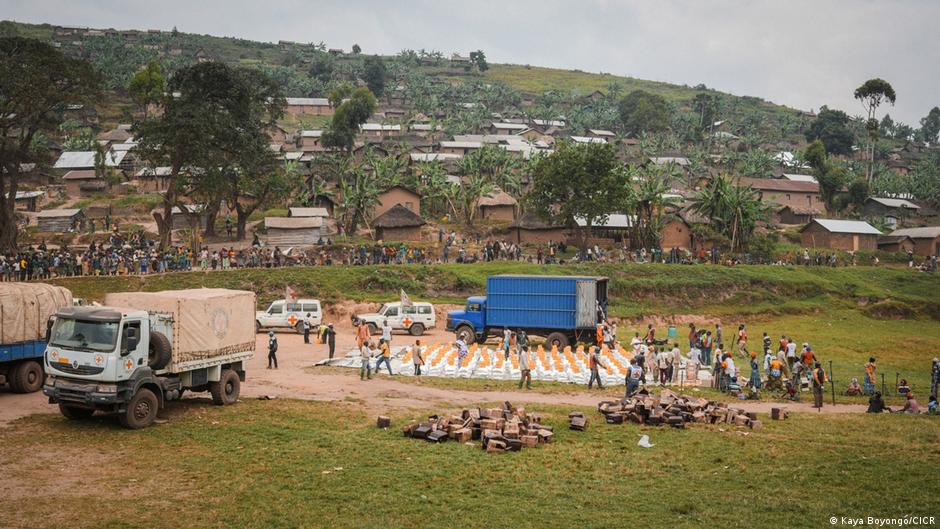
In the eastern Democratic Republic of Congo, families face an unprecedented dual crisis. The lingering Ebola outbreak continues to threaten communities, while relentless armed violence, frequent displacements, and shrinking agricultural opportunities push millions deeper into food insecurity. Recently, the International Committee of the Red Cross resumed its vital food and seed distributions, reaching over 80,000 people despite severe operational challenges. The question remains: how can aid providers respond when families are forced to choose between disease and starvation?
Converging crises: how Ebola intensifies existing vulnerabilities
Eastern DRC has endured years of conflict, displacement, and economic disruption, leaving communities with frayed coping mechanisms. The arrival of Ebola has not only introduced a new health threat but has also eroded the few remaining safety nets. Movement restrictions, market closures, and disrupted trade have compounded the suffering of populations already struggling to access food and income.
The most vulnerable households—those with limited land access and minimal savings—are hardest hit. Many have relocated to crowded displacement sites or remote areas deemed “safer,” where arable land is scarce and overworked. Agricultural extension services, which could improve yields and resilience, are barely functional due to insecurity and access constraints.
Strained resources: the impact on food production and trade
With large areas of farmland abandoned or inaccessible, crop yields have plummeted. Families who once relied on cross-border trade for food and income now face closed borders and heightened security checks. The result? Soaring food prices, vanishing livelihoods, and an acute shortage of staple crops.
“The convergence of conflict and disease has created a perfect storm for hunger in eastern DRC,” explains a senior official from the International Committee of the Red Cross. “When people can’t farm their land or sell their goods, they lose the ability to feed themselves—and recovery becomes nearly impossible.”
Humanitarian response in a fragile environment
Despite the challenges, aid organizations are scaling up efforts to address immediate food needs. Distributions of fortified food, seeds, and agricultural tools are critical lifelines. However, delivering aid remains perilous. Violence often forces last-minute route changes, and health restrictions tied to Ebola complicate logistics.
Community-led initiatives are also emerging, with local leaders organizing solidarity networks to share resources and information. Yet, these efforts are limited by the scale of the crisis and the lack of external support.
You may also like
Senegal’s December 2, 2026: will Diomaye Faye dissolve parliament or play the long game?
Senegal’s 2026 budget revision: can Dakar still rescue its growth and investment agenda?
Senegal’s 2026 revised budget: a trap vote for Pastef or a necessary evil?
Burkina Faso’s armored vehicles: can Faso Armored’s 300-unit claim survive the scrutiny?
Can Senegal and Azerbaijan turn a New York memorandum into a lasting political partnership?