
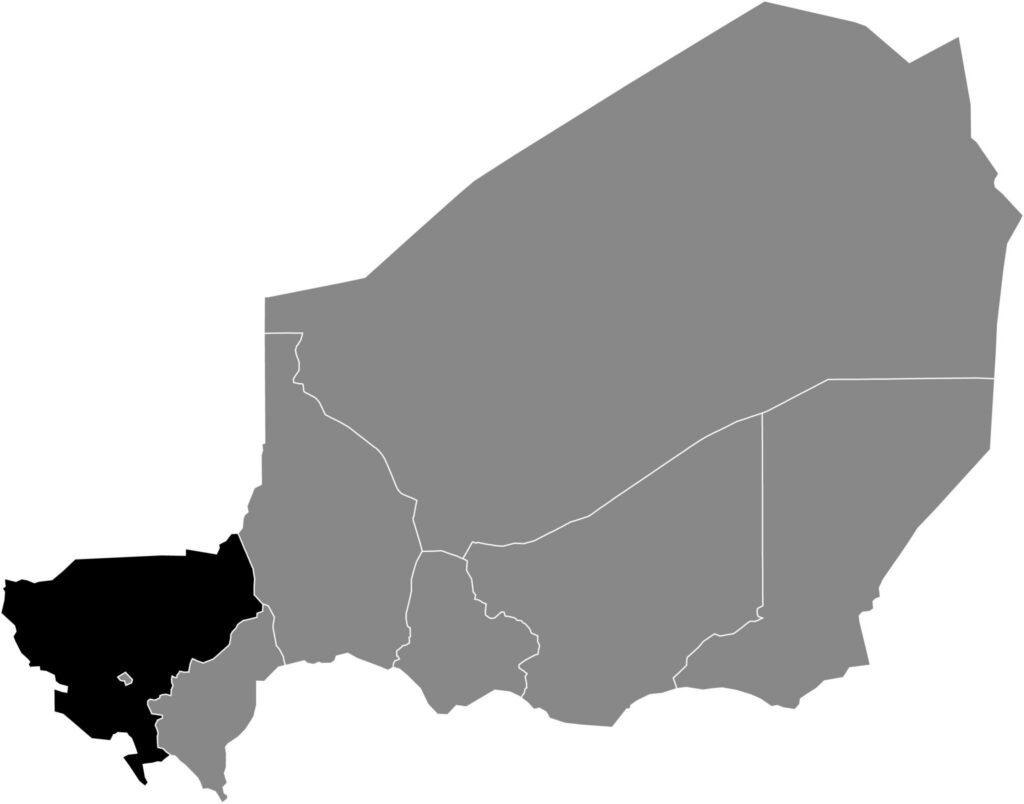
What began as a moment of mourning and unity ended in devastation for the village of Chinagodrar in Niger’s Tillabéri region. On July 24, a funeral gathering was violently interrupted when two military drone strikes tore through the ceremony, killing at least seven people and leaving others severely injured.
Eyewitnesses describe sheer panic as villagers scrambled to help the wounded while others fled in terror. The attack targeted a crowd of mourners and supporters, including families who had come only to pay their respects—leaving behind a trail of grief and unanswered questions.
Tillabéri: a region under siege by insecurity and military response
Tillabéri, bordering Mali and Burkina Faso, has long been at the heart of Niger’s battle against armed groups. Known as the “three-border zone,” this area remains a hotspot for frequent clashes between security forces and jihadist factions. In response, the government has escalated military operations, increasingly relying on aerial surveillance and strike drones to target hostile positions.
While these drones provide rapid strike capabilities, their deployment in areas with dense civilian activity raises concerns about intelligence accuracy and targeting procedures. Villages in the region often serve as gathering points for funerals, markets, and religious events—spaces where even the smallest error in intelligence can lead to catastrophic consequences.
Two deadly strikes compound the tragedy
Residents recount how the first explosion erupted near the funeral site, sending shockwaves through the crowd. As people rushed to aid the injured, a second strike followed within moments, intensifying the devastation. Survivors describe scenes of chaos—families separated, homes damaged, and emergency responders struggling to navigate the chaos in an already isolated area.
The toll continues to rise, with at least seven confirmed deaths and additional victims in critical condition. Among those killed were individuals who had no involvement in the conflict, simply attending the funeral out of solidarity—a fact that has deepened the community’s sense of injustice and fear.
Families shattered, trust eroded
Beyond the immediate loss of life, this tragedy has left behind grieving families and a population traumatized by years of violence. The people of Chinagodrar now face a grim reality: caught between the brutality of armed groups and the unintended consequences of military operations meant to protect them.
For communities already struggling under the weight of insurgency, this incident has further strained their relationship with security forces. Trust is a fragile but critical asset in counterinsurgency efforts, particularly when local cooperation depends on a shared belief in safety and accountability. Any erosion of that trust risks undermining future military operations and deepening the sense of abandonment felt by rural populations.
Calls for transparency and accountability
In the absence of official statements from authorities, questions linger about the legitimacy of the drone strikes. Human rights advocates emphasize that international humanitarian law demands rigorous distinction between combatants and civilians, requiring foolproof intelligence before any aerial assault.
The lack of clarity surrounding this operation has only fueled speculation. Locals demand answers: Who was the intended target? How were the strikes authorized? What measures will be taken to prevent similar tragedies? Without accountability, the cycle of fear and mistrust risks perpetuating itself, leaving communities more vulnerable than ever.
You may also like
-
Appels sur l’actualité – Mali : Donald Trump va-t-il attaquer le Jnim?
-
Appels sur l’actualité – VOS RÉACTIONS – Sénégal : Que pensez-vous des ambitions du président Bassirou Diomaye Faye?
-
ANALYSE – Ibrahim Traoré et la traite orientale : Une vérité qui dérange le Sahel
-
Paul biya’s 49-day absence fuels speculation in Cameroon
-
Senegal’s president Bassirou Diomaye Faye unveils new party Kiiraay