Why Cotonou’s port is rewriting West African logistics despite regional obstacles
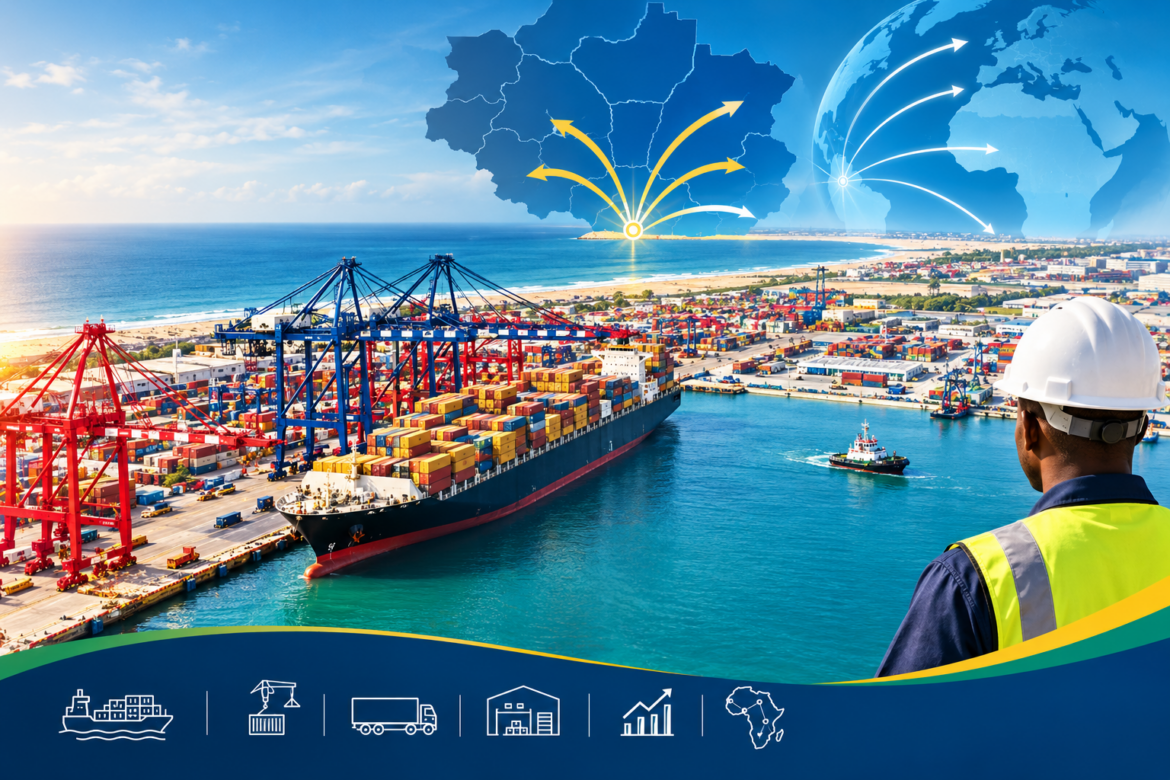
The Port of Cotonou is undergoing a quiet transformation that defies regional trade disruptions. While neighboring corridors collapse under political tensions and security threats, this Beninese gateway is expanding its influence by diversifying its traffic sources, strengthening transshipment capacity, and reinforcing its role as a logistics hub in the Gulf of Guinea. Recent traffic data reveals how a strategic pivot is turning obstacles into opportunities for economic reinvention.
Traffic surges expose a port no longer dependent on single corridors
In 2025, the Port of Cotonou handled 14.7 million tonnes up 52% from 9.6 million in 2024. But the real story lies beneath the numbers: transshipment volumes skyrocketed by 312.6%, while exports climbed 74.8%. Ship calls rose from 725 to 841 vessels. These figures tell a compelling narrative not just of growth, but of evolution. The port is no longer a passive receptor of regional cargo. It is actively reshaping how trade flows across West Africa.
A shift from hinterland reliance to multi-market outreach
Historically, Cotonou’s success depended heavily on trade corridors linking Benin with landlocked neighbors like Niger, Burkina Faso, and Mali. But recent tensions particularly the closure of the Benin-Niger border have exposed the risks of such dependence. Instead of waiting for cargo to arrive, the port is now proactively expanding alternative routes. Transshipment, in particular, has become a key growth engine, increasing from 204,928 tonnes in the first half of 2025 to 516,558 tonnes in the same period of 2026 a jump of 152.1%. This shift signals a fundamental strategic change: Cotonou is positioning itself not just as a destination, but as a redistribution center for goods moving across West Africa.
The infrastructure upgrade that fuels operational agility
Behind these numbers lies a transformation that goes beyond mere capacity. The Port Autonome de Cotonou (PAC) has embarked on a far-reaching modernization initiative, backed by an investment of over 450 million euros. Key projects include Terminal 5 expansion, dredging of port basins, modernization of quays, and centralized access and parking improvements. These upgrades aim to increase throughput, handle larger vessels, and improve cargo handling efficiency critical factors in attracting new trade flows.
The African Development Bank has played a key role, contributing approximately 60 billion CFA francs toward Terminal 5 and access infrastructure. These investments are designed to enhance the port’s competitiveness and reduce logistical bottlenecks that have long constrained regional trade.
From transit hub to economic engine: how growth ripples across Benin
Cotonou’s influence extends far beyond its docks. The port is deeply embedded in Benin’s economic fabric, directly supporting sectors such as transport, logistics, warehousing, financial services, and digital customs platforms. Each tonne of cargo processed generates economic ripple effects creating jobs, stimulating ancillary industries, and boosting national productivity.
Export growth is a prime example. In the first half of 2026, processed exports reached 2.87 million tonnes up 33.3% year-on-year. This surge is closely linked to Benin’s industrial expansion and increased exports of Nigerian crude oil routed through the port. It reflects a broader shift: the country is moving from re-export dependence toward higher-value production and export-oriented manufacturing.
The Glo-Djigbé Industrial Zone (GDIZ) and the new export frontier
The rise of the Glo-Djigbé Industrial Zone (GDIZ) is accelerating this transformation. With increasing production capacity and new export markets opening, Cotonou is playing a pivotal role in connecting Beninese manufacturers to international buyers. The port’s modernization is not just about handling more cargo it’s about enabling Benin to integrate more deeply into global supply chains. This evolution transforms the PAC from a regional transit point into a driver of structural economic change.
Charting a new trade map: what’s driving Cotonou’s competitive leap
Several factors explain Cotonou’s rapid progress. First, geographic positioning: the port sits at a crossroads between Benin’s domestic market, landlocked neighbors, and Nigeria the region’s largest economy. Second, operational resilience: despite regional instability, the port has maintained steady growth by diversifying its revenue streams. Third, digital transformation: investments in port community systems and customs digitization have improved efficiency, transparency, and predictability.
These improvements have not gone unnoticed. In 2024, the World Bank’s Container Port Performance Index ranked Cotonou 303rd out of 403 ports globally a leap from 402nd in 2023. While still behind peers like Lomé or Abidjan, the progress reflects a clear trajectory of improvement and strategic intent.
Future challenges and next steps: can Cotonou sustain the momentum?
Despite its gains, Cotonou faces ongoing challenges. Security risks in the Sahel, fluctuating fuel and logistics costs, and the need to reconquer certain hinterland markets remain hurdles. The port must also continue reducing transit times, lowering operational costs, and maintaining digital advancements to stay competitive.
Yet the trajectory is clear. Cotonou is no longer content being a passive trade gateway. It is actively reshaping West African logistics by diversifying its role, attracting new operators, and positioning itself as a reliable, high-performance hub. The message is unambiguous: this port is not just surviving regional shocks it is building the foundation for a new era of trade leadership in Africa.
The question is no longer whether Cotonou can compete with larger regional ports. It’s whether the port will successfully consolidate its emerging role as a strategic bridge between Sahelian economies and global markets a role that could redefine Benin’s place in West Africa’s commercial landscape.