Cotonou/Berlin — Behind the high-profile visits and joint statements, a deeper transformation is unfolding in the German-Bénin relationship. With regional security crises in the Sahel intensifying and Cotonou’s economic ambitions gaining traction, Berlin is quietly laying the groundwork for a landmark bilateral security pact that could redefine West Africa’s stability landscape.
Why Berlin is doubling down on Bénin’s security and economic future
The shift in Germany’s approach isn’t just diplomatic rhetoric; it reflects a calculated response to two converging pressures. First, the surge in cross-border threats from armed groups operating across the Sahel is pushing coastal West African states like Bénin into the conflict’s peripheral yet increasingly vulnerable sphere. Second, Cotonou’s push to position itself as a regional logistics and industrial hub—symbolised by the Glo-Djigbé Industrial Zone—creates strategic value for European partners seeking stable, high-growth markets.
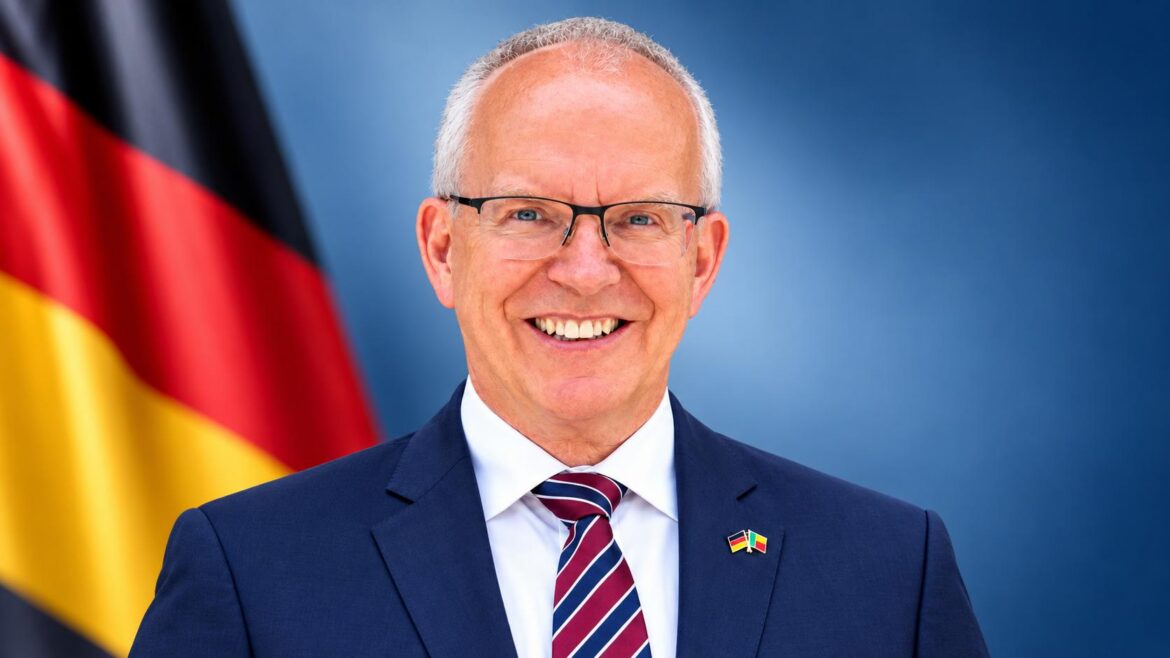
Dr. Stefan Buchwald, Germany’s ambassador to Bénin, framed this shift during a keynote address at the German Unity Day commemorations. He didn’t just highlight cooperation; he outlined a sustained commitment—one that ties German security assistance directly to Bénin’s long-term stability and economic transformation goals.
Three pillars shaping the new security partnership
The upcoming pact isn’t a standalone military agreement. It’s designed as a structured, multi-layered framework rooted in three core areas of engagement:
- Institutional and operational support: Regular joint staff talks to align threat assessments, share intelligence, and coordinate responses—particularly in northern Bénin, where spillover violence from the Sahel has escalated.
- Targeted capacity-building: Customised training programs for Bénin’s Defence and Security Forces, focusing on counterterrorism tactics, border management, and rapid-response logistics.
- Legal and technical scaffolding: A binding bilateral agreement that formalises funding mechanisms, equipment transfers, and joint exercises—ensuring accountability and long-term scalability.
From aid to investment: how Germany is retooling its Bénin strategy
Germany’s engagement with Bénin is no longer confined to development aid. The country is leveraging its full diplomatic toolkit to foster private-sector growth, positioning Bénin as a gateway for German businesses eyeing West Africa. The German ambassador’s push for Bénin to reopen its embassy in Berlin signals more than political symbolism—it reflects a deliberate bid to deepen economic ties.
Key drivers of this pivot include:
- Infrastructure as an anchor: Projects like the Glo-Djigbé Industrial Zone offer German companies tax incentives, streamlined customs, and access to a workforce trained under Germany’s vocational programs—aligned with Africa’s booming manufacturing and logistics sectors.
- Trade facilitation: Policy reforms spearheaded by Bénin’s Investment and Export Promotion Agency (APIEx) are simplifying market entry for European firms, reducing red tape in sectors like renewable energy and agro-processing.
- Diplomatic leverage: A resident embassy in Berlin would serve as a 24/7 advocacy platform for German-Bénin businesses, smoothing regulatory hurdles and securing high-level support for large-scale ventures.
Economic development: aligning governance, jobs, and sustainability
While security dominates headlines, Germany’s partnership model embeds socio-economic outcomes at its core. Three interlocking priorities guide this focus:
Governance and decentralisation: building resilient local systems
The partnership supports public finance reforms and strengthens local governance, ensuring tax revenues are reinvested in communities rather than siphoned off. This builds institutional trust—a critical factor in countering extremist narratives that thrive in weak-state environments.
Vocational training: closing the skills gap to curb youth unemployment
Germany is scaling up dual-training programs that mirror its famed apprenticeship model, equipping Bénin’s youth with in-demand skills in construction, IT, and green technologies. The goal? Reduce youth unemployment—currently a major driver of instability—and create a talent pool for German firms expanding into West Africa.
Natural resource management: sustainability as a security cornerstone
Climate change and resource scarcity exacerbate communal tensions in Bénin’s northern regions. The partnership includes joint initiatives to promote sustainable water management and biodiversity conservation, reducing pressure on fragile ecosystems that fuel conflict.
What’s next: timelines, expectations, and regional ripple effects
The security pact is expected to reach final approval in the coming quarters, with pilot programs in border regions launching within six months of ratification. German officials have indicated that initial funding commitments could exceed €100 million, with additional investments tied to measurable milestones in security performance and economic reform.
For Bénin, the stakes are clear: secure its borders, attract investment, and position itself as a stable anchor in a turbulent region. For Germany, the calculus is strategic—tackling instability at its source while securing trade routes and new markets for its industries.
As Dr. Buchwald noted, this partnership isn’t just about treaties or budgets—it’s about shared futures. And in West Africa today, that’s a rare currency.
