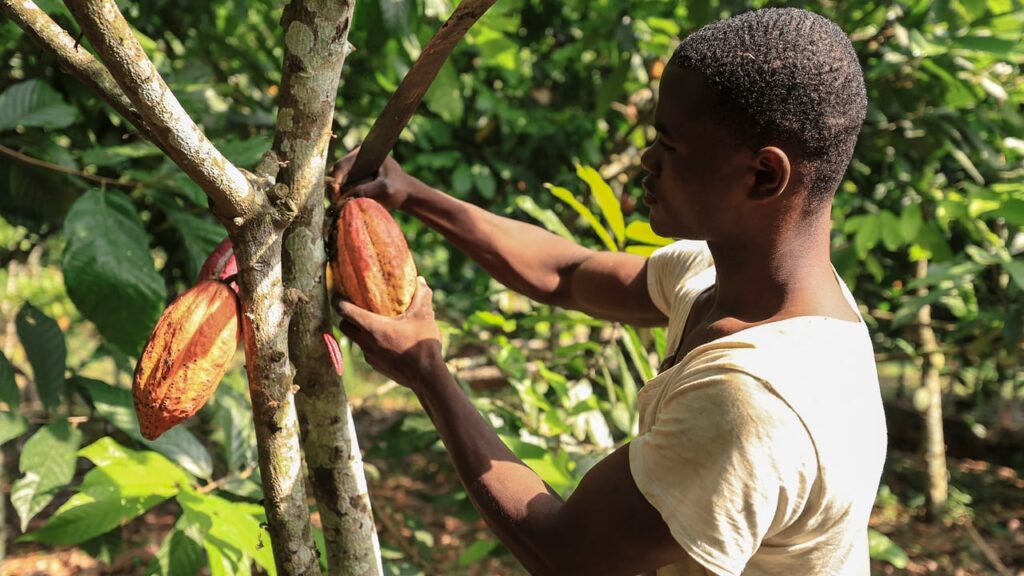

In the lush landscapes of Ebebda, Cameroon’s cocoa sector is at a crossroads. Family-run plantations, the backbone of the industry, are grappling with mounting challenges that threaten their livelihoods. While demand for high-quality cocoa remains robust, producers face hurdles from climate variability to fluctuating market prices, pushing them to seek innovative solutions for sustainability.
Climate shifts and their impact on cocoa farms
Rising temperatures and erratic rainfall patterns have disrupted traditional growing cycles in Cameroon. Many smallholder farmers report reduced yields, with some fields struggling to recover from prolonged dry spells. “The seasons are no longer predictable,” shared a local farmer. “What used to be a reliable harvest is now uncertain.” These changes force growers to adapt, experimenting with drought-resistant varieties and soil conservation techniques to protect their crops.
Market dynamics and fair trade concerns
The global cocoa market’s volatility adds another layer of complexity. While international prices have seen occasional spikes, inconsistent earnings leave farmers vulnerable. Cooperatives are stepping in to negotiate better terms, but disparities in bargaining power persist. Efforts to promote fair trade practices are gaining traction, yet access to premium markets remains a challenge for many producers.
Government initiatives and future outlook
Recognizing the sector’s importance, Cameroon’s government has rolled out programs to support cocoa farmers. Subsidies for fertilizers, training on modern farming methods, and infrastructure improvements aim to boost productivity. However, critics argue that more needs to be done to address systemic issues like land tenure insecurity and limited access to credit.
Innovation and community resilience
Despite the obstacles, there’s a growing spirit of resilience among Cameroon’s cocoa communities. Young entrepreneurs are venturing into value-added products, such as organic cocoa and artisanal chocolates, to diversify income streams. Community-led cooperatives are also strengthening, pooling resources to invest in shared processing facilities and marketing strategies.
For Cameroon’s cocoa sector to thrive, collaboration between farmers, policymakers, and industry players will be key. The path forward demands both immediate action and long-term vision to secure a sustainable future for one of the country’s most cherished commodities.
You may also like
Cameroon’s youth confront social media’s real impact in #PSE debate
Cameroun’s douala-bafoussam highway in critical condition
Gabon debates dignity after attacks on president’s mother
Chad tackles gender-based violence with new victim support mapping in N’Djamena
Rising cost of living in Chad: economist calls for market price monitoring