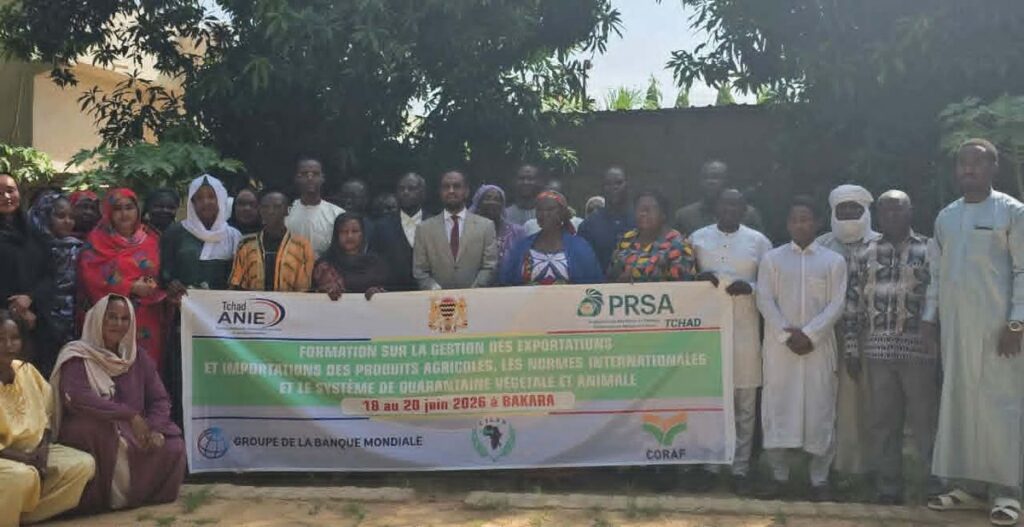
Tchad : renforcement des capacités pour une meilleure gestion des exportations agricoles
The World Bank and ANIE recently collaborated on a training initiative in Bakara, designed to enhance expertise in agricultural export management and navigate complex international standards and procedures.
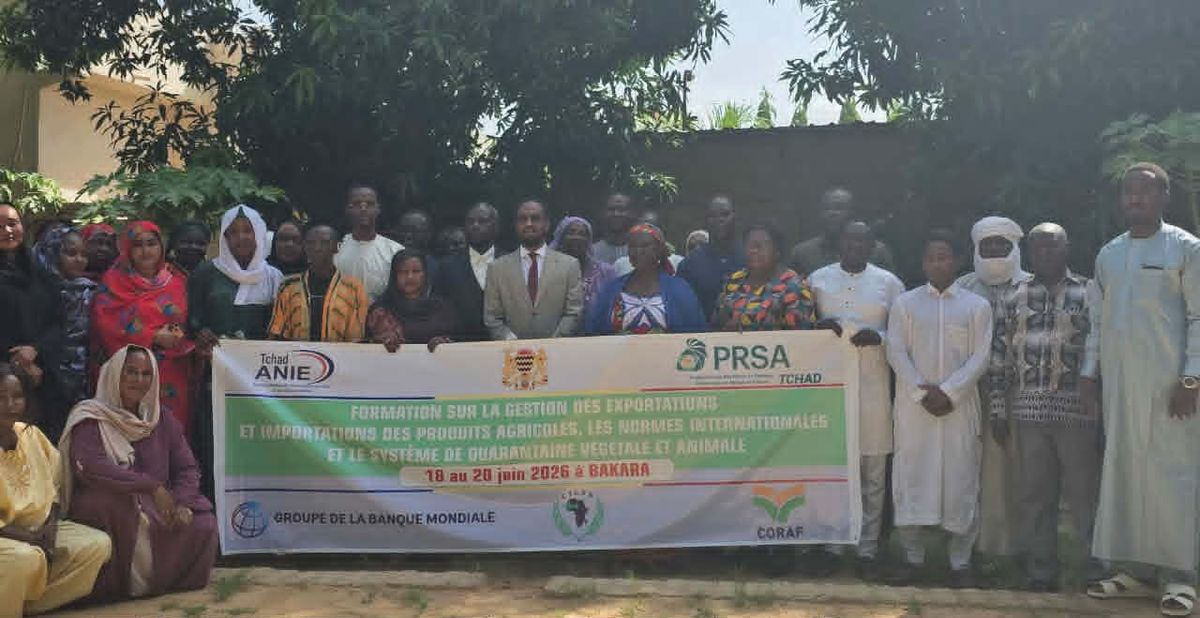
As part of the ongoing Agricultural Sector Resilience Program (PRSA), the World Bank and the National Agency for Investments and Exports (ANIE) jointly hosted a pivotal capacity-building workshop in Bakara. This specialized training focused on the intricate aspects of managing agricultural product exports and imports, emphasizing international standards, and animal and plant quarantine systems.
Gotoraye Arnaud, coordinator for the PRSA-TD Agricultural Trade and Market Dashboard, highlighted the significant hurdles Chadian producers encounter when seeking access to foreign markets. These challenges primarily stem from the intricate nature of export procedures, the stringent requirements for quality and safety compliance, and the strict application of sanitary and phytosanitary measures.
The comprehensive training program aimed to significantly bolster participants’ operational capabilities across several critical areas: mastering international certifications, streamlining export logistics chains, and effectively mitigating customs-related risks.
Dadi Adoum Arsin, ANIE’s Deputy Director General, underscored that this initiative aligns perfectly with the strategic vision of the Chadian government. This vision prioritizes economic diversification, the local transformation of national produce, robust private sector development, and aggressive export promotion as core national objectives. It also seamlessly integrates with the ambitious “Tchad Connexion 2030” National Development Plan, which envisions the private sector as a primary engine for growth, job creation, and regional economic integration.
Achieving this national ambition necessitates cultivating an economy capable of not only increasing production but also expanding sales beyond national borders. From this perspective, boosting agricultural exports emerges as a crucial lever for strengthening Chad’s economic sovereignty.
The operationalization of the African Continental Free Trade Area (AfCFTA) presents an expansive market of over 1.4 billion consumers. Within this new economic landscape, only nations committed to investing in quality assurance, standardization, certification, and the empowerment of their economic operators will fully capitalize on the opportunities presented by African economic integration. Chad is determined not to be left behind in this transformative dynamic.
ANIE is dedicated to cultivating an enabling ecosystem where enterprises can readily access vital information, technical support, market opportunities, and essential partnerships for their growth. The agency aspires to be a close partner, a catalyst for economic expansion, a facilitator of trade, and a genuine ambassador for Chadian expertise in the global marketplace.
This recent training stands as a tangible demonstration of this overarching ambition. It signifies a fresh milestone in the collective commitment towards fostering a more competitive agricultural sector, empowering more efficient businesses, and ensuring Chad’s deeper integration into regional and international economic exchanges. The training successfully brought together diverse stakeholders from both public and private sectors involved in agricultural trade, sanitary and phytosanitary controls, production, processing, and export promotion.
You may also like
Will Benin’s UCESIF gambit in Bucharest pay off for francophone social dialogue?
Niger’s sovereignty paradox: can the junta’s UN rhetoric survive the SOMAÏR and SONIDEP collapse?
South Africa’s mass shooting crisis: can Johannesburg and Cape Town ever feel safe again?
Senegal’s December 2, 2026: will Diomaye Faye dissolve parliament or play the long game?
Senegal’s 2026 budget revision: can Dakar still rescue its growth and investment agenda?