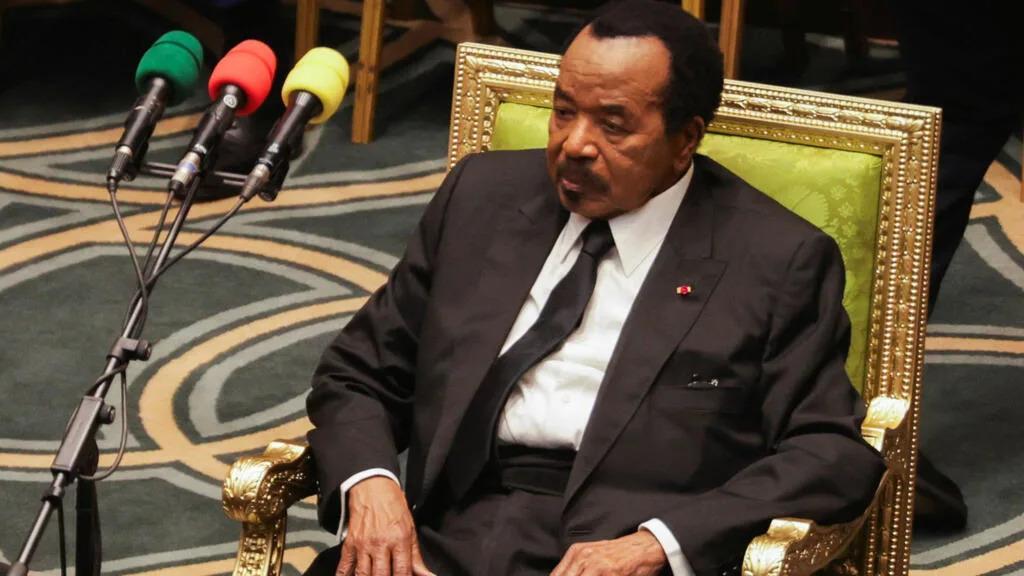
The government of Cameroon has categorically refuted claims regarding the prolonged absence of President Paul Biya, dismissing such assertions as legally and politically unfounded. According to Minister of State Jacques Fame Ndongo, the notion of a constitutional vacancy due to the president’s absence lacks any legal basis.
In a firm rebuttal, Fame Ndongo emphasized that no existing law or regulation in Cameroon stipulates a maximum duration for the president’s overseas trips. He described attempts to apply such a non-existent provision as a form of legal misinterpretation and criticized the proponents of this argument as indulging in «imaginative and wandering legal logic».
Fame Ndongo further clarified that President Biya, who has led the country since 1982, remains actively engaged in governance. He stated that the president meticulously reviews all submitted files, whether in person or through established digital communication channels.
Opposition challenges government’s stance
The Movement for the Renaissance of Cameroon (MRC), led by opposition figure Maurice Kamto, swiftly responded to the government’s explanation. Mamadou Mota, the party’s vice-president, questioned the legitimacy of a presidency exercised remotely, asking: «At what point does the absence of a president transform the highest office into a mere illusion? Forty-five days away from national territory is not a visit—it is, in fact, exile by default.»
The MRC also mocked the suggestion that Cameroon could be governed remotely, describing the scenario as «the world’s first instance of clandestine telecommuting leadership».