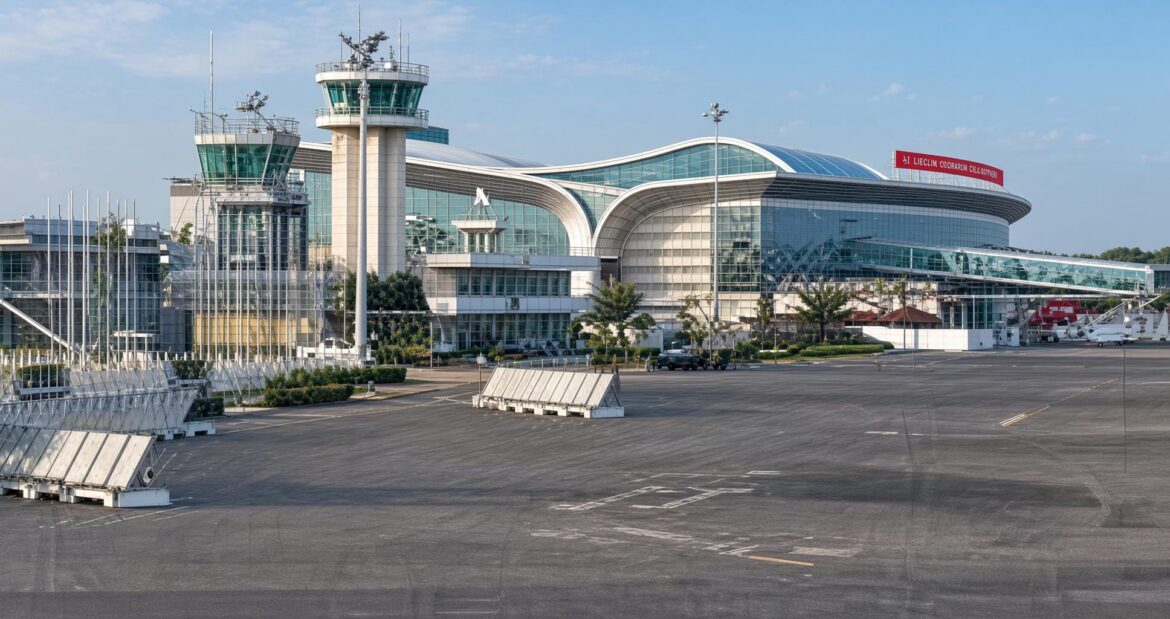
Behind the scandal: How a sanitation failure exposed Togo’s airport vulnerabilities
What began as a routine operational hiccup at Lomé’s international gateway transformed into a national embarrassment—one that exposed deep-seated cracks in the country’s airport management. Public outrage erupted in October 2026 when passengers navigated a literal rain of waste in terminal corridors, a scene that quickly became a viral symbol of systemic neglect. Contrary to initial dismissals labeling the incident as a “minor technical glitch,” the disaster underscored the alarming decay of infrastructure at the Aéroport International Gnassingbé-Eyadéma (AIGE).
From public outcry to private intervention: The unstoppable shift
The fiasco in Lomé’s terminal wasn’t just an inconvenience—it was a credibility reckoning. International travelers and airlines alike voiced concerns over hygiene, efficiency, and Togo’s ability to meet global aviation standards. The Société Aéroportuaire de Lomé-Tokoin (SALT), tasked with managing the airport, faced overwhelming evidence of its failure to uphold even the most basic standards. Suddenly, the government’s long-standing ambition to position Lomé as a West African air travel hub was at risk, and swift action was demanded.
The invisible cracks in Africa’s aviation showcase
Togo had poured decades of resources into branding AIGE as a model for African aviation, yet the reality told a different story. Behind the gleaming facade of tech-forward infrastructure planning, critical systems were allowed to deteriorate. The sanitation crisis became the public breaking point, but it wasn’t the root cause—it was the final straw. The government’s realization that self-management had become unsustainable led to an inevitable conclusion: expertise was needed, and fast.
Can Lagardère save Togo’s aviation gateway—or risk its sovereignty?
Enter Lagardère Travel Retail, the French retail giant poised to assume control of AIGE’s commercial concessions. With a global reputation for operating airport duty-free networks in some of the world’s busiest terminals, the company brings more than just polished storefronts. It promises operational excellence, upgraded sanitation, and a revenue model aligned with international standards. For a nation desperate to restore confidence, the offer is seductive.
But the deal is not without controversy. The entry of a French conglomerate—linked to influential shareholders like the Bolloré Group—raises questions about economic sovereignty. Will local businesses be sidelined in favor of international brands? Can the government ensure that modernization benefits Togolese stakeholders first?
The hidden costs of external management
Beyond the surface-level benefits of improved services, skeptics point to potential long-term trade-offs. The concession model, though common in global aviation, often leads to profit leakage to foreign shareholders. For Togo, a country still consolidating its economic independence, the decision to outsource such a strategic asset reflects a painful compromise: immediate efficiency versus enduring local ownership.
Lomé’s crossroads: Modernization today, sovereignty tomorrow?
The stakes couldn’t be higher. Lomé’s airport is not just a transit point—it’s a gateway to trade, tourism, and regional connectivity. If Lagardère succeeds, AIGE could become a leading example of how public-private partnerships can revive struggling infrastructure. If it fails, the fallout could extend far beyond the terminal, affecting investor confidence and national pride.
Togo’s government now faces a defining moment. Will it prioritize speed and global standards, or will it demand stricter safeguards to protect domestic interests? The answers will shape not just Lomé’s next decade but the very trajectory of West African aviation as a whole.
The road ahead: What Lagardère must deliver
For Lagardère Travel Retail, the mandate is clear: restore order, rebuild trust, and prove that a private operator can transform a crisis into an opportunity. The company must deliver tangible results in sanitation, passenger flow, and commercial revenue—all while demonstrating that its presence does not undermine Togo’s economic autonomy.
The world is watching. If successful, this partnership could redefine how African nations approach airport management. If not, the lessons will be equally profound—forgo sovereignty or risk irrelevance.