The long shadow of captivity: how two european women endured 18 months in Niger’s crossfire
More than a year and a half after their abduction in northern Niger, Austrian national Eva Gretzmacher and Swiss citizen Claudia Abbt have been freed. The two women, seized separately in the desert city of Agadez, were transferred to Benghazi, Libya, where they are now awaiting repatriation to their respective countries. Their release brings a rare moment of relief to a region where kidnapping foreign nationals has become an alarmingly frequent—and increasingly sophisticated—security threat.
Yet the circumstances surrounding their freedom are far from straightforward. While official channels confirmed the breakthrough on October 21, key details about the negotiation process, the identities of their captors, and the terms of their release remain shrouded in ambiguity. What is clear is that their liberation did not occur in a vacuum. It reflects deeper, often obscured dynamics shaping the Sahel’s evolving conflict landscape—and the growing, if controversial, influence of Libyan actors in resolving regional hostage crises.
Agadez: a crossroads of danger and desperation
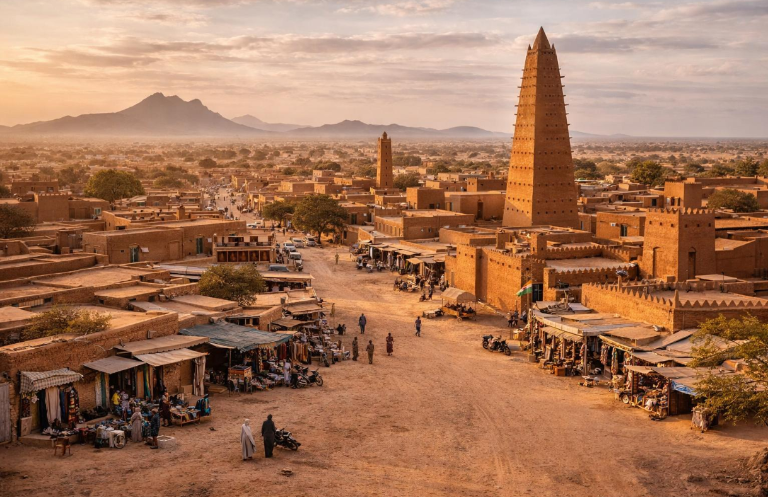
Both women were abducted in Agadez, a city that straddles the Sahara’s trade and migration routes. Eva Gretzmacher, who had lived in the region for years, had witnessed firsthand the erosion of security in northern Niger. Her kidnapping in January 2025 marked the beginning of a harrowing ordeal. Less than four months later, in April 2025, Claudia Abbt fell victim to a similar fate in the same city.
The pattern of these abductions underscored a troubling shift: armed groups were no longer confining their operations to remote desert expanses. They were striking in urban centers, forcing governments and international observers to confront a new, more unpredictable phase of the Sahel’s jihadist insurgency. While suspicions have pointed toward the so-called Islamic State in the Sahel (ISIS-Sahel), no definitive evidence has emerged to confirm the affiliation of their captors. What is certain is that the prolonged captivity—nearly two years in duration—signaled the complexity of navigating a conflict where militant factions exploit porous borders and weak governance.
Benghazi’s shadow diplomacy: the Haftar factor in hostage negotiations
The breakthrough in this case has redirected attention to Libya’s eastern strongman, Khalifa Haftar, and his administration in Benghazi. Reports indicate that intermediaries linked to Haftar’s inner circle played a pivotal role in securing the women’s release. Among these actors, Haftar’s son, Saddam, has been cited as a key figure in the behind-the-scenes talks. Yet the specifics of the mediation—how it unfolded, who initiated the discussions, and what concessions were exchanged—remain classified.
This development is not merely anecdotal. It highlights Libya’s dual role in the Sahel: a fractured state with competing governments, yet a critical hub for cross-border negotiations. For Haftar’s self-styled Libyan National Army (LNA), facilitating such a high-profile release offers a rare opportunity to project influence beyond its territorial control. European governments, desperate for solutions in a region where traditional diplomacy often fails, have increasingly turned to Libyan interlocutors—even those with controversial reputations—to break deadlocks in hostage crises.
But caution is warranted. Without transparent accounts of the negotiation process, it is impossible to determine whether this was a one-off humanitarian gesture, a calculated political move, or something in between. The lack of clarity only deepens concerns about the precedents being set for future hostage situations.
Niger’s unrelenting vulnerability: a country under siege
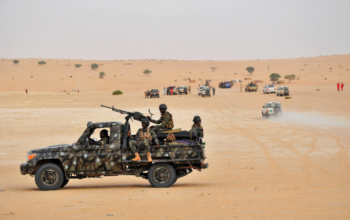
The release of Gretzmacher and Abbt offers a fleeting reprieve, but Niger remains trapped in a cycle of violence. The northern regions, including Agadez, are hotspots for jihadist factions exploiting ungoverned spaces and local grievances. The challenges facing Niger’s security forces are daunting: vast desert expanses, limited logistical capacity, and the fluid movements of armed groups render conventional counterterrorism efforts insufficient.
International advisories paint a stark picture. Western governments continue to warn their citizens against traveling to Niger, citing both terrorism and the ever-present risk of kidnapping. The French government’s travel advisory, last updated in late 2026, explicitly discourages all non-essential travel to the country. Similarly, the U.S. State Department has classified Niger at its highest risk level for crime and terrorism. These warnings are not mere bureaucratic formalities. They reflect the harsh reality that in northern Niger, foreigners—whether aid workers, journalists, or businesspeople—are increasingly targeted.
For Gretzmacher and Abbt, the path to freedom is almost complete. But for others still held in similar circumstances, the road ahead looks just as perilous. Their ordeal serves as a stark reminder of the fragility of security in the Sahel—and the lengths to which families, governments, and intermediaries must go to secure even the smallest glimmer of hope.
The unresolved questions: what really happened?
As Eva Gretzmacher and Claudia Abbt prepare to reunite with their families, critical questions linger. Who, precisely, held them captive? What backchannel communications were employed to reach a resolution? And crucially, were any tacit agreements made in exchange for their release?
Without official disclosures, definitive answers remain elusive. One thing, however, is clear: in the Sahel, where borders are porous and militancy thrives across multiple jurisdictions, hostage negotiations are a high-stakes puzzle. The involvement of Libyan actors in this case may signal a temporary shift in dynamics—but it also raises urgent concerns about transparency, accountability, and the unintended consequences of relying on unconventional mediators in a crisis zone.
For now, the two women’s return offers a rare moment of closure. For the rest of the region, the battle to restore security—and restore trust—has only just begun.