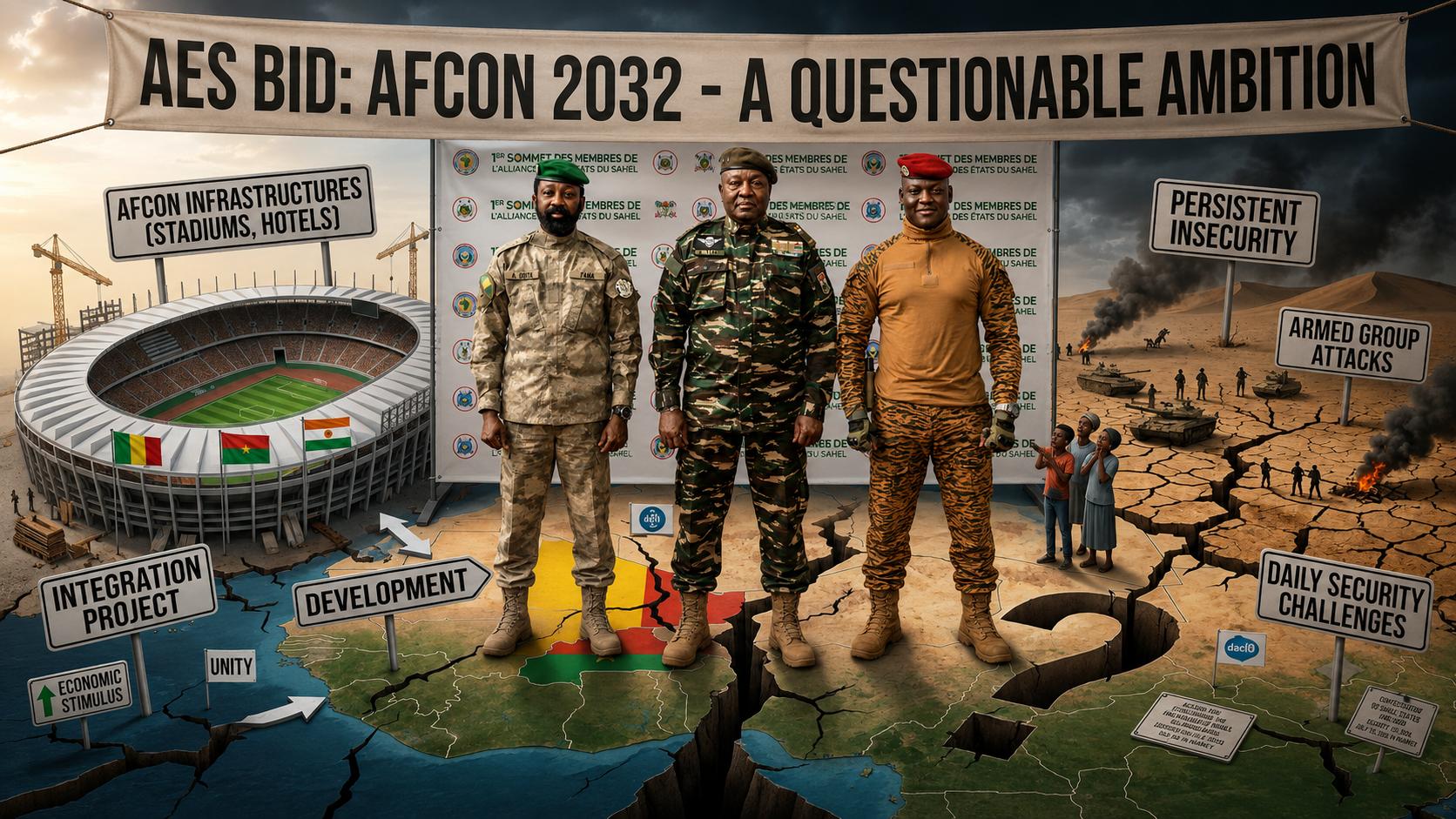
The governments of Burkina Faso, Mali, and Niger have jointly submitted their bid to host the 2032 Africa Cup of Nations (AFCON), positioning the proposal as a testament to regional cooperation within the Alliance of Sahel States (AES). While framed as a unifying vision for West Africa, the announcement has sparked debate over whether these nations possess the necessary groundwork to safely and successfully stage Africa’s premier football tournament.
Security concerns overshadow ambition
Hosting the AFCON extends far beyond stadium construction. It demands an environment where players, officials, media personnel, and spectators—potentially numbering in the hundreds of thousands—can move freely and securely. Yet the three nations, now under military leadership following recent coups, continue to grapple with entrenched insecurity that threatens both urban and rural areas.
Despite pledges from transitional authorities to restore stability, armed group attacks persist across Burkina Faso, Mali, and Niger. Civilians, security forces, and critical infrastructure remain frequent targets, with entire communities still living under the shadow of violence. In this climate, the timing of a joint AFCON bid raises a critical question: Is it feasible to invite international visitors while large segments of the local population still face daily threats to their safety?
Logistical and financial hurdles loom large
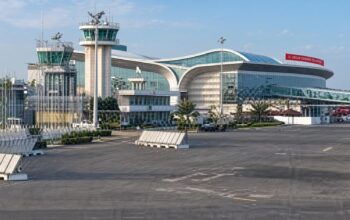
Organizing the AFCON requires world-class infrastructure, including reliable transportation networks, modern airports, an extensive hotel sector, advanced medical facilities, and airtight security protocols. Yet these countries face a paradox: they must allocate vast resources to address immediate security crises even as they prepare for a potential decade-long project.
The financial strain is undeniable. With limited budgets already stretched thin by counterinsurgency efforts, the question arises whether such an investment is prudent—or even realistic—before core stability and governance issues are resolved. Sponsors, broadcasters, and football governing bodies will scrutinize not just the stadiums, but the broader ecosystem of safety and functionality.
Credibility and expectations in the balance
International football authorities prioritize risk mitigation. A tournament marred by instability, logistical failures, or security incidents could damage the reputation of both the host bid and African football as a whole. For the AFCON 2032 proposal to gain traction, Burkina Faso, Mali, and Niger must demonstrate not just political will, but tangible progress in restoring peace and public trust.
Many citizens, weary of years of conflict and unmet promises, view the bid with skepticism. The military-led transitions were sold on the promise of ending violence and restoring sovereignty. Yet tangible improvements remain elusive in vast regions, casting doubt on the leadership’s ability to deliver on its commitments.
A call for substance over spectacle
While a successful AFCON could serve as a catalyst for economic growth and regional pride, its feasibility hinges on first addressing fundamental challenges. A trophy is not a solution to insecurity. Before welcoming the world, these nations must ensure their people can live, travel, and work without fear—within their borders and beyond.
The bid, therefore, is more than a sporting proposition; it is a referendum on governance, security, and national resilience. Until these pillars are firmly in place, the dream of hosting the 2032 AFCON may remain just that—a dream deferred by the harsh realities of a region still fighting for its future.