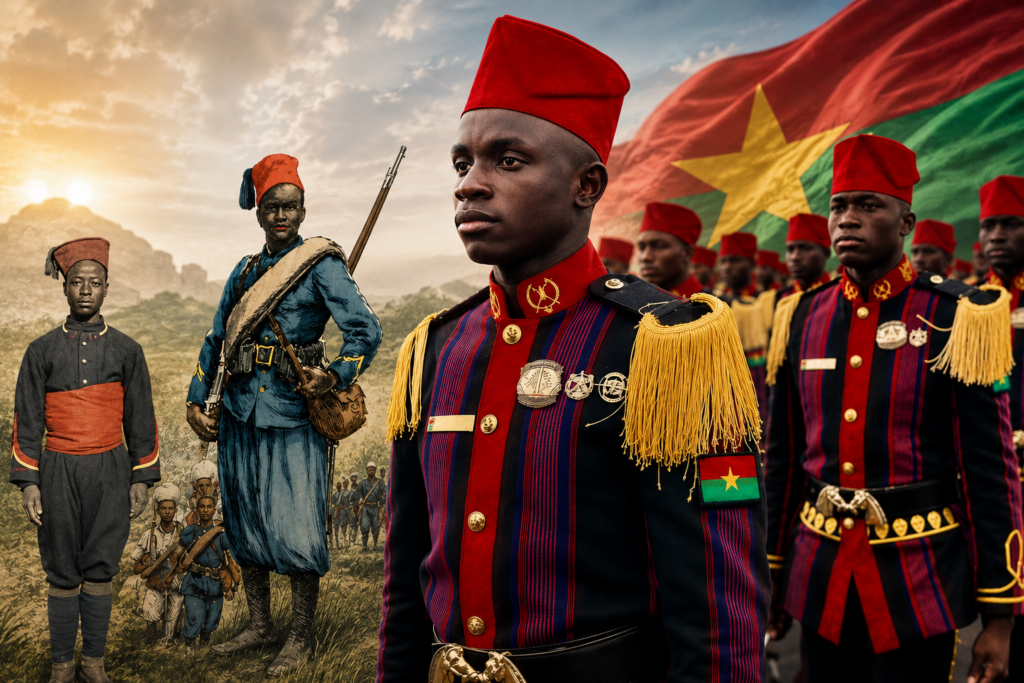
Between sovereignty narratives and stark realities
The line separating political spectacle from ground-level reality in Burkina Faso continues to blur with each passing day. A case in point is the military junta’s recent decree establishing a “memory attire” for national commemorations tied to decolonization milestones. Marketed as a triumphant return of national pride and sovereignty, the initiative is part of a broader effort to revive indigenous identity markers. Yet it simultaneously thrusts into sharp relief a critical question: when a nation faces an unprecedented security crisis, what should take precedence?
The gamble on nationalist posturing
Captain Ibrahim Traoré’s political capital remains significant among a broad segment of the Burkinabè populace and across certain West African opinion currents. By rejecting conventional frameworks of international cooperation and embracing an unapologetically anti-imperialist stance, the transitional leader has tapped into decades of frustration over ineffective counterterrorism strategies.
This sovereignist rhetoric resonates deeply with many citizens who believe former security approaches failed to restore stability. In response, authorities have rolled out a series of symbolic gestures: elevating Faso Dan Fani to official status, promoting national languages, rehabilitating historical resistance figures, and now introducing the “memory attire.” To the regime’s supporters, these measures collectively rebuild a national identity long eroded by external pressures and internal divisions.
On the security front, the rapid expansion of the Voluntary Defense of the Homeland (VDP) militia reflects an attempt to rally civilian participation in the war effort. The stated goal is twofold: curb external reliance and cultivate a self-sufficient defense apparatus capable of addressing threats sustainably.
A security landscape still spiraling out of control
Yet symbols, no matter how potent, cannot substitute for tangible outcomes. Nearly four years into military rule, the security challenge remains daunting.
Extensive swaths of national territory remain beyond state control. In multiple provinces, armed factions persist in targeting defense units, civilian auxiliaries, and local communities. Ambushes on convoys, village raids, infrastructure sabotage, and kidnappings fuel an entrenched climate of fear. The humanitarian toll is staggering: hundreds of thousands displaced internally, entire villages living under constant threat, and critical services such as healthcare, education, and administration severely disrupted. Economic precarity deepens, especially in rural areas, as supply chains collapse and artisanal mining operations shutter.
The economic strain is equally unsustainable. A growing share of public funds is diverted to military spending, leaving social sectors—health, education, infrastructure, and development—chronically underfunded. Agricultural slowdowns and restricted movement of goods exacerbate the downturn, pushing communities further into vulnerability.
The widening gap between rhetoric and reality
Tensions mount as official narratives clash with grassroots expectations. While Ouagadougou touts symbols of regained sovereignty, citizens demand tangible relief: secure roads, restored public services in abandoned zones, and safe returns for the displaced.
True sovereignty transcends ceremonial displays or wardrobe mandates. It demands the state’s effective authority over every inch of its territory, the protection of civilians, the unhindered movement of people, and the delivery of essential public functions.
Patriotic mobilization can foster unity, but its power wanes when communities remain trapped in daily violence. As the conflict drags on, the gulf widens between the regime’s ambitions and the lived experiences of rural populations.
The ultimate test for Burkina Faso’s transition
The nation stands at a pivotal juncture in its modern history. Restoring security isn’t just a priority—it’s the prerequisite for any political, economic, or social revival. Without measurable progress on this front, even the most resonant nationalist symbols risk losing their mobilizing force.
The legacy of this military transition will ultimately hinge not on the eloquence of its slogans or the proliferation of identity-centric initiatives, but on its capacity to reclaim lost territories, safeguard civilians, and lay the groundwork for a return to normalcy. Genuine sovereignty isn’t proclaimed; it’s proven through the ability to deliver security, stability, and hope to every citizen.
You may also like
Burkina Faso’s military academy opens as 221,000 citizens flee abroad in 2025
Gabon opens EU fisheries talks after scrapping old pact
S&P holds Cameroon at B-/B, warning that political succession is now the main risk
Senegal’s 2026 revised finance bill: national assembly confirms receipt after three-day delay
Mali: JNIM’s Dioura attack shatters army’s official narrative