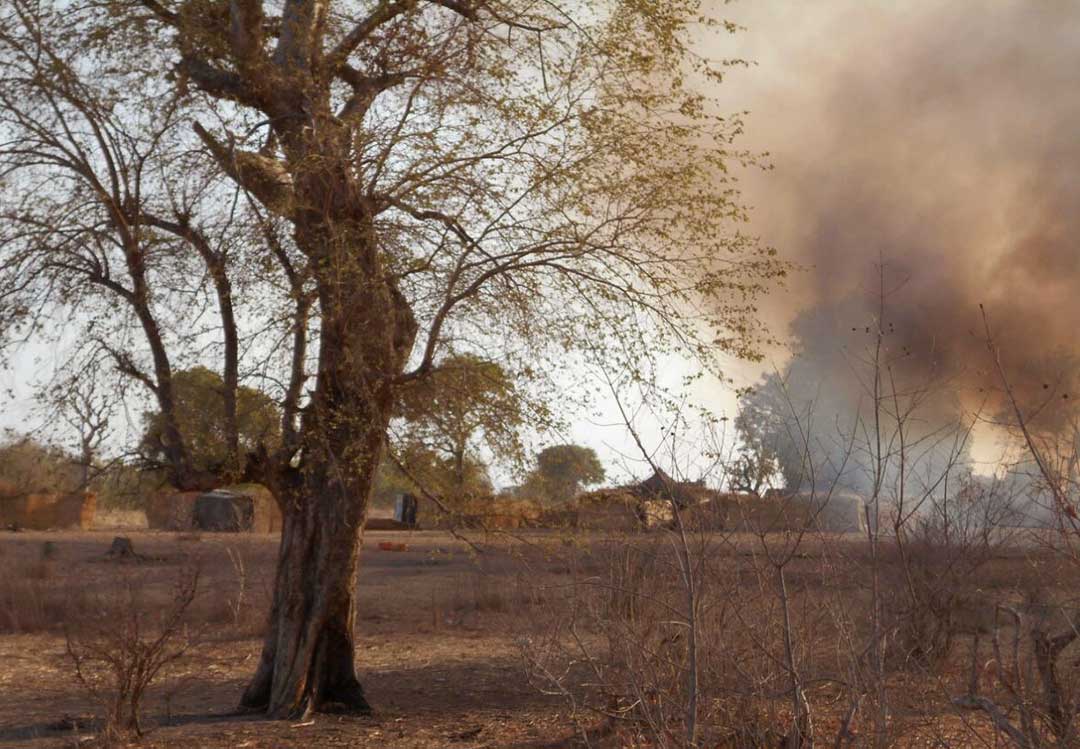
Once a thriving natural reserve spanning 60,000 square kilometers in Nigeria’s Northeast, the Sambisa forest now serves as a contested battleground for two rival militant factions. The lush, dense vegetation that once attracted tourists has become a haven for armed groups, replacing wildlife with conflict and military operations.
Since Boko Haram split into two distinct groups in 2016—the Sunni Group for Preaching and Jihad (JAS) and the Islamic State’s West Africa Province (ISWAP)—the struggle for control over Sambisa has intensified. Recent field reports confirm a surge in clashes, with both factions vying for dominance in a region critical to their insurgent operations.
Covering vast terrain and offering dense canopy cover, Sambisa provides an ideal base for launching attacks and controlling illicit trade routes. Its strategic importance cannot be overstated, as it allows militants to evade security forces while maintaining operational flexibility.
Expert analysis from Borno-based security analyst Zagazola Makama highlights the growing intensity of the conflict. Multiple skirmishes have been documented inside and around the forest, with both sides claiming heavy casualties. While unverified, these claims underscore the escalating rivalry between the two groups, now operating as parallel insurgencies against Nigerian and multinational forces.
Since Boko Haram’s insurgency began in 2009, the violence has spilled into neighboring countries, including Cameroon, Niger, and Chad. United Nations data estimates over 40,000 civilian deaths and the displacement of more than two million people across the region.
While JAS is notorious for kidnappings, looting, and deadly raids, ISWAP focuses on territorial control, taxation, and establishing shadow governance structures—though with lethal disregard for civilian lives. Sambisa and the Lake Chad islands have long been strongholds for both factions, where they regroup, rearm, and regroup.
tactical shifts and evolving threats
According to Zagazola Makama, recent intelligence suggests that despite counterterrorism pressure, insurgents continue to maintain active communication networks and operational capabilities within these enclaves. The ongoing clashes between Boko Haram and ISWAP present a dual challenge: they disrupt regional security cohesion while creating opportunities for further fragmentation among insurgent forces.
Taiwo Adebayo, a Boko Haram specialist at the Institute for African Security Studies in South Africa, warns that Nigerian and multinational forces must recalibrate their strategies. With security efforts currently focused on ISWAP’s attacks on military installations, JAS has gained breathing room to reorganize and rebuild its ranks.
In a 2025 analysis, Adebayo stresses the need to treat JAS as an independent and adaptive threat rather than a weakened rival of ISWAP. “Security strategies must evolve to address JAS as a distinct, resilient force capable of sustaining its insurgency.”
Malik Samuel, a senior researcher at Good Governance Africa, predicts a prolonged stalemate between the two factions. “ISWAP faces significant hurdles in accessing JAS’s stronghold in Barwa, where its leadership is based, complicating efforts to replicate a Sambisa-style offensive to dismantle JAS command structures.”
He adds, “The proximity of both groups in the Lake Chad islands makes confrontation inevitable, as competition for territory and resources intensifies. However, outside these islands, JAS lacks the manpower, territorial reach, and foreign fighter support that ISWAP possesses.”