Mayo-Tsanaga in ashes: Boko Haram’s devastation and state indifference
Over 50 deserted villages, thousands displaced, and a state that remains deafeningly silent
The terror unleashed by Boko Haram is no longer a distant threat—it has become a daily reality in the Mayo-Tsanaga region of Cameroon. Originating in Nigeria’s Borno State in the early 2000s, the jihadist group crossed the border in 2014 and struck Cameroon for the first time at Mount Gossi in the village of Tourou, just 35 kilometers from Mokolo.
Since then, hundreds of Boko Haram fighters have entrenched themselves in the area, escalating attacks that have left devastation in their wake. These militants burn, kill, loot, and abduct, targeting farms, markets, places of worship, gendarmerie posts, schools, and health centers. As the years pass, the human toll rises, villages empties, and survivors flee—either massacred or forced to abandon their homes. Nearly 13 years after the first strikes, the response remains inadequate, and the silence persists. The Mayo-Tsanaga is withering away, and no one seems to care.
The silent exodus of a region
From Mokolo to Koza, extending to the Mayo-Moskota area, the landscape tells a story of unprecedented territorial abandonment. More than 50 villages in the Mayo-Tsanaga have been completely or partially deserted, including Gossi, Tourou, Vizik, Ldamang, Magoumaz, Ldubam, Dinglding, Chougoulé, Oupai, Houdahai, Vouzoud, Ldama, Ziver Montagne, Houva, Gouzda Wayam, Tchébé-Tchébé, Koza, Locktcha, Toufou, Guedjele-Guibedrom, Zelevet, Krawa-Mafa, Ldaoutsaf, Merekouet, Dzamadzaf, Hitéré, Bavangola, Vreket, and Gouzou-dou.
In May 2022, Mahadek Nicolo Nouhou, the fifth deputy mayor of Mokolo, presented a grim assessment to Public Health Minister Manaouda Malachie during the Fraternal Gatherings of Mayo-Tsanaga in Tourou and Mokolo: ten villages completely abandoned, two occupied by Boko Haram, and seven others regularly targeted by attacks. Militants have dug in at Gossi, Toufou 1, Toufou 2, Roum, and Hitawa, forcing residents to flee in droves.
Since then, the situation has only worsened. Residents of Tourou voice their despair: “We are left to fend for ourselves, struggling to understand why our local leaders and the government remain silent. Do we, the people of Mayo-Tsanaga, not matter as true Cameroonian citizens?”
Life in fear: survival in the shadows
For over a decade, residents have lived in constant terror. By night, men flee their homes. By day, they return—only to work the land under the cover of daylight. When darkness falls, they take refuge in the mountains, sharing caves with snakes and other wildlife, risking bites and contamination. It is a desperate existence, one that underscores the failure of protection.
The Cameroonian state’s response is woefully insufficient. In Ldamang and Ldubam, during a brutal attack on June 18, 2026, at 2 a.m., only two soldiers were present. How can two lightly armed men confront a heavily equipped terrorist group? Civilians, organized into vigilance committees armed with machetes and sticks, are left to defend their communities alone.
The complicity of silence
The indifference of local elites compounds the crisis. Mayo-Tsanaga is home to influential figures, high-ranking officials who could amplify the voices of the oppressed. They appear at election rallies, deliver speeches, and make empty promises—exploiting the vulnerability of the population for political gain. Yet when Tourou burns and Koza mourns its dead, these same elites remain conspicuously silent. This is not oversight; it is a calculated political choice.
Ministers have visited the region, held meetings, and issued statements. But their promises fade like echoes in the wind. The attacks continue unabated. Yesterday, it was Mokolo. The day before, Koza. What will tomorrow bring? No one can say. No one dares to promise.
Humanitarian collapse: the unending displacement
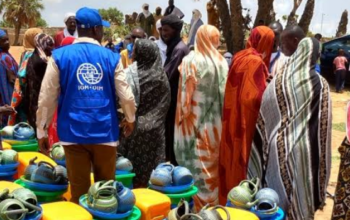
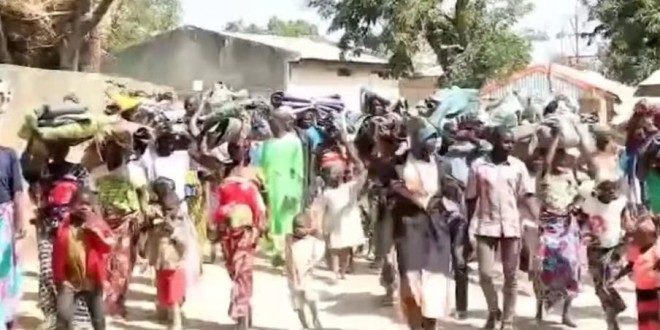
More than 9,000 people have been displaced by Boko Haram’s violence, unable to return to their villages—a number that grows with every incursion. In early June 2026 alone, the International Organization for Migration (IOM) recorded 482 newly displaced individuals, or 78 households, fleeing attacks in Mokolo, Koza, and Mayo-Moskota. The crisis extends beyond the department’s borders. By early July 2026, a local authority in Kalfou, Mayo-Danay, reported welcoming nearly 300 displaced people who had fled Boko Haram’s violence from Mokolo. The journey spans roughly 210 kilometers by road, illustrating the scale of the exodus: families trek hundreds of kilometers, abandoning homes, land, and livelihoods in search of safety.
Those who escape leave behind everything—even the dead. Identification papers, birth certificates, and national identity cards are reduced to ashes with their homes. The most heartbreaking consequence, however, is the fracturing of families. In the chaos of attacks, parents and children are separated, some forced to flee without their loved ones. Children and adolescents, left to fend for themselves, are stripped of protection, education, and stability. Their future darkens: some abandon their studies, others turn to crime, and many young girls lose all hope for a better life.
A region on the brink of collapse
The Mayo-Tsanaga is emptying. Agriculture is collapsing. Schools are closing. Local economies are vanishing. Without urgent intervention, the region faces irreversible depopulation. The state cannot afford to ignore its citizens simply because they live far from Yaoundé. The question lingers: how many more villages must be abandoned before this crisis becomes a national priority?