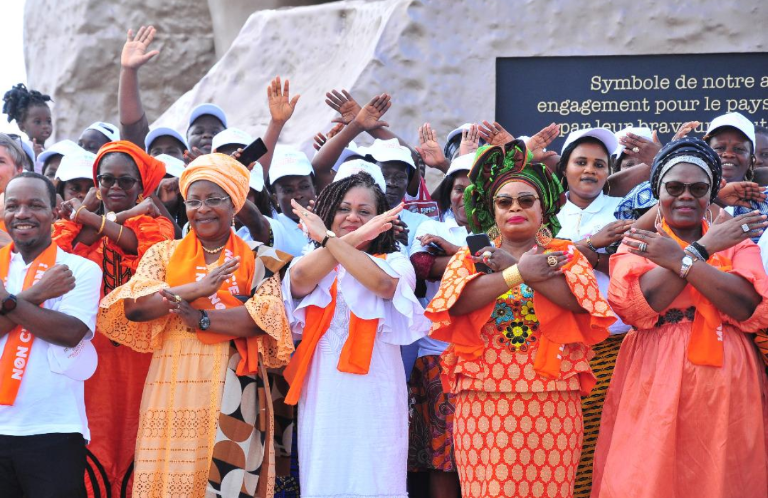
From political declaration to legal weapon: the Beninese government’s calculated move
In an unprecedented display of political will, Benin has taken a decisive step to confront the entrenched issue of gender-based violence. During a high-stakes cabinet meeting on November 4, 2026, chaired by Prime Minister Romuald Wadagni, the government approved the ratification process for the African Union Convention on Eliminating Violence Against Women and Girls. This strategic maneuver is not merely symbolic—it represents a calculated shift in Benin’s legal framework, designed to address both visible and invisible forms of violence that have long afflicted its society.
Why this Convention is more than just another legal document
The African Union’s landmark instrument, adopted in February 2025 in Addis Ababa, stands out for its comprehensive scope. Unlike previous agreements that often focused narrowly on physical or sexual violence, this Convention casts a wider net. It explicitly condemns emotional abuse, digital harassment, economic discrimination, and any form of gender-based harm—whether in private homes, public spaces, workplaces, or online environments. For a nation like Benin, where cultural norms have sometimes perpetuated tolerance for such abuses, this legal framework demands a fundamental rethinking of long-standing practices.
The invisible battles: violence in the digital age
One of the Convention’s most groundbreaking provisions addresses the cyber realm, where women increasingly face threats that transcend physical boundaries. Online harassment, blackmail, and reputational damage can have devastating, long-lasting effects on victims. By including this dimension, the Convention forces Benin to modernize its legal response to match the realities of a digital society. The government acknowledges that traditional protection mechanisms are ill-equipped to handle these emerging threats, making this a critical area for legislative reform.
Can traditions ever justify harm? The Convention says no
A particularly contentious aspect of the agreement is its unequivocal stance: no custom, tradition, or religious belief can be used to justify violence against women. This principle directly challenges deeply rooted social norms in many African communities, including Benin. While the government’s endorsement of this stance demonstrates progress, it also raises questions about enforcement. Changing societal attitudes will require more than legal declarations—it demands sustained education, community engagement, and a redefinition of what constitutes acceptable behavior.
Experts warn that without a cultural shift, the Convention’s provisions may remain largely theoretical. ‘Laws can be changed overnight,’ notes sociologist Adama Coulibaly, ‘but reshaping entrenched beliefs is a generational challenge.’
From paperwork to impact: what success will look like
The journey ahead is twofold. First, the Beninese Parliament must approve the Convention, a technical but politically charged step that could face resistance from conservative factions. Second—and more critically—the government must demonstrate that this legal commitment translates into tangible change. This means:
- Strengthening victim support services, ensuring they are accessible and adequately funded
- Training law enforcement and judicial officials to handle cases with sensitivity and efficiency
- Launching nationwide awareness campaigns to challenge harmful norms
- Holding perpetrators accountable, regardless of their social or economic status
A gender-equal society: the role of men and boys
The Convention places significant emphasis on prevention, recognizing that eradicating violence requires the active involvement of men and boys. Programs promoting positive masculinity are proposed as key tools for deconstructing toxic behaviors and fostering mutual respect. Education systems, media outlets, and community leaders are all called upon to participate in this cultural transformation. The goal is not to demonize men but to redefine masculinity in a way that aligns with dignity, equality, and non-violence.
Looking beyond November 25: a year-round commitment
With the International Day for the Elimination of Violence Against Women approaching on November 25th, Benin’s timing could not be more strategic. The 16 Days of Activism against Gender-Based Violence campaign that follows presents a critical window to showcase the government’s resolve. However, officials emphasize that true progress cannot be confined to symbolic dates. ‘This is not a sprint,’ warns Family and Social Action Minister Véronique Tognifodé. ‘It is a marathon that requires relentless effort on all fronts—legal, social, and cultural.’
The road ahead: challenges and opportunities
Benin’s path to ratification is not without obstacles. Skeptics question whether the government has the capacity—or the will—to implement such sweeping reforms. Others worry about backlash from religious or traditional leaders who may view the Convention as an imposition of foreign values. Yet, supporters argue that this moment represents an historic opportunity to align Benin with progressive continental standards while addressing its own deeply rooted challenges.
The Prime Minister’s leadership has set the stage, but the real test lies in execution. Will the Convention remain a paper tiger, or will it become the catalyst for transformative change? For the women and girls of Benin, the stakes could not be higher.