From fiery rhetoric to fiscal necessity: how Burkina Faso’s anti-western posturing faced economic reality
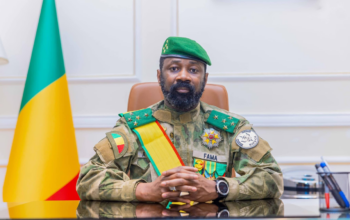
The Burkina Faso transitional government led by Captain Ibrahim Traoré built its political narrative on a bold promise: sever ties with western partners and pivot toward Moscow. Official statements painted Russia as the savior, ready to fulfill the country’s security, economic, and financial needs while liberating it from European influence. Yet behind the defiant headlines lies a less glamorous truth: financial commitments from Russia have fallen short of expectations, leaving Ouagadougou no choice but to quietly re-engage with Brussels.
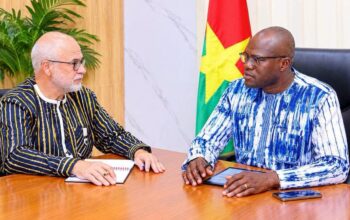
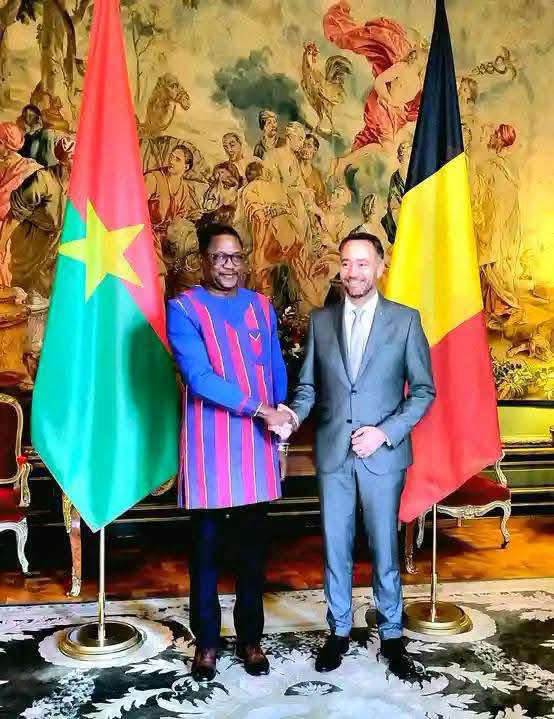
This unspoken policy reversal was underscored in early November 2026, when Burkinabè Foreign Minister Karamoko Jean Marie Traoré boarded planes not for Moscow, but for Brussels. On November 4 and 5, he met with EU High Representative Kaja Kallas, followed by Belgian Deputy Prime Minister and Foreign Minister Maxime Prévot. These talks came just days after the Russia-Africa Economic and Humanitarian Forum in Moscow, where Burkina Faso had sought to showcase its strategic shift toward its new ally.
The Russian partnership: promises made, funds delayed
During the Moscow forum, Burkina Faso touted a newly signed memorandum between the Economic Community of West African States (ECOWAS) Bank for Investment and Development (EBID) and Russia’s VEB.RF. The agreement was framed as a major step forward yet it lacked one critical component: ready-to-use capital. A memorandum of cooperation outlines future potential, not immediate cash.
Burkina Faso faces a staggering annual budget deficit projected at 4% of GDP for 2026, with total public spending set to exceed 3.9 trillion CFA francs while revenue hovers around 3.4 trillion. Security operations, social programs, and critical infrastructure demands aren’t on hold. Without external financing, the gap cannot be bridged by domestic means alone.
The question now looms: after years of anti-western rhetoric, can Moscow alone deliver the billions needed to fund a nation in crisis? Initial indicators suggest not. While political statements flourish, concrete financial flows remain conspicuously absent.
Brussels steps in with tangible support as Moscow stalls
The diplomatic pivot became undeniable during the minister’s visit to Belgium. Belgium announced a firm commitment: a €40 million financial package for Burkina Faso—but not until after 2027, via Enabel, Belgium’s international cooperation agency. That pledge signals more than goodwill. It confirms that despite public posturing, EU funding remains indispensable.
During the same visit, Karamoko Jean Marie Traoré also engaged with top European Commission officials and operational arms of EU development cooperation, including Enabel and Bio Invest. These meetings weren’t merely symbolic. They were part of a broader effort to secure immediate fiscal breathing room through trusted European channels.
The numbers behind the shift
Burkina Faso’s 2026 budget gap of 486.8 billion CFA francs (≈ $800 million) is not an abstract figure. It represents salaries unpaid, roads unbuilt, schools unopened, and counterterrorism operations underfunded. The deficit doesn’t disappear with slogans against the West it demands hard currency and long-term investment.
While Russian delegations spoke of accelerated cooperation, Brussels delivered a concrete figure: €40 million in development aid beginning after 2027. It may not close the gap, but it’s a lifeline the junta cannot ignore. And it exposes a critical contradiction: the same government that once declared Europe persona non grata now finds itself dependent on its financing.
The paradox of sovereignty: can Burkina Faso afford ideological consistency?
Sovereignty is not built on rejection it is built on capability. A nation cannot finance its future with declarations alone. It needs resources, partnerships, and deliverable results. So far, Moscow’s return on investment for Burkina Faso appears suspiciously low compared to the glowing promises once made in Ouagadougou’s public forums.
Meanwhile, Brussels offers a different value proposition: predictable funding, transparent accountability, and institutional cooperation tools the junta once dismissed as colonial relics. Yet today, they are the only visible path to fiscal stability.
The real test of leadership isn’t how loudly one denounces the West. It’s how effectively one secures the funds to feed children, protect citizens, and build roads. On that score, Burkina Faso’s diplomatic detour to Brussels tells a clearer story than any anti-western speech ever could.
What Moscow promised vs. what Ouagadougou received
To understand the magnitude of the shift, it’s worth comparing the rhetoric with the reality:
Russian narrative: Moscow would replace European donors, fund defense, and catalyze economic growth without conditionalities.
Russian delivery: A memorandum of cooperation (non-binding), no disbursed funds, and no clear roadmap to financial delivery.
European response: €40 million committed (albeit deferred), existing development pipelines, and institutional mechanisms already in place.
Burkinabè strategy: Still seeking Russian investment while actively pursuing European aid even as official speeches continue to downplay Brussels.
This dual track exposes a widening gap between political messaging and fiscal reality. A government can change partners, but it cannot change the laws of economics. Money, after all, is agnostic to ideology.
The path ahead: realism over rhetoric
Burkina Faso stands at a crossroads. It can continue to use anti-western rhetoric as a domestic rallying cry. But it cannot ignore the arithmetic of governance. Financial stability requires partnerships not just grandstanding. The junta’s return to Brussels is not a sign of weakness; it is a sign of pragmatism.
As the minister’s late 2026 tour demonstrates, diplomacy is not a zero-sum game. Burkina Faso can engage Moscow on security or trade without abandoning Brussels on health or education. The key lies in transparency: let citizens see what each partnership delivers.
Until Russia fulfills its pledges or until new alternatives emerge Ouagadougou will keep returning to the negotiating table in Europe. The only question is how long it will take the government to admit it openly, instead of cloaking financial necessity in ideological posturing.
By Pierre Tchuente — Journalist