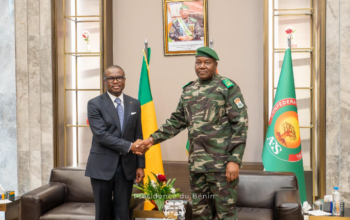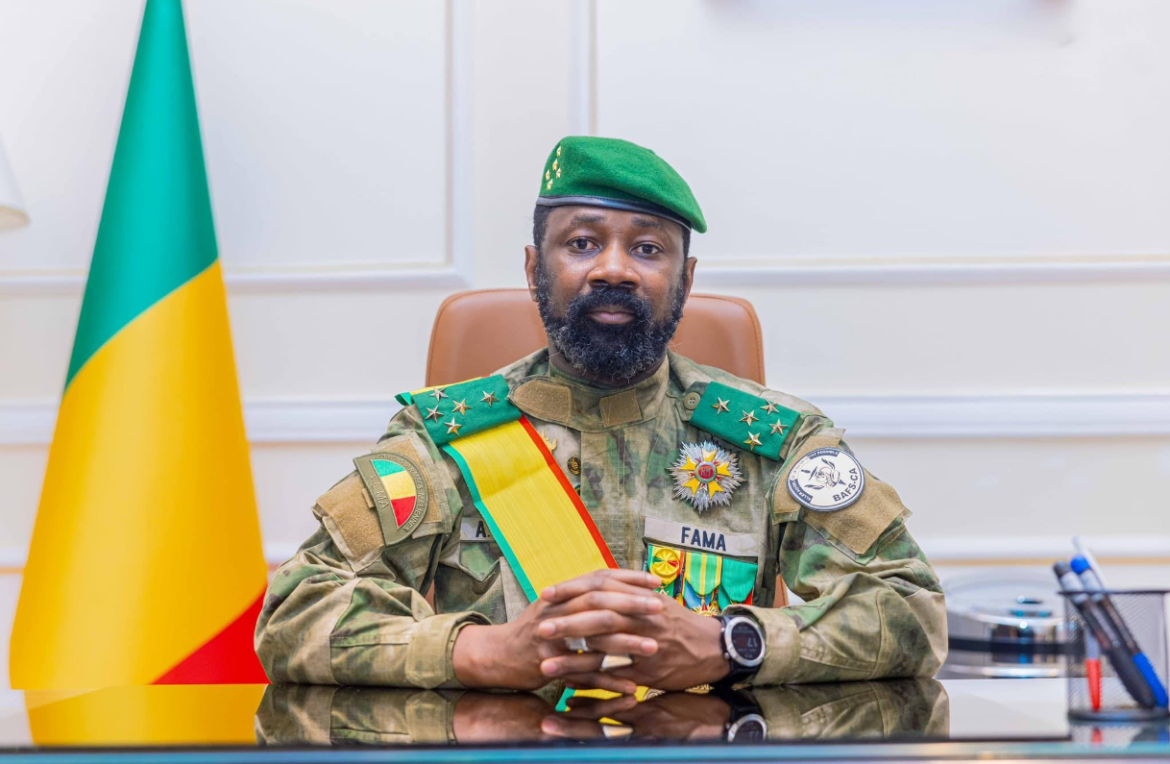
As the Sahel’s political landscape undergoes subtle yet significant shifts, a high-profile diplomatic meeting in Ouagadougou has laid bare an unspoken tension within the Alliance of Sahel States (AES). This week, Malian military leader Assimi Goïta arrived in Burkina Faso’s capital for an official visit with his Burkinabè counterpart, Ibrahim Traoré. While the encounter strengthens ties between Bamako and Ouagadougou, the conspicuous absence of Niger’s president, Abdourahamane Tiani, has prompted analysts and regional observers to probe deeper into the alliance’s evolving dynamics.
Diplomatic signals and hidden fractures in the AES
The November 5, 2026 meeting between General Goïta and Captain Traoré was officially framed as a bilateral visit focused on shared security, economic, and political priorities. Yet beneath the public agenda lies a critical question: why did Niger’s president skip the summit? The presence of two out of three AES members at a top-level gathering—especially one touted as a cornerstone of regional unity—raises concerns about whether the alliance is drifting away from its founding principle of tripartite cohesion.
Official statements have stopped short of offering explanations, emphasizing instead the routine nature of high-level exchanges between neighboring states. Still, the optics are difficult to ignore. If the AES was intended to serve as a unified front against common threats, then the absence of one of its three pillars at a major bilateral meeting risks being interpreted as more than just timing.
A fragmented alliance or strategic realignment?
Proponents of the AES argue that the alliance remains intact, pointing to prior cooperative frameworks such as the October 16 ministerial meeting in Ouagadougou, where foreign ministers from all three countries convened under the AES governance structure. This gathering was designed to synchronize policies on regional security, trade, and political alignment. Yet, the presence of officials does not always equate to consensus at the highest level.
When heads of state do not appear together, questions naturally arise about underlying tensions. Is this a sign of internal competition? A divergence in strategic priorities? Or simply logistical scheduling? The truth likely lies in a combination of factors, including evolving national agendas, security priorities, and perhaps even divergent views on the alliance’s future direction.
Security cooperation: the fragile foundation of alliance unity
At the heart of the AES’s mission is a shared commitment to countering transnational threats from armed groups operating across the Sahel. Mali, Burkina Faso, and Niger have repeatedly voiced their intention to deepen military collaboration, intelligence sharing, and joint operations. Yet, the reality on the ground often shows uneven implementation.
The failure to include Niger’s top leadership in this week’s diplomatic summit may reflect a more fundamental challenge: aligning three sovereign states behind a unified security strategy. Without consistent, high-level coordination between all three capitals, even the most well-intentioned agreements risk remaining on paper.
This is not to suggest that the AES is on the brink of collapse. However, it does highlight the urgent need for regular trilateral engagement—not just bilateral rounds—if the alliance is to maintain credibility both internally and externally.
Between symbolism and strategy: what does the future hold?
The true test of the AES will come not from public statements or photo opportunities, but from tangible follow-through. Will the outcomes of the Goïta-Traoré meeting be formally communicated to Niamey? Will Niger be invited into future joint initiatives discussed in Ouagadougou?
What is clear is that the alliance cannot afford prolonged gaps in leadership-level coordination. In a region where stability is fragile and external pressures are mounting, the AES must demonstrate that its strength lies not only in the strength of its two strongest members, but in the unity of all three.
As the world watches, the next move belongs to the three heads of state. Will they use this moment as a catalyst for deeper integration? Or will the absence of one create ripple effects that weaken the foundation they have built?
The road ahead: reconciling interests with unity
For an alliance born out of shared struggle and a rejection of external interference, unity must remain its greatest asset. But unity does not emerge automatically. It requires proactive diplomacy, transparent communication, and a willingness to set aside bilateral convenience in favor of collective progress.
The Ouagadougou meeting may have been a bilateral engagement in practice, but in the eyes of the Sahel and the world, it became a statement about the AES’s cohesion. The burden is now on its leaders to transform this moment of scrutiny into one of renewed commitment—before the silent absence speaks louder than any declaration.