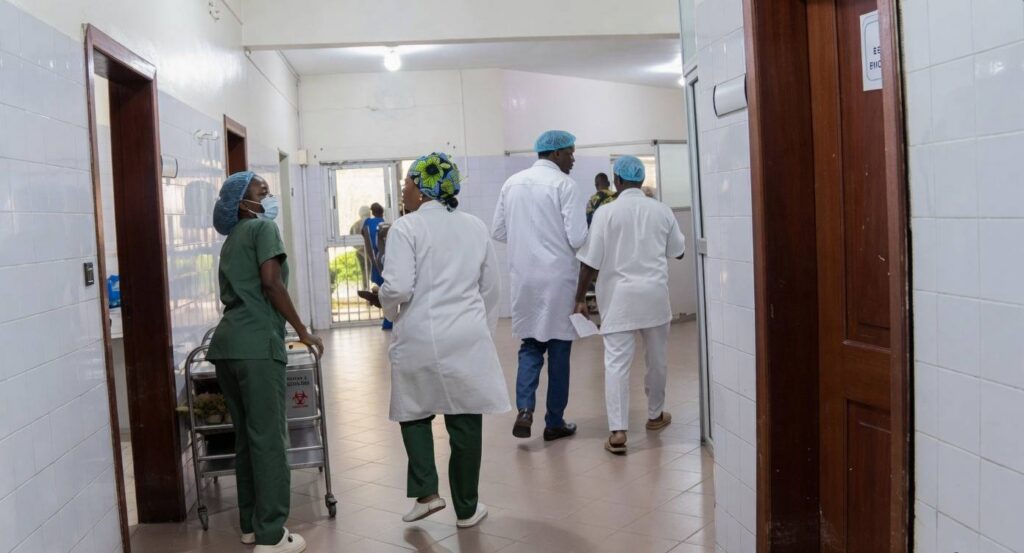
A significant transformation is underway within Benin’s healthcare system. In a groundbreaking move, financial barriers no longer impede the urgent need to save lives, as the nation’s health authorities have formally implemented immediate care for vital emergencies. The directive is unequivocal: “Treat first, pay later.” Central to this critical new framework are two prominent medical institutions in the economic capital: the Centre National Hospitalier Universitaire Hubert Koutoukou Maga (CNHU-HKM) and the Hôpital de la Mère et de l’Enfant Lagune (HOMEL).
Comprehensive mobilization of staff and resources
Previously, access to emergency medical services was frequently contingent upon an upfront payment or the purchase of necessary medical kits by distressed relatives. That era has now definitively concluded.
On the ground, the reality has demonstrably shifted:
- Immediate availability of supplies: The emergency pharmacies at CNHU-HKM and HOMEL have received substantial resupplies. Essential medicines, consumables, and resuscitation kits are now directly accessible to medical staff without any prior financial validation.
- 24/7 team deployment: Medical and paramedical personnel are continuously on duty, ensuring rapid triage and immediate treatment upon the arrival of ambulances or patients.
“Our absolute priority is to stabilize the patient within minutes of admission. Administrative and financial matters are only addressed once the vital prognosis is out of danger,” a CNHU emergency physician confirmed.
A seamless and immediate care pathway
To ensure the effectiveness of this measure, the patient management mechanism now follows a precise and streamlined protocol, engineered to eliminate any delays.
Upon a patient’s arrival, the initial step involves immediate admission and triage. Qualified personnel swiftly assess the situation to determine if a critical, life-threatening emergency exists.
Once a diagnosis is established, the process transitions directly to medical treatment. At this stage, care is administered, and medications are provided without any upfront charges, with the sole objective being to stabilize the patient’s vital functions.
Finally, the post-emergency phase commences once the immediate danger has been averted. It is at this precise juncture that billing is processed retrospectively. Should the patient’s circumstances warrant it, referral to a social services department is offered to humanely and appropriately manage the financial aspects.
The challenge of sustainability
While the public widely hails this initiative as a historic humanitarian and social advancement, it simultaneously presents a significant challenge for hospital administrations: managing inventory and recovering costs retrospectively. The government is relying on civic responsibility and various subsidy mechanisms to guarantee the long-term viability of this initial no-cost model.
By abolishing upfront “counter payments” in critical emergency situations, Benin takes a decisive step towards universal health coverage, firmly placing human dignity and the right to life at the core of its health policy.
You may also like
Can OL Lyonnes still top the group after Chelsea stalemate?
Can Togo’s mediation still deliver peace in eastern DRC after Tshisekedi’s latest letter to Gnassingbé?
Mali: did the JNIM ambush on Africa Corps near Niono expose a fatal gap in Russia’s Sahel strategy?
Will Mali’s 73.6 million dollar funding gap decide the fate of millions by 2027?
Niger’s jailing of lawyer Abdourahamane Lirwana: is free speech now a crime in the country?