GEX 2026: uncovering France’s strategic shift in West African defense cooperation
The upcoming GEX 2026 military exercise represents more than just a joint drill—it marks a fundamental rethinking of France’s military engagement strategy across West Africa. With Côte d’Ivoire and Gabon as primary partners, this multinational operation reflects Paris’s evolving approach to security cooperation, particularly in the Gulf of Guinea, where regional stability has become increasingly fragile.
The exercise, scheduled in two phases, aims not only to enhance troop readiness but also to redefine how European and African militaries collaborate in an era of shifting geopolitical alliances and emerging transnational threats.
The mechanics and scale of GEX 2026: what’s really happening on the ground
The Grand Exercice Multinational Interarmées (GEX) 2026 spans two weeks in November, divided into two distinct operations. The first, “FANGHA 2026”, unfolds in Côte d’Ivoire from November 7 to 14, while the second, “WAIYA 2026”, takes place in Gabon from November 24 to 29. Together, they bring together over 2,000 troops, integrating land, air, and naval units in a complex, cross-border training environment.
While Côte d’Ivoire contributes approximately 1,181 soldiers, France fields around 850 personnel, and Gabon commits just over 100. Additionally, regional observers from Benin, Guinea, Liberia, and Senegal will be present, signaling growing interest in interoperability across coastal West African nations.
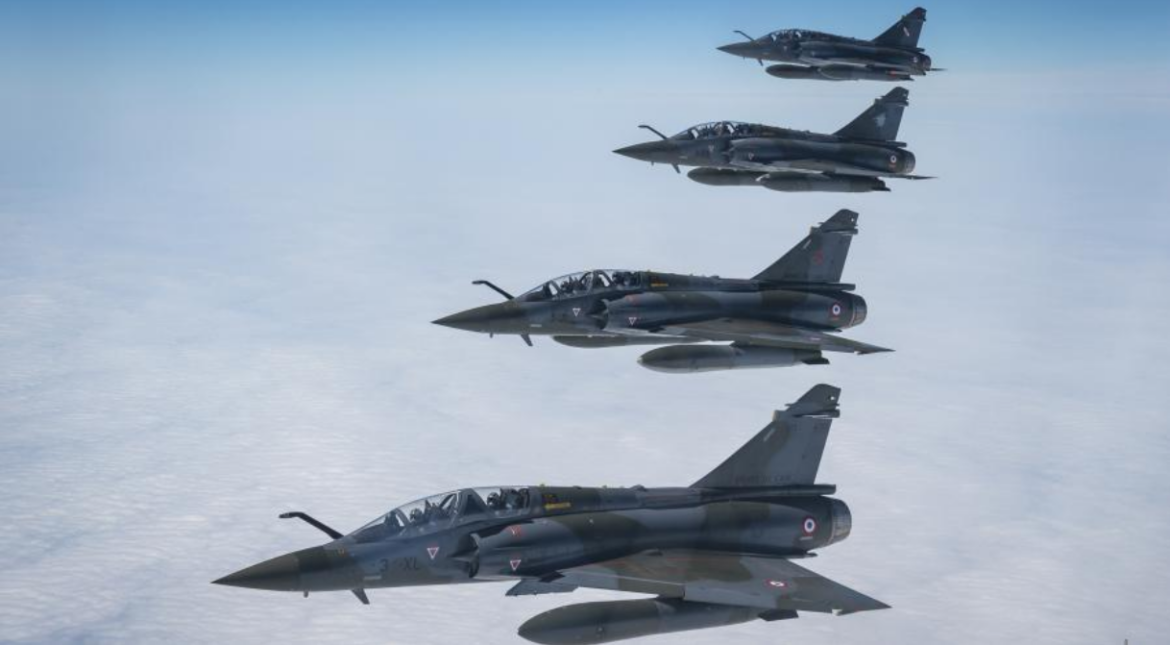
The French contingent includes advanced assets such as the amphibious assault ship Mistral and Mirage 2000 fighter jets, designed to simulate combined maritime deployments, amphibious landings, air support, and land operations—scenarios that reflect the evolving nature of security threats in the Gulf of Guinea.
Why the Gulf of Guinea is now central to regional security planning
The Gulf of Guinea isn’t just a body of water—it’s a vital artery of global trade, energy supply, and maritime commerce. Home to major oil fields, deep-water ports, and shipping lanes connecting Europe, the Americas, and Asia, this region is increasingly vulnerable.
Piracy, illegal fishing, human trafficking, arms smuggling, and attacks on offshore platforms are on the rise. Compounding these threats is the spillover of instability from the Sahel, with armed groups potentially extending their reach toward coastal states like Côte d’Ivoire and Gabon.
For Côte d’Ivoire, northern border regions remain under pressure from cross-border militant activity. Gabon, with its expansive coastline, is prioritizing maritime domain awareness to protect critical infrastructure and prevent spillover conflicts. By integrating their operations in GEX 2026, these nations aim to establish a coordinated, multi-domain response framework—bridging land, sea, and air capabilities that transcend national borders.
France’s pivot: moving from permanent bases to flexible partnerships
The GEX 2026 initiative arrives amid a sweeping transformation in France’s military footprint across West and Central Africa. The withdrawal from Mali, Burkina Faso, and Niger—along with the restructuring of its presence in Côte d’Ivoire and Gabon—signals a strategic retreat from large, permanent bases toward a more agile, partnership-driven model.
The return of the Port-Bouët base to Ivorian control in 2025 was a symbolic step in this transition. Rather than replacing boots on the ground with static installations, Paris is now focusing on training, joint exercises, and rapid deployment capabilities, enabling it to respond to crises while respecting partner sovereignty.
GEX 2026 embodies this philosophy. It’s not about projection for the sake of influence, but about demonstrating that France remains a capable and willing security partner—especially in regions where instability threatens both African and European interests.
Local ambitions: Côte d’Ivoire and Gabon’s drive for enhanced defense autonomy
While international observers may view GEX 2026 through the lens of French strategic interests, the participating African nations have their own agendas. Both Côte d’Ivoire and Gabon are keen to modernize their armed forces, reduce dependence on external security guarantees, and assert leadership in regional stability.
For Côte d’Ivoire, strengthening interoperability with partners like France is key to addressing threats in the north and securing its maritime approaches from the Gulf of Guinea. For Gabon, situated on the Atlantic’s eastern flank, the focus is on safeguarding critical infrastructure, enforcing maritime law, and protecting sovereign waters from illicit activities.
Both countries see GEX 2026 as a platform to test real-world collaboration—not just in drills, but in intelligence sharing, joint patrols, and coordinated crisis response. The long-term goal? Building a West African security architecture that is less reliant on foreign models and more responsive to local realities.
The broader challenge: can GEX 2026 foster a sustainable regional defense network?
GEX 2026 is not an isolated event—it’s the latest step in a broader experiment. The inclusion of observers from Benin, Guinea, Liberia, and Senegal hints at a future where cooperation extends beyond a single bilateral exercise. The challenge, however, lies in translating temporary training into lasting institutions.
Success will depend on three core pillars:
- Information integration: establishing shared intelligence mechanisms across countries to improve threat detection and response times.
- Sustainable training systems: moving beyond one-off drills to continuous professional development and joint staff colleges.
- Autonomous command capability: ensuring that African militaries can plan, lead, and conclude operations without constant external oversight.
If GEX 2026 succeeds, the Gulf of Guinea could emerge as a laboratory for a new model—one where cooperation is rooted in equality, shared responsibility, and mutual benefit. But if the initiative remains purely symbolic, it risks reinforcing old patterns of dependency and short-lived engagement.
The future of defense cooperation in West Africa: partnership or dependency?
GEX 2026 is a microcosm of a larger question: what will future defense relationships between Africa and its international partners look like? The real test isn’t in the scale of the drills or the sophistication of the equipment—it’s in whether these exercises lead to real, enduring change.
For France, the goal is to maintain influence while adapting to a continent asserting greater control over its security architecture. For African states, the opportunity is to shape a future where partnerships enhance—not diminish—their strategic sovereignty.
The Gulf of Guinea, with its converging threats and shared economic stakes, has become the ideal proving ground. GEX 2026 may be just the beginning—but if executed well, it could redefine what African-European defense cooperation truly means.