The Contradiction Between National Discourse and Ground Reality
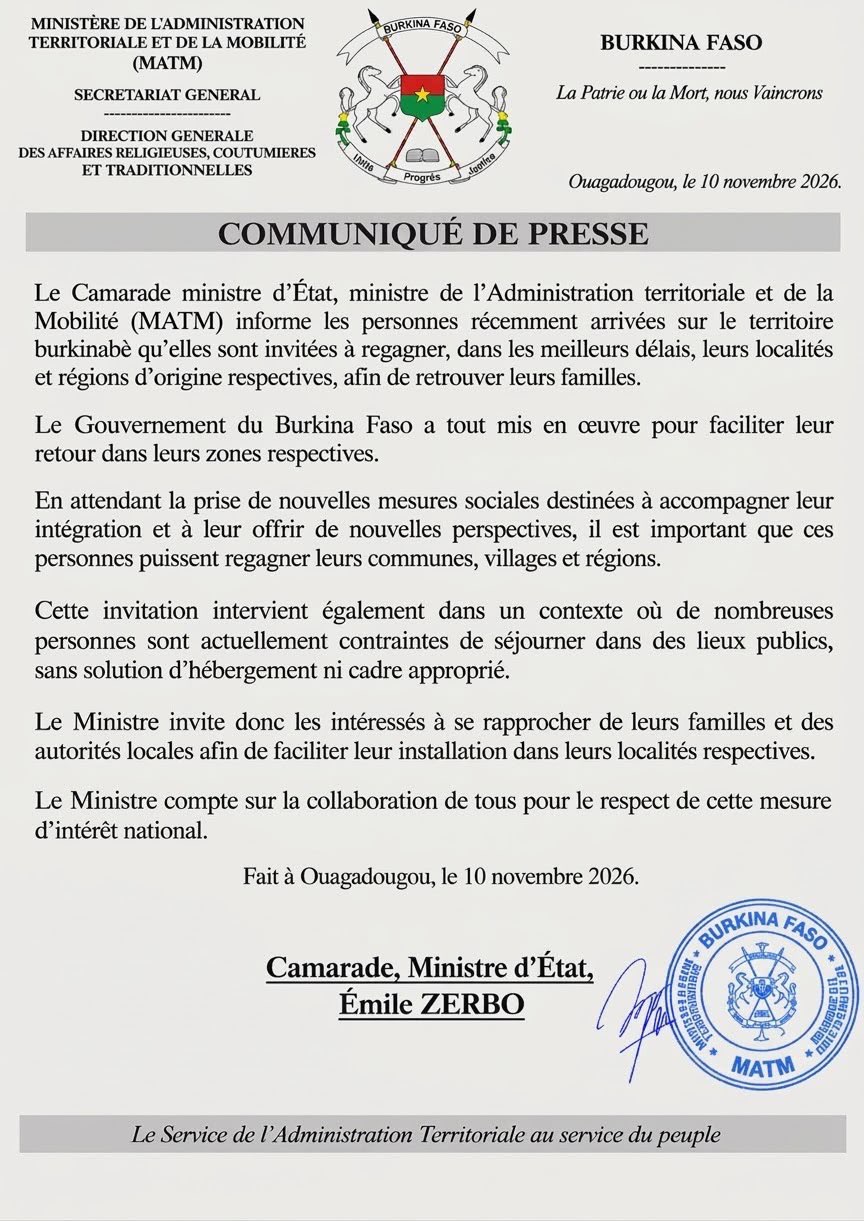
Burkina Faso’s bold declarations of economic sovereignty, national dignity, and resource independence now face a sobering test of credibility. Thousands of Burkinabè gold miners expelled from Guinea find themselves at the heart of a fundamental question: How are these young workers to rebuild their economic lives when the state offers no clear pathway to reintegration? After years of patriotic rhetoric and public outcry over their plight, the government’s response has amounted to little more than administrative directives urging returnees to return to their villages and families without providing structured plans, timelines, or financial support. This approach reveals a stark disconnect between political speeches and actionable policy.
From Artisanal Mining to Unemployment: The Human Cost of Sudden Displacement
The rush to label the miners’ situation as a mere administrative issue overlooks the profound economic and social consequences of their expulsion. For these young men and women, gold panning was not a mere occupation it was often their sole means of survival, a pathway to supporting families dependent on their earnings. The abrupt termination of this activity has left many without income, destabilized household budgets, and shattered carefully laid plans for their futures.
Once back in Burkina Faso, the challenges multiply. Can these individuals regain employment? Do they possess the financial resources to restart an economic activity? Is there a structured support system to lift them out of precarity? The government’s failure to address these questions reveals a critical gap in policy-making. Relying solely on repatriation as a solution ignores the fact that a returnee without a job remains unemployed, a family without income remains vulnerable, and a community stripped of its primary livelihood source faces systemic collapse.
Economic Sovereignty Must Translate Into Tangible Opportunities
President Ibrahim Traoré’s administration has consistently framed resource sovereignty as a cornerstone of national recovery, emphasizing the need to reclaim control over Burkina Faso’s mineral wealth. Yet this vision clashes sharply with the reality faced by thousands of returning miners. If the state claims mastery over gold resources, why are its citizens, who once mined these very resources, now left in economic limbo?
True sovereignty demands more than nationalizing industrial mining operations or condemning foreign interests. It requires transforming natural wealth into employment, income, and economic opportunities for the population. Turning resource control into real-world benefits is the unmet challenge. A nation may declare ownership of its gold, but if its youth lack viable economic activities, the promise of sovereignty remains hollow. The ultimate test of this policy lies in its ability to deliver tangible improvements in the lives of ordinary citizens.
The Illusion of Quick Fixes: Agriculture, Livestock, and Handicrafts
The government has proposed several avenues for returnees, including transitioning to agriculture, livestock rearing, handicrafts, and vocational training. While these sectors hold potential, they are not panaceas. Moving from artisanal gold mining to farming requires land access, equipment, seeds, technical support, and viable markets none of which are guaranteed. Similarly, livestock rearing demands startup capital, veterinary services, and stable supply chains, while handicrafts require market demand and production tools to sustain a business.
A few weeks of training or the formation of paper cooperatives without funding or equipment does not constitute a sustainable solution. The government’s current approach risks reducing economic reintegration to a hollow directive: “abandon gold mining and find something else.” Without addressing the practical barriers funding, land, training, and market access these proposals amount to little more than rhetoric in the face of persistent unemployment and poverty.
Funding: The Invisible Barrier to Economic Recovery
Access to capital remains one of the most pressing hurdles for returnees. Many arrived back in Burkina Faso having spent their savings on repatriation, leaving little to reinvest in new ventures. For those without prior experience in agriculture or commerce, the challenge is even steeper. Without financial support, the call to “start afresh” becomes an unrealistic burden rather than a viable path to recovery.
A robust reintegration program would include startup funds, microcredit mechanisms, public guarantees, and entrepreneurial guidance. It would also differentiate between returnees with agricultural experience and those with none, ensuring tailored support. Without such targeted measures, the transition from miner to farmer or trader risks becoming a cycle of unmet expectations and persistent poverty. Additionally, the social cost of this failure is profound families dependent on the returnees’ income face hunger, unpaid bills, and the collapse of long-term plans, from school fees to housing costs.
A Mining Policy That Must Not Forget the Informal Sector
The government’s mining strategy cannot afford to overlook the role of artisanal miners in the economy. If Burkina Faso seeks to formalize and regulate its mining sector, it must provide a framework where former gold panners can transition into legal, sustainable livelihoods. This includes establishing regulated artisanal mining sites, improving safety standards, fostering functional cooperatives, and creating official gold buying channels.
Such measures would not only preserve economic activities but also combat clandestine mining, reduce accident risks, and mitigate the environmental damage caused by unregulated operations. The irony would be profound if a country asserting control over its gold resources failed to offer a viable economic future to those who once sustained themselves through its extraction.
Ibrahim Traoré’s Moment of Reckoning
The expulsion of Burkinabè miners from Guinea has become a litmus test for President Traoré’s government. It demands more than denunciations of foreign policies it requires concrete actions to address the immediate and long-term needs of returnees. While international advocacy for the miners’ rights is commendable, domestic governance must take precedence. The government’s credibility hinges on its ability to deliver viable solutions, not just rhetoric.
How many of these ex-miners will secure gainful employment in the coming months? How many will access financing for their transition? How many will escape precarity through government programs? Without clear answers, the promises of reintegration risk remaining unfulfilled political gestures rather than transformative public policy. At its core, the issue is not merely the expulsion of miners from Guinea. The deeper problem is whether these individuals, upon return, will face the same economic hardships that once drove them abroad in search of opportunity.
The principle of economic sovereignty must be measured in the capacity of the state to provide work, income, and dignity to its citizens. Ibrahim Traoré’s administration now faces a defining moment not to champion resource control in speeches, but to deliver results in the villages and communities where these citizens await tangible change. Governing demands anticipation, funding, support, and the creation of conditions for a dignified life within one’s own country. The time for excuses has passed; the time for action has come.
By Claire Mvondo — Journalist