Following fifteen months of tense relations with Bamako, Algiers has decided to mend its diplomatic ties with Mali and significantly boost cooperation with Niger. The gesture comes as Rabat strengthens its economic and political footprint in the Sahel, prompting Algeria to act swiftly to prevent its regional influence from eroding further. Among the key developments, Algeria has reopened its airspace to Malian aircraft, delivered military helicopters to Niger, and revived joint oil ventures, signaling a renewed commitment to securing its southern borders.
Diplomatic thaw with Bamako: a strategic U-turn
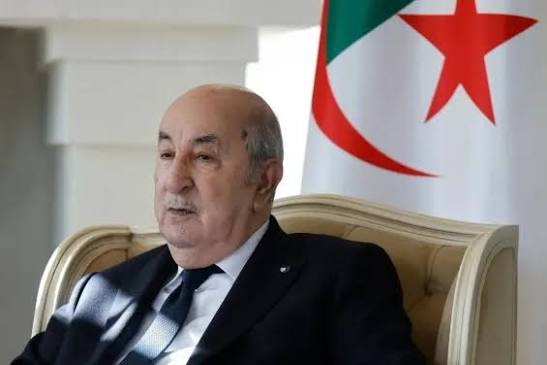
After a period of unprecedented confrontation, Algeria and Mali have taken decisive steps to restore bilateral relations. On July 10, Algerian President Abdelmadjid Tebboune ordered the return of Ambassador Kamal Retieb to Bamako, while Mali simultaneously reinstated its ambassador to Algiers and reopened its airspace to Algerian civil and military aircraft. This normalization follows a fifteen-month standoff that reached its peak when Bamako accused Algiers of violating its airspace with a drone strike near Tinzaouaten in April 2025, a claim Algeria denied. The crisis had escalated further when Mali withdrew from the 2015 peace agreement and referred the dispute to the International Court of Justice, a move Algeria rejected.
By early August, the tone had shifted dramatically. Malian Prime Minister Abdoulaye Maïga declared a «full convergence of views» with Algeria, emphasizing shared principles such as «respect for state sovereignty and non-interference in internal affairs». This rapprochement is more than a mere restoration of diplomatic ties; it represents Algeria’s bid to reclaim its role in shaping the security and political future of West Africa’s Sahel. Observers note that Niger’s mediation played a crucial role in facilitating this détente, underscoring the regional interconnectedness of these developments.
Niger emerges as Algeria’s key partner in the Sahel
The partnership between Algiers and Niamey has evolved into one of Algeria’s most tangible engagements in the region. On August 9, Algeria delivered four military helicopters to Niger’s armed forces—two Mi-24V attack helicopters and two Mi-171 transport helicopters—along with spare parts, maintenance equipment, and ammunition. This military support was swiftly followed by a high-level visit from Algeria’s Prime Minister, who attended the groundbreaking ceremony for the Kafra Sud-Est 1 exploratory oil well. Meanwhile, Sonatrach and Niger’s Société nigérienne des produits pétroliers (Sonidep) announced their first joint oil commercialization operation, marking a new phase in bilateral economic cooperation.
These moves highlight Algeria’s strategy of combining security, energy, and economic cooperation to reassert its presence in the Sahel. The initiatives are particularly significant given Algeria’s shared borders with both Mali and Niger, which expose it to the spillover effects of regional instability. By strengthening ties with Niamey, Algiers is not only addressing immediate security concerns but also securing long-term strategic interests in a region where Morocco has been rapidly expanding its influence.
Sahel’s shifting alliances intensify Algeria’s urgency
The geopolitical landscape of the Sahel has undergone profound changes in recent months. The three members of the Alliance of Sahel States (AES)—Mali, Burkina Faso, and Niger—have distanced themselves from Western partners, deepened ties with Russia, and begun building independent diplomatic, economic, and military frameworks. In June, the foreign ministers of these countries convened in Bamako to advance the «Diplomacy pillar» of their Confederation, signaling a unified approach to regional engagement. For Algeria, this evolving dynamic presents both a challenge and an opportunity: while the erosion of Western influence creates space for new partnerships, it also intensifies competition with Morocco, which has adopted a multi-pronged strategy combining political diplomacy, religious outreach, infrastructure investments, and Atlantic-oriented initiatives.
Analysts suggest that Algeria’s current policies are largely reactive, aimed at countering Morocco’s gains rather than forging a distinct vision for the Sahel. The International Crisis Group noted in late 2024 that «Morocco has capitalized on Algeria’s declining influence in the Sahel», while the Institute for Security Studies (ISS) observed in March that Algeria’s economic diplomacy is primarily focused on «preserving regional influence in the face of Moroccan advances». The contrast between the two countries’ approaches is striking: while Rabat has cultivated durable interdependencies through banking, telecommunications, religious training, and infrastructure, Algiers appears more focused on preventing its rival from turning its own setbacks into lasting diplomatic advantages.
Rabat’s head start complicates Algeria’s recovery
Algeria’s challenge is compounded by Morocco’s early and sustained engagement in the Sahel. Mali’s decision in April to withdraw recognition of the Polisario Front’s self-proclaimed state (RASD) and endorse Morocco’s «autonomy plan» as the «only serious and credible basis» for resolving the Western Sahara dispute underscored Rabat’s growing clout. The three AES countries have progressively strengthened their ties with Morocco, a development that cuts to the heart of Algiers’ rivalry with its neighbor. For Algeria, the stakes are high: beyond mere regional influence, the contest now revolves around which country can sway African capitals to support its position on the Sahara issue.
In response, Algeria has adopted a strategy of damage control, seeking to recover lost ground rather than pioneer new initiatives. The restoration of diplomatic ties with Bamako, the delivery of military hardware to Niamey, and the revival of joint oil projects are all aimed at rebuilding Algeria’s presence in a region where it once held unchallenged sway. Yet, this recovery remains fragile, as Algeria’s efforts are still largely driven by the imperative to thwart Morocco’s advances rather than by a cohesive, forward-looking vision for the Sahel.
Can Algeria break free from Morocco-centric diplomacy?
The current phase of Algeria’s Sahel policy reflects a struggle to reclaim past influence rather than a confident projection of future leadership. While the partnership with Niger serves as a testing ground for Algeria’s renewed engagement, the relationship with Bamako will be the true measure of its success. Burkina Faso, though less prominently featured in these developments, remains an important piece of the puzzle. Ultimately, Algeria’s ability to assert itself in the Sahel will depend on whether it can move beyond a purely reactive stance and present a compelling, self-driven agenda—one that offers tangible benefits to its partners rather than merely serving as a counterweight to Morocco.
You may also like
Will Senegal’s local elections break Bassirou Diomaye Faye’s presidency before it truly begins?
Senegal’s budget: can Ousmane Sonko afford to block Bassirou Diomaye Faye’s 2026 plan?
Senegal electoral reform: Khalidou dit Mbaye Sokoma’s full proportional representation push
Senegal’s local elections: Bassirou Diomaye Faye still won’t set a date
Alain-Georges Moukoko takes over Libreville prosecutor general’s office