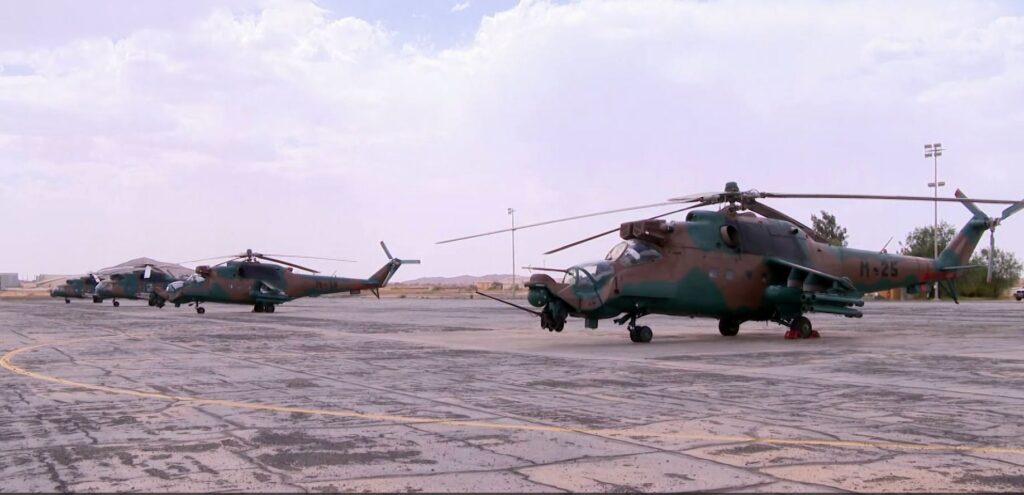
The Algerian government has delivered a strategic military aid package to Niger, reinforcing bilateral defense cooperation under the directives of President Abdelmadjid Tebboune. The transfer, personally supervised by Army General Saïd Chanegriha, Chief of Staff of Algeria’s People’s National Army (ANP), included four helicopters alongside essential equipment and logistical support.
Military hardware transferred to enhance regional security
Two MI-24V attack helicopters and two MI-171 utility helicopters departed Sunday from the secondary deployment base at In Gezzam in Algeria’s Sixth Military Region, bound for Niamey’s international airport. Alongside the rotorcraft, the aid shipment contained:
- Specialized ammunition for the helicopters
- Critical spare parts for maintenance
- Logistical support equipment
- Additional operational supplies
An Algerian Air Force transport aircraft also transported these materials to ensure timely delivery.
Diplomatic and security collaboration highlighted
According to the Algerian Ministry of National Defense, this gesture underscores Algeria’s commitment to fostering stability and security across the Sahel region. The donation reflects a broader strategy of multilateral cooperation in defense and intelligence-sharing initiatives.
«This aid solidifies the historical and fraternal ties between Algeria and Niger while demonstrating our shared resolve to counter regional threats,» stated a ministry spokesperson. «By enhancing Niger’s operational capabilities, we contribute to collective efforts for peace and security in West Africa.»
Strengthening Sahel defense partnerships
The initiative aligns with Algeria’s ongoing efforts to bolster military partnerships with neighboring countries. Through coordinated defense strategies and capacity-building programs, Algeria reinforces its role as a key player in regional security architecture.
Military analysts view this donation as a tangible step toward addressing evolving security challenges in the Sahel, where cross-border threats continue to pose significant risks to civilian and military stability.
You may also like
South Africa’s mass shooting crisis: can Johannesburg and Cape Town ever feel safe again?
Senegal’s December 2, 2026: will Diomaye Faye dissolve parliament or play the long game?
Senegal’s 2026 budget revision: can Dakar still rescue its growth and investment agenda?
Senegal’s 2026 revised budget: a trap vote for Pastef or a necessary evil?
Burkina Faso’s armored vehicles: can Faso Armored’s 300-unit claim survive the scrutiny?