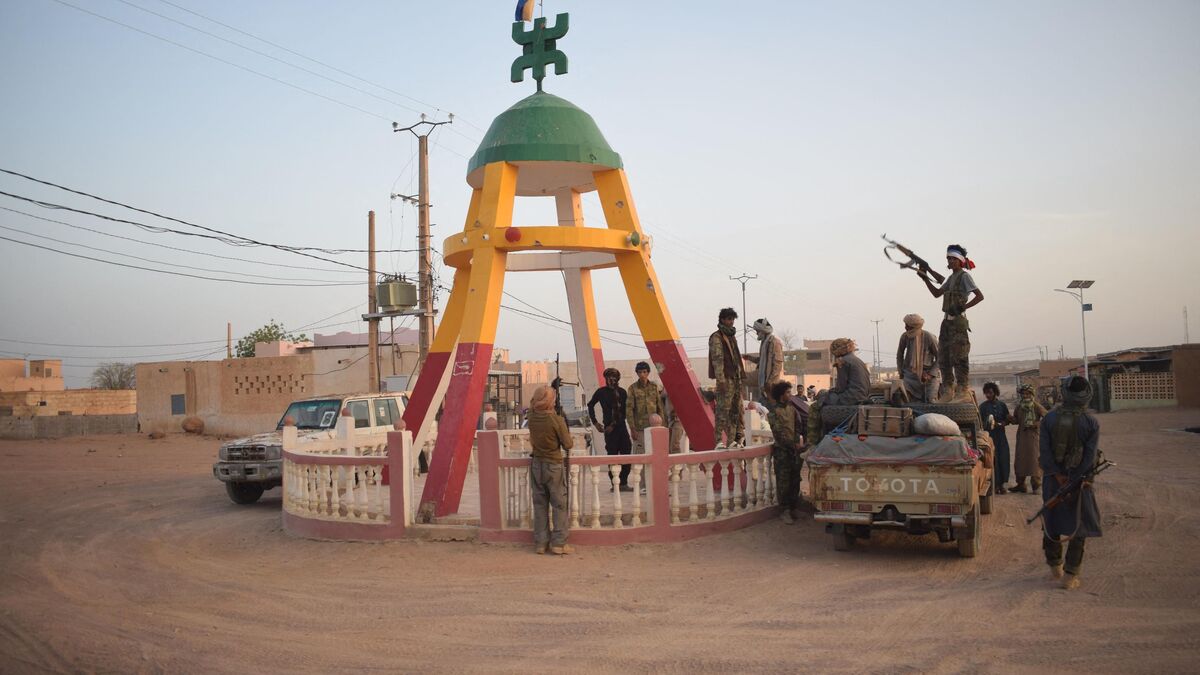
The African nation of Mali has become the latest battleground for a shadowy conflict involving a new Russian-backed paramilitary group. Over the weekend, rebel forces seized control of Kidal, a key stronghold previously held by the Africa Corps, a shadowy military organisation that has been operating in the region for years.
This latest development marks a significant shift in the power dynamics of Mali’s ongoing crisis, where Africa Corps had been a dominant military presence under the country’s ruling junta. The group’s withdrawal from Kidal follows intense clashes and negotiations, but its influence in the Sahel region remains strong despite this setback.
From Wagner to Africa Corps: a strategic transition
The emergence of Africa Corps coincides with the decline of the Wagner Group, a Russian paramilitary organisation that had been active in Africa since 2014. After the death of its two founders, Evgueni Prigojine and Dmitri Outkine, in a suspicious plane crash in August 2023, Wagner’s operations began to fracture.
Russian authorities then moved to consolidate control over these military operations by creating Africa Corps in late 2023. The group is reportedly overseen by Iounous-bek Evkourov, Russia’s Deputy Minister of Defence, and is described as being more rigidly structured than Wagner, with direct oversight from Moscow.
A strategic name with historical echoes
The name Africa Corps is no coincidence. It draws inspiration from the infamous Afrikakorps, the German military unit that fought in North Africa during World War II under the command of Erwin Rommel. The choice of name is seen as a deliberate attempt to evoke historical military power and prestige, aligning with the group’s stated objectives.
Clear objectives: anti-colonialism and resource control
From its inception, Africa Corps has outlined its mission as supporting African nations in breaking free from colonial legacies, removing Western influence, and asserting full sovereignty. Igor Korotchenko, a military blogger and former colonel close to the Kremlin, has been vocal about the group’s goals, stating that it will conduct large-scale military operations across the continent to achieve these aims.
Unlike Wagner, which was frequently accused of human rights abuses and brutal repression, Africa Corps presents itself as a more disciplined and state-aligned force. Its strategy focuses on strengthening ties with allied governments by providing military personnel and equipment. The group has expanded its presence across the Sahel, including in Burkina Faso, Libya, Sudan, the Central African Republic, and Niger.
Africa Corps’ growing influence in the Sahel
In Mali, Africa Corps officially took over from Wagner in 2024, deploying hundreds — if not thousands — of fighters to bolster the ruling junta. Many former Wagner commanders and their troops have since joined the new organisation, consolidating its grip on the country’s military apparatus.
The group’s primary mission in Mali has been to support the junta in Bamako against Touareg rebels and other insurgent factions. This aligns with Russia’s broader geopolitical strategy in the region, which includes reducing Western influence, controlling migration routes, and securing access to valuable mineral resources.
International scrutiny and sanctions
Despite its more subdued approach compared to Wagner, Africa Corps has not escaped international scrutiny. In 2024, the United Kingdom accused the group of widespread human rights violations and the exploitation of natural resources for profit. The organisation’s growing footprint in Africa has raised concerns among Western governments, particularly as it continues to expand its operations across the continent.
As Africa Corps solidifies its position in the Sahel, its role in shaping the region’s future remains a critical question. With Moscow’s backing and a clear strategic vision, the group is poised to play an increasingly influential role in Africa’s complex political and military landscape.