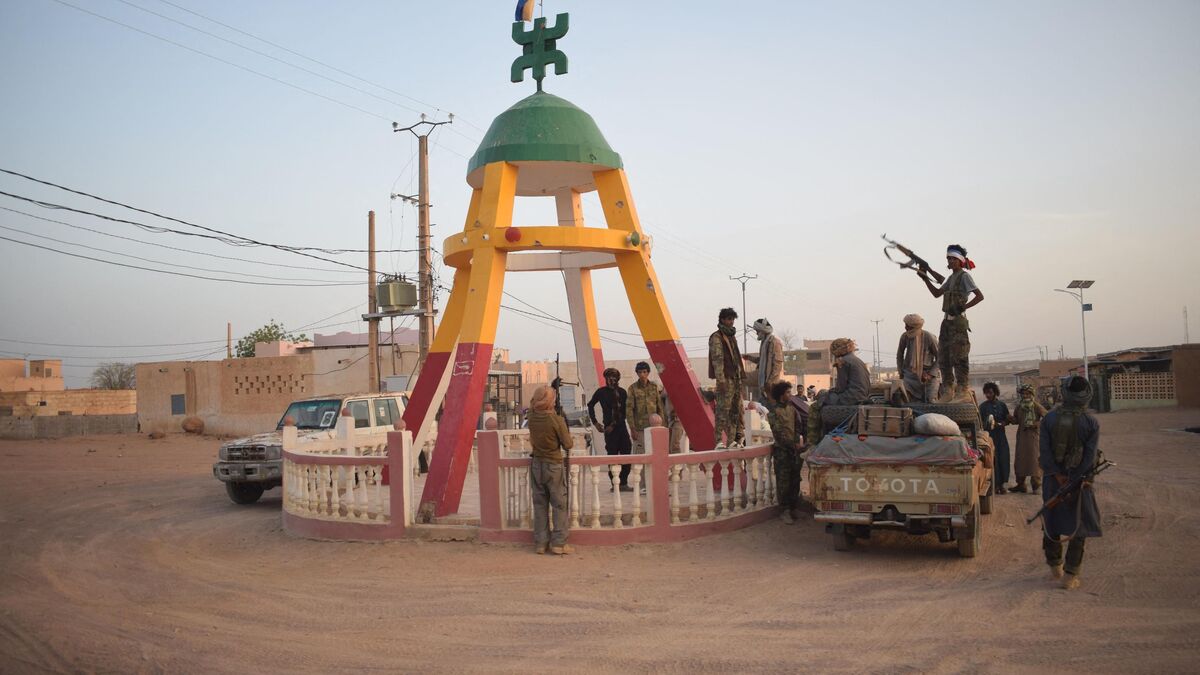
One of the most secretive branches of Russia’s military operations abroad, Africa Corps has been forced from a key stronghold in Mali’s restive north this past weekend. Despite this setback, the paramilitary force remains a vital strategic asset for Moscow across the Sahel region.
The dramatic shift unfolded in the eastern city of Kidal, long held by the juncture government’s forces and the Africa Corps since 2023. A coordinated offensive by Islamist militants and Touareg rebels succeeded in recapturing the city after intense clashes and negotiations forced the Russian-backed fighters to withdraw. The withdrawal marks a significant blow to Africa Corps’ operational grip in the region, though its broader influence across West Africa appears intact.
Origins of a shadowy force
Russia’s Africa Corps emerged in late 2023 as a direct successor to the Wagner Group, which had dominated Moscow’s African operations since 2014. The abrupt rise followed the dramatic deaths of Wagner’s founders, oligarch Evgueni Prigojine and ex-intelligence officer Dmitri Outkine, in a suspicious air crash in August 2023—a tragedy that coincided with Prigojine’s failed mutiny against the Kremlin.
The new force was first publicly referenced by military blogger Deux Majors on Telegram in November 2023, citing remarks from Igor Korotchenko, a former Russian colonel and Kremlin-aligned journalist. Korotchenko revealed that Africa Corps operates under the direct supervision of Deputy Russian Defense Minister Iounous-bek Evkourov, signaling a tighter, centralized chain of command compared to Wagner’s more decentralized structure.
Its name draws a deliberate parallel to the Afrikakorps, the Nazi-era German expeditionary force that operated in North Africa during World War II—a historical echo that underscores Moscow’s symbolic intent to project power across the continent.
Strategic objectives and regional expansion
From its inception, Africa Corps has outlined a clear agenda: to conduct large-scale military operations across Africa, supporting governments seeking to break free from Western influence, expel colonial legacies, and assert full sovereignty. Korotchenko emphasized that the group aims to replace foreign military presence with Russian-backed security arrangements while securing access to critical mineral resources.
Unlike Wagner, which gained notoriety for brutal tactics and alleged war crimes, Africa Corps has pursued a more discreet approach. It focuses on forging alliances with sympathetic governments by offering military training, equipment, and direct combat support. Its footprint now spans Burkina Faso, Libya, Sudan, Central African Republic, and Niger, with particularly deep involvement in Mali.
Africa Corps in Mali: power and retreat
Since 2024, Africa Corps has supplanted Wagner as the dominant foreign security partner in Mali, deploying hundreds—or possibly thousands—of fighters. Many former Wagner commanders and troops have reportedly transitioned under the new banner, reinforcing Moscow’s foothold in Bamako.
The group’s primary mission has been to prop up the Malian junta against a surge of rebel activity, including the Touareg-led coalition that recently seized Kidal. This intervention aligns with Russia’s broader strategy to fill the security vacuum left by the withdrawal of Western powers, particularly France, from the Sahel. By securing key territories, Africa Corps also seeks to control migration routes and exploit lucrative mining sectors.
Despite its reduced visibility, Africa Corps has not escaped international scrutiny. In 2024, the United Kingdom imposed sanctions on the group, accusing it of widespread human rights abuses across Africa and exploiting local resources for profit.
As Africa Corps navigates setbacks like the loss of Kidal, its long-term role in the Sahel remains a cornerstone of Russia’s ambitions to redefine geopolitical influence on the continent—one that continues to reshape power dynamics in West Africa.