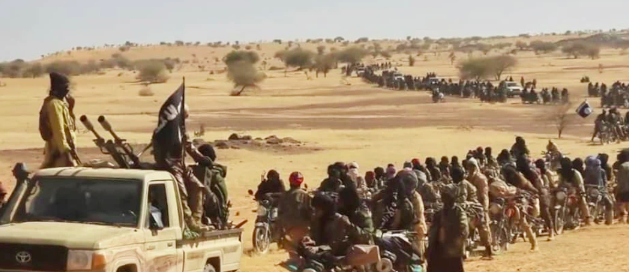
The United Nations has issued a stark warning about the escalating threat posed by the Islamic State (ISIS) in Africa, particularly in the Sahel region and around the Lake Chad Basin. According to a newly released report presented to the UN Security Council, the terrorist group continues to expand its influence despite setbacks suffered by its central leadership.
UN report highlights persistent ISIS threat in Africa
In a detailed assessment delivered by Oguljeren Niyazberdiyeva of the United Nations Office of Counter-Terrorism (UNOCT), the Sahel and Lake Chad Basin have been identified as critical hotspots for ISIS expansion. The report, compiled under the leadership of UN Secretary-General António Guterres, underscores that while international efforts have weakened ISIS’s central command, the group’s regional affiliates are becoming increasingly autonomous and resilient.
ISIS affiliates adapt and survive despite military pressure
The assessment reveals that ISIS’s West Africa Province (ISWAP) remains the most active affiliate globally. The report notes that the group has adapted its operations by increasingly deploying commercial drones to enhance both surveillance and attack capabilities. Additionally, ISIS-affiliated factions in the Democratic Republic of the Congo (DRC) and Mozambique continue to launch offensives despite sustained pressure from national and regional forces, while actively recruiting new members and strengthening local networks.
Oguljeren Niyazberdiyeva emphasized, ‘The terrorist group has fundamentally transformed its operational structure to survive military campaigns. Despite international efforts, ISIS continues to pose a severe threat to global peace and security.’
Decentralized network strategy poses new challenges
The UN report highlights a critical shift in ISIS’s operational model. While international counter-terrorism efforts have significantly weakened its central leadership, the group has transitioned into a decentralized network of regional affiliates. This transformation allows ISIS to adapt more effectively to local contexts and sustain its activities despite losses. The report warns that the group is exploiting institutional weaknesses, prolonged conflicts, and economic vulnerabilities to deepen its foothold in vulnerable regions.
Emerging technologies fuel ISIS’s evolution
The assessment also raises concerns about ISIS’s growing use of modern technologies. The report states that the group is leveraging artificial intelligence, encrypted communications, digital platforms, virtual assets, and unmanned aerial vehicles (UAVs) to enhance its propaganda, recruitment, financing, and operational planning. The UN stresses the urgent need for enhanced international cooperation and closer collaboration with technology companies to regulate these emerging tools effectively.
However, the report also acknowledges that these same technologies could serve as powerful instruments in counter-terrorism efforts when deployed responsibly and in compliance with international law.
You may also like
Can West Africa’s peace hold without the Entente Council and UNOWAS pact?
Can Lomé’s quiet diplomacy finally deliver peace to eastern DRC?
Can Nigeria’s security forces ever shut down the kidnapping economy in the north?
Can Benin’s defense strategy survive on diversification alone?
Can the CEMAC capital market finally bankroll Cameroon’s real economy?