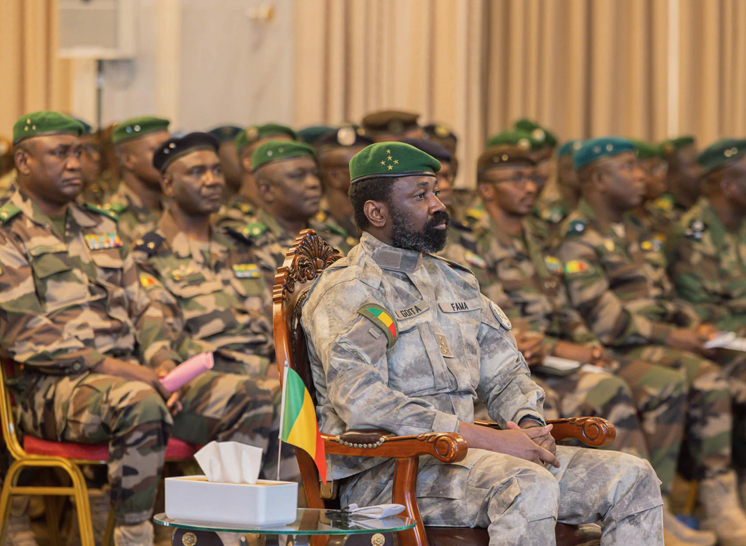
The Republic of Mali is poised to unveil a sweeping overhaul of its defense and security architecture, marking the first major revision in over two decades. Envisioned to replace the 2004 National Defense Law, the new framework expands its scope to encompass internal security, cyber defense, and crisis management, reflecting the evolving threats facing the nation.
On July 2026, the National Transitional Council (NTC) adopted the landmark legislation with a unanimous vote from its 125 members. The reform, slated to take effect after official promulgation and publication, was championed by General Daoud Aly Mohammedine, Minister of Security and Civil Protection. Speaking before the NTC, he emphasized the urgent need for modernization, citing two decades of security challenges that the 2004 framework could no longer adequately address. The reform’s development involved extensive consultations with security stakeholders, ensuring an inclusive and collaborative approach.
Streamlining command and clarifying roles
The 2004 law, while foundational, did not explicitly address the complexities of modern security threats. The updated strategy refines the roles of military, civilian, and territorial actors, ensuring clearer decision-making and operational coordination. The National Security Council and the National Defense Committee replace older structures, reinforcing the President’s oversight and strategic direction.
Central to the reform is the consolidation of operational command under the Chief of Staff of the Armed Forces. This unified approach aims to expedite responses during crises—whether large-scale attacks, major emergencies, or transnational threats—without permanently placing internal security forces under military command. Since 2022, the National Police and Civil Protection have been militarized, enabling seamless integration into joint operations while preserving their core responsibilities in public safety and emergency response.
Bridging tradition and modernity in security
General Mohammedine highlighted three critical priorities during his address: strengthening territorial administration, leveraging traditional leadership in counterterrorism efforts, and accelerating the recruitment and equipping of security forces. These goals align with the expanded mandate of the Ministry of Territorial Administration and Decentralization, which now plays a pivotal role in civil defense, interagency coordination, and community engagement.
The reform emphasizes bottom-up alert systems, empowering local governments to channel intelligence from municipalities to national authorities without resorting to informal militias. This approach seeks to foster trust between institutions, security forces, and civilians while preserving the rule of law.
Cyber defense takes center stage
A parallel reform targets the cyber domain. In June, the government enacted laws establishing the National Agency for Information Systems Security (ANSSI), aligning with the 2026–2030 National Cybersecurity Strategy. The agency’s mission is to coordinate cyberattack responses, safeguard critical infrastructure, and protect national digital assets. While cyber defense focuses on strategic threats to the state, cybersecurity extends protection to government networks, public communications, and digital services.
Beyond legislative changes, practical coordination is already underway. On August 4, 254 former combatants from various armed groups graduated from Soufouroulaye training camp and were integrated into the Armed Forces as part of the Disarmament, Demobilization, and Reintegration Initiative (DDR-I). The program aims to integrate 2,000 ex-fighters and reintegrate 1,000 others socioeconomically, fostering collaboration across defense, security, reconciliation, and local authorities.
The path to success hinges on execution
The true test of this reform lies not in its structural innovations but in its implementation. Key factors—such as application decrees, intelligence-sharing protocols, local government resources, cyber capabilities, and transparent accountability—will determine its effectiveness. Success will be measured by the speed of decision-making, seamless interagency coordination, and the trust forged between institutions and citizens.
You may also like
Can West Africa’s peace hold without the Entente Council and UNOWAS pact?
Can Lomé’s quiet diplomacy finally deliver peace to eastern DRC?
Can Nigeria’s security forces ever shut down the kidnapping economy in the north?
Can Benin’s defense strategy survive on diversification alone?
Can the CEMAC capital market finally bankroll Cameroon’s real economy?