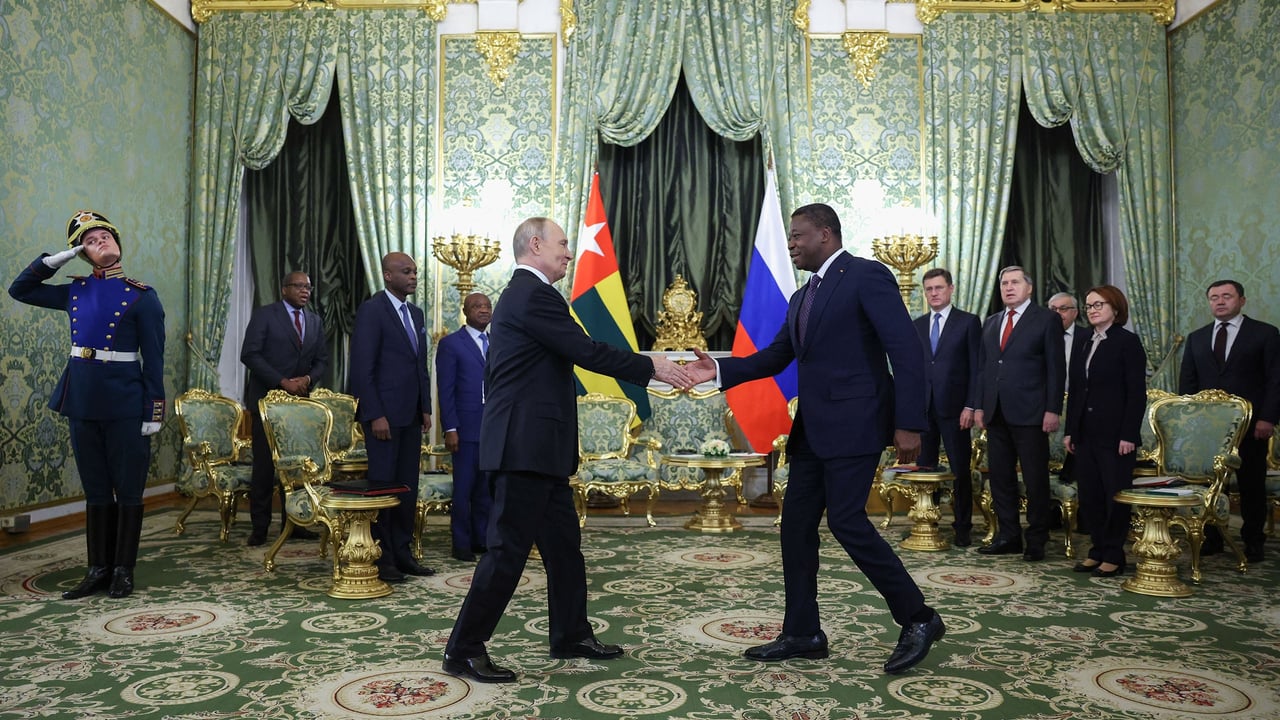
Lomé is quietly reshaping its security strategy in the Sahel amid escalating jihadist threats. While traditional partners remain cautious, the Togolese government has taken bold steps by engaging with unconventional allies, including Russia’s Africa Corps and Turkey, to bolster its defense capabilities.
The shift comes as regional instability forces West African nations to seek new solutions. Togo’s President Faure Gnassingbé has quietly pursued these partnerships, recognizing the need for aerial support and specialized training to counter the growing influence of extremist groups.
Turkey’s rising role in West Africa’s security landscape
For years, Lomé has maintained discreet but strategic cooperation with Ankara, focusing on intelligence-sharing and logistical assistance. The collaboration gained momentum as Turkish drones and military advisors became more visible in the region, offering a counterbalance to the rising jihadist presence.
Analysts suggest that Togo’s engagement with Turkey aligns with a broader trend in the Sahel, where nations are diversifying their security partnerships beyond traditional Western alliances. The move reflects a pragmatic approach to addressing immediate threats while positioning Togo as a key player in regional stability.
Russia’s Africa Corps: a new player in Sahel security
Since 2025, Russia’s Africa Corps has emerged as a significant actor in West Africa’s security dynamics. Reports indicate that Lomé has welcomed Russian military personnel, particularly in advisory and training roles, to enhance Togo’s counterterrorism capabilities.
The partnership has raised eyebrows among Western observers, who question the long-term implications of such collaborations. However, for Togo, the benefits—ranging from rapid deployment capabilities to cost-effective military support—appear to outweigh the risks. The Africa Corps’ presence in the region signals a broader shift toward non-Western security partnerships in the Sahel.
Why Togo is turning to unconventional allies
The decision to engage with Russia and Turkey is driven by several factors:
- Immediate security needs: The growing threat of jihadist groups in neighboring countries has forced Togo to seek external support to strengthen its defenses.
- Cost efficiency: Traditional military aid from Western partners often comes with stringent conditions. Russia and Turkey offer more flexible terms, making them attractive alternatives.
- Strategic autonomy: By diversifying its alliances, Togo aims to reduce its dependence on former colonial powers and assert greater control over its security policies.
Regional implications and future outlook
The evolving security landscape in West Africa is forcing nations to reconsider their alliances. Togo’s engagement with Russia and Turkey is a clear indication of this shift, with potential ripple effects across the Sahel.
While some observers express concerns over the long-term stability of these partnerships, others argue that Togo’s pragmatic approach may serve as a model for other nations grappling with similar challenges. As the jihadist threat continues to evolve, Lomé’s strategy could redefine regional security dynamics.
This article is based on firsthand observations and analysis of Togo’s evolving security partnerships.