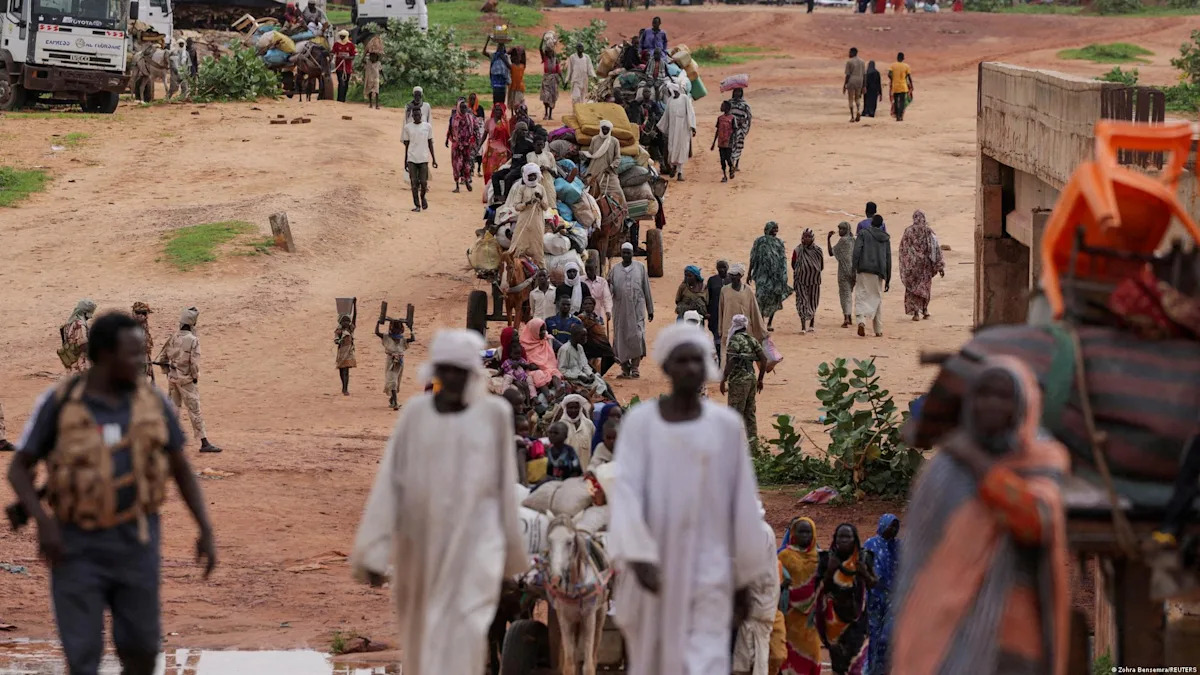
Escalating violence in Sudan has pushed nearly a million civilians into neighboring Chad, creating a humanitarian crisis along the 1,300-kilometer border. With the fall of El-Fasher in North Darfur, over 100,000 people fled in just two weeks, including 6,000 crossing into Chad—a nation already strained by regional instability.
Border tensions escalate amid regional spillover
The vast, sparsely patrolled desert frontier has long been a hotspot for militant movements. Now, the advance of the Rapid Support Forces (RSF), which controls much of Darfur, has intensified cross-border tensions. Since December 2024, Chad has reported several incidents: a drone strike in January killed two Chadian soldiers, and an RSF incursion near Tiné left seven dead.
In response, N’Djamena has sealed its border completely, citing the direct risk of conflict spillover into its territory.
Chad’s neutrality under scrutiny
Officially, Chad maintains a neutral stance in the Sudanese conflict. Yet satellite investigations and reports suggest weapons from the United Arab Emirates may have transited through Chad to the RSF. Authorities deny involvement, emphasizing that Chad itself faces repeated attacks and incursions by armed groups.
Internal divisions have deepened as well. In April 2025, several high-ranking officers—many from the Zaghawa ethnic group, historically opposed to the RSF—were removed from their posts, fueling political tensions.
Realigning with Paris to secure stability
After a period of strained relations, Chad is restoring ties with France. Intelligence support from Paris was once crucial for border security, but its reduction has left N’Djamena seeking renewed cooperation. President Mahamat Idriss Déby and French President Emmanuel Macron are now prioritizing the Sudan crisis in their discussions, aiming to stabilize the region through strategic collaboration.