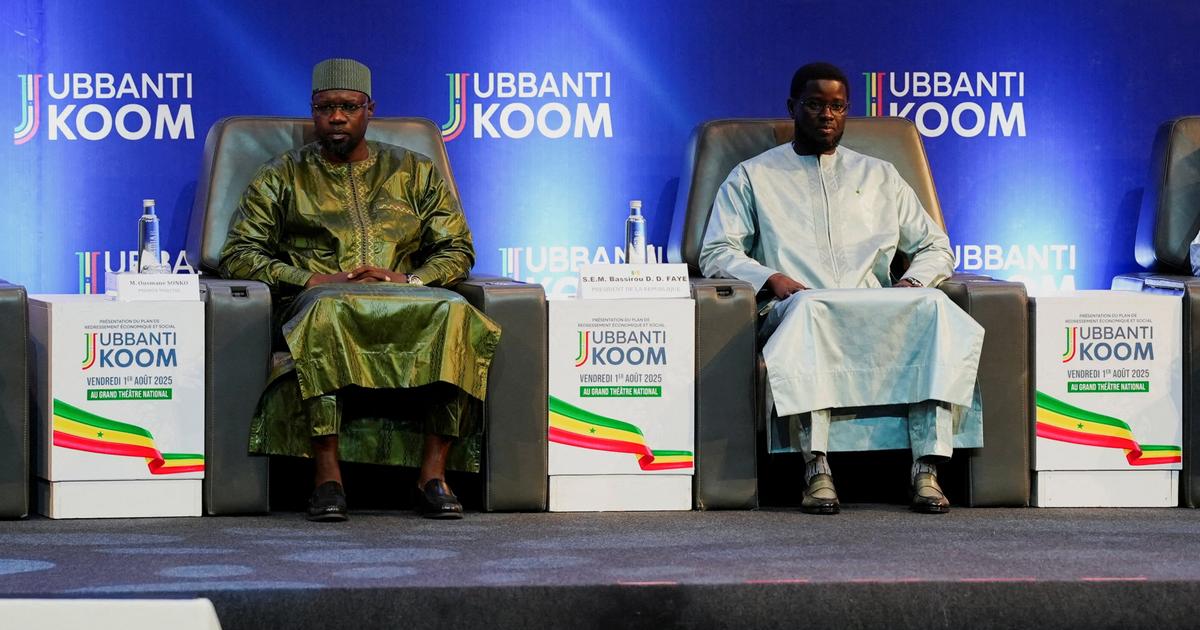
A significant political shift has unfolded in Senegal, marked by President Bassirou Diomaye Faye’s recent dismissal of Prime Minister Ousmane Sonko. This move, which took place on Friday, May 22, signals what many observers believe was an inevitable rupture, fueled by escalating political tensions and increasingly public disagreements between the two leading figures of the nation’s executive branch.
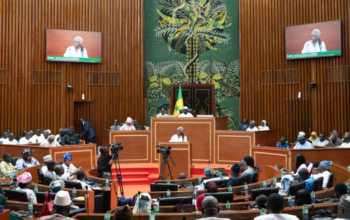
Following this development, the President of the National Assembly, Malick Ndiaye, announced his resignation from the parliamentary leadership. This resignation, however, does not signify a complete departure from the legislative body. Instead, it appears to be a calculated maneuver designed to facilitate the return of the former Prime Minister, Ousmane Sonko, who has requested to reclaim his mandate as a deputy within the National Assembly.
The political divide deepens
The Parliament is scheduled to convene in an extraordinary session on May 26 to elect its new president. All indications suggest that, barring an unforeseen political earthquake, Sonko, the former mayor of Ziguinchor, is poised to assume leadership of the Parliament. This strategic position would allow him to continue his power struggle directly with President Bassirou Diomaye Faye, setting the stage for ongoing political friction in this West African nation.
A critical question now looms: how far will this conflict between the two former political allies escalate? The query gains particular weight given that, beyond the former Assembly President’s resignation — which many interpret as a gesture of loyalty to Sonko — Ousmane Sonko is expected to secure the top parliamentary post with relative ease, should he desire it. The ruling Pastef party (Patriotes africains du Sénégal pour le travail, l’éthique et la fraternité), which Sonko still spearheads, holds a dominant majority with no fewer than 130 out of 165 parliamentary seats.
This highlights the immense importance of the upcoming parliamentary session, as it provides a clear pathway for the former Prime Minister to remain a central figure in Senegal’s political landscape and within the state’s highest decision-making circles. Assuming the role of Parliament chief is a highly strategic move, especially in a context where the rift between the Thiès native and President Bassirou Diomaye Faye seems complete. President Faye, for his part, appears determined to emerge from the shadow of his former mentor and firmly assert his own presidential authority.
Ousmane Sonko’s potential for legislative obstruction
In this clash of ambitions between former comrades who have reached the pinnacle of state power, Senegal faces the potential risk of an institutional crisis. This risk is particularly acute if, as the scenario appears to suggest, Ousmane Sonko is elected President of the National Assembly following the May 26 session. Such an outcome would elevate him to the second most powerful position in the state, making him the President’s constitutional successor.
From this powerful vantage point, Sonko could at any moment utilize his control over the legislative branch to impede government actions. Predicting the extent of this rivalry between the two leaders of the ruling party remains a challenge. Should they fail to exercise caution, this situation could severely undermine the cohesion of the Pastef party. Indeed, with these two prominent figures in open conflict, one might question whether Pastef is inadvertently sabotaging its own future.
It is evident that since their ascent to power, Ousmane Sonko has harbored ambitions to occupy the presidential office, having effectively propelled Bassirou Diomaye Faye into the presidency due to his own judicial disqualification in 2024. Sonko’s current open conflict with the head of state suggests he not only intends to avoid remaining in the President’s shadow but also believes he possesses sufficient political capital to pursue his presidential aspirations, overcoming the legal hurdles he faced in 2024.
A delicate balance of power
This calculus is bolstered by the new Electoral Code, which was swiftly adopted on May 12. This revision sought to clarify criteria for ineligibility and prevent the political disqualification of candidates. While proponents highlighted its aim for transparency, critics perceived it as a means to clear the path for both Ousmane Sonko and Bassirou Diomaye Faye to run in future elections.
Despite Sonko’s considerable popularity within the party he founded and his past role as a fierce opponent of former President Macky Sall, his eligibility for the next presidential election, scheduled for March 2029, will likely remain contested until the Constitutional Council issues a definitive ruling. The intensifying rivalry between these two prominent personalities at the state’s highest level could usher in a period of political deadlock, a “you scratch my back, I’ll scratch yours” dynamic that bodes ill for Senegal. It could also weaken Pastef, potentially allowing a third contender to capitalize on voter dissatisfaction in upcoming elections.
For now, the nation watches, hoping that reason will prevail in the superior interest of Senegal, ensuring that the country does not become hostage to the rivalries between these two political leaders who once promised a new era of governance.