Dakar intensifies foreigner verification amid growing scrutiny
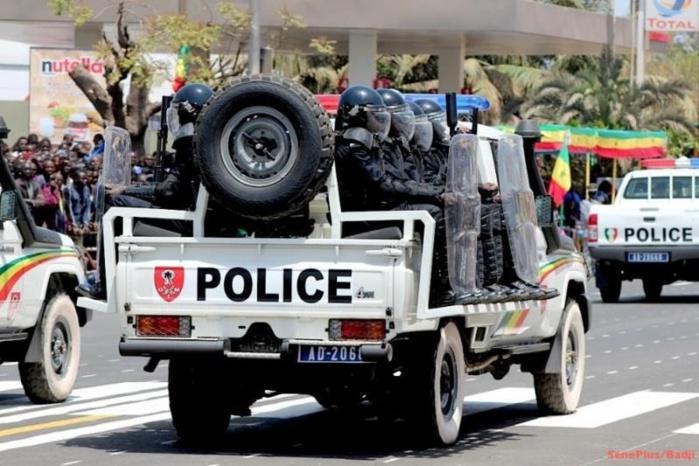
The capital of Senegal is witnessing a notable upsurge in police checks targeting foreigners, raising concerns among residents and civil society organizations. Over an eight-day period, authorities conducted 490 identity verifications, leading to the prosecution of 36 individuals for irregular stay. While authorities frame these operations as routine administrative measures, critics argue they signal a troubling shift in how foreigners are perceived in the country.
An unexpected encounter
The recent crackdowns have left many expatriates shaken, including Amadou Bangoura, a 30-year-old Beninese student who has been pursuing his graduate studies in Senegal for five years. One evening, as he left a gym in the Liberté 6 district around 10 p.m., a police patrol stopped him and demanded to see his documents. Caught off guard, he admitted he had left his papers at home.
“Until now, I had never experienced anything like this in five years,” Bangoura recounted. The fear of deportation, imprisonment, or a court appearance flashed through his mind. After verifying his claims, officers accompanied him home, where he presented his passport and residency documents—all in order. The incident concluded without further consequences, but the memory lingers.
Numbers reveal a trend
Between June 30 and July 8, 2026, the Directorate of Police for Foreigners and Travel Documents (DPETV) carried out a sweeping campaign across several neighborhoods in Dakar and its suburbs. Official figures show 490 foreigners of various nationalities were subjected to identity checks, with 36 facing prosecution for breaches of residency regulations. While authorities insist the operations aim to bolster public safety, critics question their proportionality and intent.
Civil society warns against a climate of suspicion
A collective of civil society groups, including Legs Africa, Frapp, Nawle, Afrikajom Center, and Diwan Citoyen, issued a joint statement on July 13, expressing deep concern over the escalation of administrative measures targeting foreigners living in Senegal.
The statement acknowledges the state’s sovereign right to regulate immigration and border controls but cautions against conflating sovereignty with arbitrary action. “What is troubling is not the existence of migration policies themselves, but the gradual normalization of a climate of permanent suspicion directed at foreigners,” the groups warned. They argue that this shift risks reducing foreigners from individuals with rights to perceived administrative liabilities—a development that could transform even legal stays into bureaucratic ordeals.
Balancing security and hospitality
Elimane Kane, president of Legs Africa, emphasizes that security and hospitality are not mutually exclusive values in Senegalese society. While affirming the state’s duty to monitor borders and verify identities, he cautions against interpretations that frame these operations as outright rejection of foreigners. “Security does not exclude otherness,” Kane insists, calling for better coordination among security forces to prevent these checks from being perceived as persecution rather than regulation.
He also highlights the global reality of labor mobility, pointing out that just as Senegalese citizens seek opportunities abroad, foreigners contribute to the local economy. “The solution is not to blame migrants but to create conditions that allow young Senegalese to seize available opportunities,” he argues, stressing the need for balanced policies that uphold both national security and the dignity of foreigners.
This article reflects the concerns raised by both expatriates and civil society amid intensified administrative controls.